

INTRODUCTION
If you’ve followed the news lately, you’ve probably heard Jamie Dimon’s name come up next to China, chips, and AI. That’s not a coincidence.
As JPMorgan Chase’s CEO, Dimon sits closer to the real-world consequences of the US-China technology competition than almost anyone else in business. He’s not a politician making speeches. He’s a banker watching capital, supply chains, and risk shift in real time.
This guide breaks down exactly what Dimon has said, why it matters, and — more importantly — what it means for your job, your portfolio, and your understanding of where the global economy is headed. No jargon. No hype. Just what’s actually going on.
What Is the US-China Technology Competition, Really?
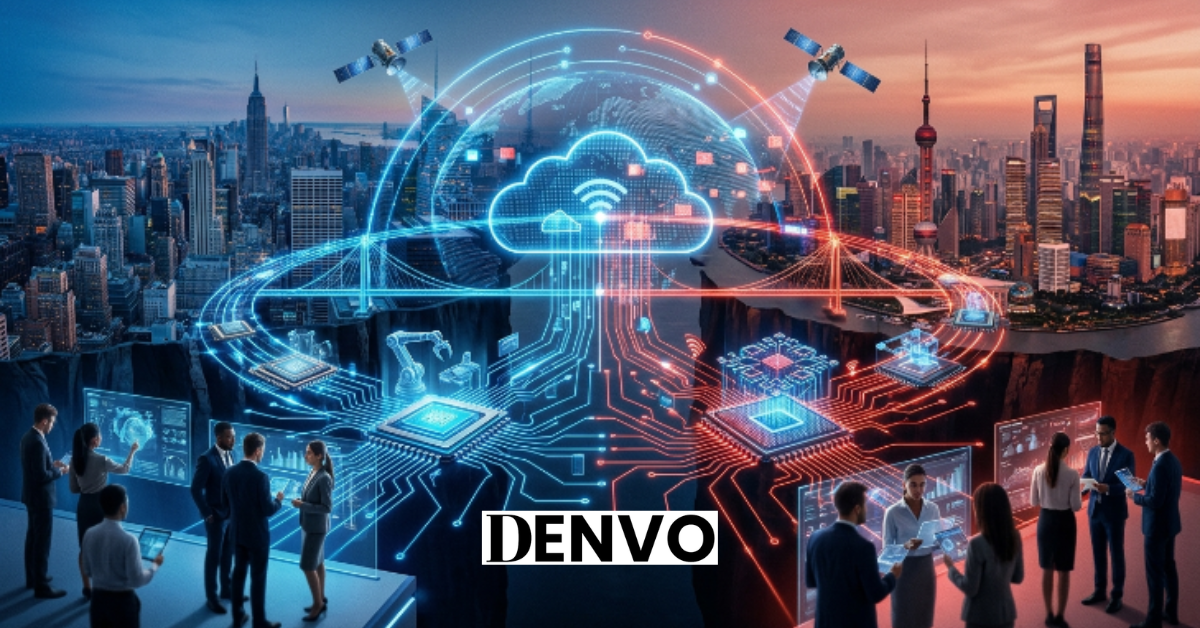
Let’s start simple. The US-China technology competition is a race between the world’s two biggest economies to lead in the technologies that will define the next few decades — artificial intelligence, semiconductors, robotics, quantum computing, and clean energy.
It’s not just about who builds the fastest chip. It’s about who controls the infrastructure that everything else depends on.
Here’s why that matters to you, even if you’ve never bought a single tech stock:
- Your smartphone likely contains parts made possible by both US chip design and Asian manufacturing.
- Your retirement account probably holds companies exposed to China in some way.
- Your job, if it touches software, logistics, or manufacturing, is affected by export rules you’ve never read.
The competition isn’t evenly split either. Recent industry data shows a surprisingly close race: one 2026 analysis found China is home to 51 of the world’s top 100 AI companies, while the US holds 37 — meaning these two countries together account for the overwhelming majority of the global AI industry. Neither side has a clean, total lead.
Bold takeaway: This isn’t a distant policy debate. It’s already baked into your daily life through the products you use and the money you invest.
Who Is Jamie Dimon, and Why Does His Opinion Carry Weight?
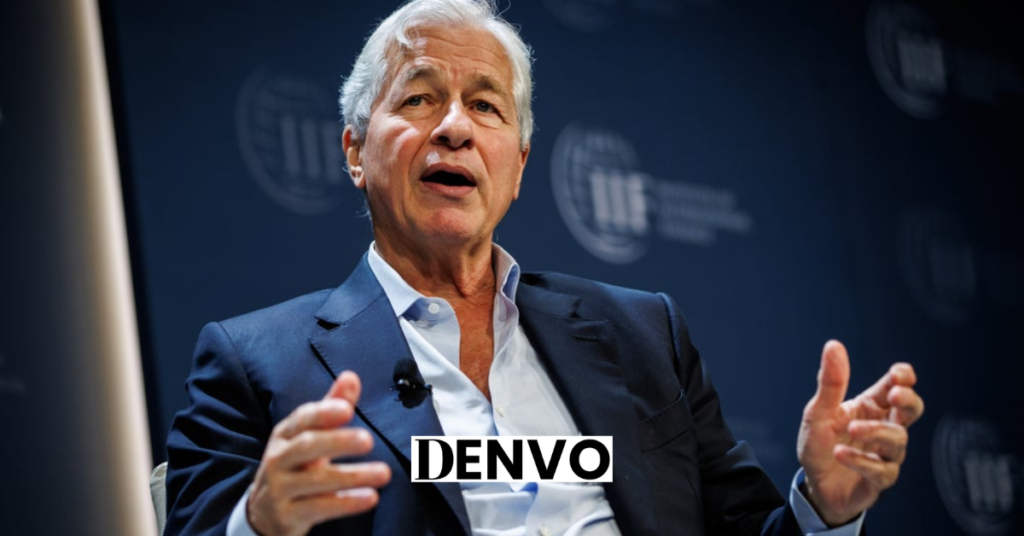
Jamie Dimon has led JPMorgan Chase — America’s largest bank — for close to two decades. He steered the bank through the 2008 financial crisis and the pandemic, which is part of why people take his warnings seriously.
Unlike a politician or a think-tank analyst, Dimon runs a business that actually operates in both the US and China. That gives him a practical, not ideological, view of the rivalry.
A few things make his perspective useful:
- He sees the money move first. Banks notice tension through compliance headaches, sanctions questions, and client contingency planning before it shows up in headlines.
- He’s stayed pragmatic, not alarmist. Dimon has said companies are going to keep doing business in China, while also acknowledging JPMorgan would follow US government direction if sanctions were imposed.
- He calls out weaknesses directly. Dimon has described America’s dependency on China for essentials like rare earth minerals and penicillin as “embarrassing,” and has urged the US to “get its act together.”
That combination — realism plus bluntness — is why “Dimon’s take” on the US-China technology competition gets quoted so often in financial media.
The Key Battlegrounds: Where the Race Is Actually Happening
The rivalry isn’t one race — it’s several running in parallel. Here’s where the real competition is playing out:
Artificial Intelligence The US currently leads in frontier AI research and foundational tools. But talent is shifting. Some analysts project China could have roughly twice as many top AI researchers as the US by 2028 if current trends hold.
Semiconductors (Chips) The US leads in advanced chip design. According to a 2026 assessment from a White House technology advisor, China’s AI chip capabilities are estimated to be about 1.5 to 2 years behind the US — a gap that’s real but not enormous.
Robotics and Industrial Deployment This is where China pulls ahead. China leads in robotics, battery production, rare earth processing, and turning new technology into real-world, large-scale deployment fast.
Quantum Computing Still early-stage for both countries, but both see it as a long-term strategic asset worth serious investment.
Practical tip: If you’re evaluating a company’s exposure to this competition, ask which of these four buckets it falls into — research, hardware, deployment, or long-term bets. Each carries different risk.
Dimon’s Core Warning: Dangerous Dependency
If there’s one theme that runs through Dimon’s commentary, it’s dependency.
His argument is straightforward: America has let itself become reliant on China for materials it can’t easily replace — rare earths used in electronics and defense, and even basic goods like penicillin. When one country controls a critical supply chain, the other side loses negotiating leverage.
This isn’t about picking a side or cutting ties completely. Dimon has consistently pushed back on total decoupling, comparing the two economies to two massive engines running side by side — if one stalls, the whole system shakes.
What this looks like in practice:
- Chip export restrictions raising costs for manufacturers
- Companies quietly diversifying suppliers outside China
- Increased scrutiny on cross-border data flows and cybersecurity
- Financial institutions building contingency plans for sudden policy shifts
Bold point: Dimon’s message isn’t “panic.” It’s “prepare.” Businesses that map their dependencies now will handle disruption far better than those caught off guard.
What This Means for Investors and Everyday Professionals
You don’t need to run a multinational company for this to matter to you. Here’s the translation into everyday terms:
- If you invest, understand that export controls, tariffs, and sanctions can move stock prices for chip and tech companies overnight, regardless of their earnings.
- If you work in tech, manufacturing, or logistics, expect ongoing shifts in where products get made and which suppliers are considered “safe.”
- If you’re simply saving for retirement, your index funds almost certainly include companies with real exposure to this rivalry — even if you’ve never picked a China-related stock directly.
Dimon’s broader advice for navigating this boils down to a few practical habits:
- Diversify rather than assume any single supply chain is permanent.
- Watch policy signals, not just company earnings.
- Avoid extremes — neither ignoring the risk nor overreacting to every headline serves you well.
This is a marathon, not a headline cycle. The US-China technology competition will likely shape policy, markets, and careers for years, not months.
CONCLUSION
The US-China technology competition isn’t a distant geopolitical story — it’s already shaping supply chains, stock prices, and the technology you use every day. Jamie Dimon’s value isn’t that he predicts the future perfectly. It’s that he brings a grounded, business-first lens to a topic that’s often buried in political noise.
His core message is simple: understand your dependencies, stay pragmatic, and don’t assume things will stay the way they are. Whether you’re an investor, a professional, or just someone trying to make sense of the headlines, that advice holds up.
Keep following how this rivalry develops — the companies and countries that adapt early tend to come out ahead.
FAQs
What is the US-China technology competition?
It’s the ongoing rivalry between the United States and China to lead in critical technologies like artificial intelligence, semiconductors, robotics, and quantum computing. Both countries see technological leadership as tied to economic power and national security, which is why the competition affects trade policy, corporate strategy, and financial markets. It’s not a single race with one finish line — it spans several technology sectors, each with different leaders and different levels of tension.
What has Jamie Dimon actually said about US-China tech competition?
Dimon has warned that America has become overly dependent on China for critical materials like rare earths and penicillin, calling that dependency “embarrassing.” At the same time, he’s said JPMorgan will keep doing business in China because companies need to operate there, while noting the bank would follow US government direction if sanctions were imposed. His overall tone is pragmatic rather than alarmist — acknowledge the risk, but don’t panic.
Who is currently winning the US-China tech race?
Neither country has a clean, total lead. The US generally leads in frontier AI research, advanced chip design, and quantum computing. China leads in robotics, battery production, rare earth processing, and rapidly deploying new technology at scale. Analysts increasingly describe this as a race with different strengths rather than one country dominating every category.
Why does Jamie Dimon’s opinion matter on this topic?
Dimon isn’t a policymaker, but he runs the largest bank in the US and operates in both American and Chinese markets. That gives him direct visibility into how tech tensions actually affect capital flows, compliance, and corporate risk — before those effects show up in headlines. His practical, business-first perspective is why financial media frequently cites his views on the US-China technology competition.
How does the US-China technology competition affect regular investors?
Export controls, tariffs, and sanctions related to this competition can move stock prices for tech and semiconductor companies quickly, sometimes independent of a company’s actual earnings. Most retirement accounts and index funds include companies with some exposure to this rivalry. Understanding the basics helps investors avoid overreacting to headlines while still recognizing genuine risk.
Is the US-China tech rivalry likely to get better or worse?
Most analysts, including perspectives associated with Dimon, expect the rivalry to continue rather than resolve quickly. The more likely path is a mix of continued competition, partial decoupling in sensitive sectors, and pragmatic cooperation where both sides benefit. Complete separation between the two economies is seen as unlikely and costly for both sides.