
I once bought a “large” dress shirt that hit me four inches above my wrist bone the second I raised my arm to shake someone’s hand. That’s the moment I stopped trusting standard sizing forever.
Quick answer
Tall man fashion isn’t about buying bigger sizes — it’s about buying longer ones. The fix is prioritizing sleeve length, inseam, and torso rise over chest or waist size, shopping tall-specific size charts, and tailoring the two or three pieces (blazers, dress shirts) that make or break a whole outfit.
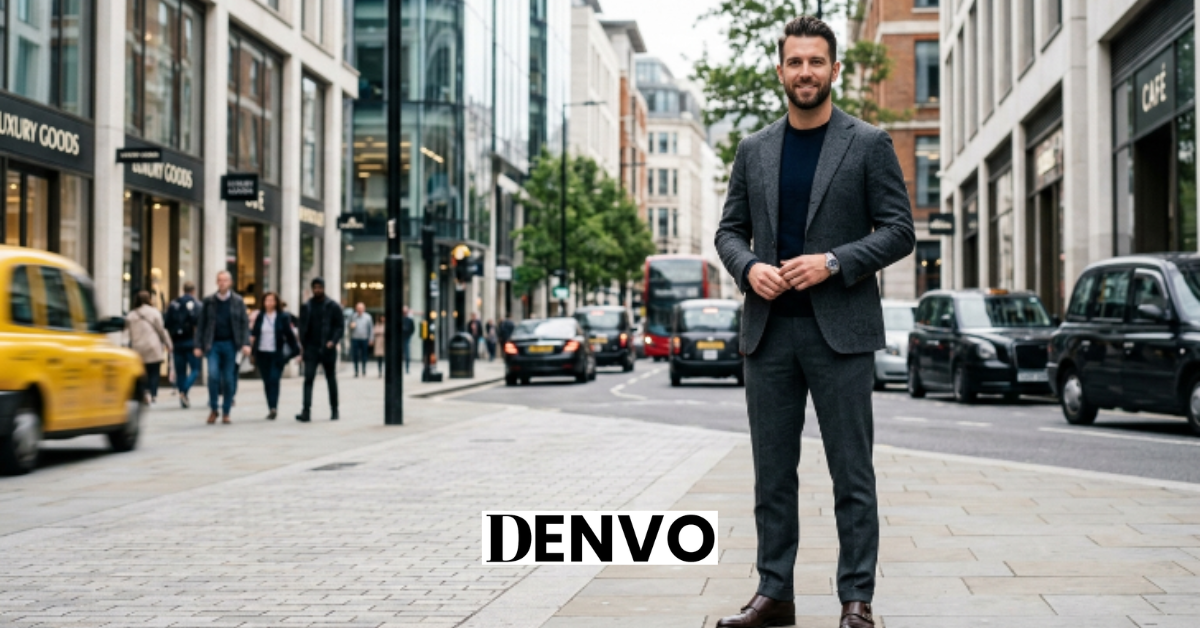
If you’re 6’2″ or taller, you already know the drill. You walk into a store, find something you love, try it on, and watch it betray you at the wrists or ankles. It’s not your body that’s the problem. It’s an industry that still designs for a 5’9″ average and calls anything bigger “the same shirt, just larger.” Over the years of dressing my own 6’4″ frame (and helping a few tall friends stop looking like they raided a middle schooler’s closet), I’ve figured out what actually moves the needle. Here’s what works.
Tall Man Fashion Starts With Length, Not Size
Most tall guys grab a size up when things feel short, and that’s exactly the wrong move. Going from a Large to an XL adds width across your chest and shoulders, not extra inches in your sleeve or torso. You end up boxy and still cropped — the worst combination.
What you actually need is a “tall” designation, which most major brands now offer separately: Large-Tall, XL-Tall, and so on. These cuts add length to the sleeves, body, and sometimes the collar stance without ballooning the shoulders. Uniqlo, Bonobos, and J.Crew all run solid tall lines, and their size charts list exact sleeve and body lengths, not just “S/M/L.” Measure your own arm length (shoulder to wrist, arm slightly bent) and body length (nape of neck to where you want the hem) once, write it down, and compare it against every chart before you buy. It’ll save you a dozen returns.
The Sleeve Rule Nobody Explains Properly
Your dress shirt sleeve should end right where your wrist meets your hand, with about a half-inch showing past your jacket cuff when your arms hang naturally. That’s it. That’s the whole rule, and almost nobody follows it because almost no off-the-rack shirt gets there for a 36-inch-plus arm.
Here’s the part that surprised me: even brands that advertise “tall” sizing often stop at a 35-inch sleeve, which leaves guys over 6’3″ still short by an inch or two. I learned this the hard way buying three “tall fit” shirts from the same retailer before realizing none of them cleared my wrist. The fix that actually worked was finding one tailor I trusted and having him add length to the cuff, which costs about $12 to $18 per shirt and takes ten minutes off the rack in-store. It’s cheaper than buying four shirts hoping one fits.
Proportion Matters More Than People Admit
A lot of tall guys overcorrect by wearing everything long and loose, thinking it balances their height. It doesn’t — it just adds visual bulk to an already large frame. The move that actually slims and lengthens your silhouette is a slightly tapered fit through the torso and leg, not extra room.
Think about it this way: a boxy XL-Tall shirt on a 6’5″ frame reads as “big man in a tent,” while a properly tapered Tall shirt reads as “tall man who dresses well.” The difference isn’t the size on the tag. It’s whether the fabric follows your actual shape or hides it. Slim-tall and athletic-tall cuts exist now specifically for this — they keep the added length but bring the width back in at the waist and cuff.
- Look for “slim tall” or “athletic tall” fits, not just “tall”
- Avoid anything labeled “relaxed” or “classic” tall — it usually means extra width, not just extra length
- Get shirts tapered at the sides if the tall cut still runs boxy on you
READ MORE: How to Put On Cufflinks Actually Works And Why Most Men Get It Wrong
Pants Are Where Most Guys Give Up Too Early
A 34-inch inseam is not tall-sized. It’s barely long enough for someone 5’11”. If you’re 6’2″ or up, you likely need a 36- to 38-inch inseam, and most mall brands cap out at 34, maybe 36 if you’re lucky.
This is where a lot of tall guys throw in the towel and just wear ankle-length pants as a “style choice.” I get it — I did the same thing for years, telling myself cropped trousers were intentional when really I just couldn’t find longer ones. Brands like Bonobos, American Tall, and Levi’s (in their 36/38 lengths) solve this directly. If your favorite pair still comes up short, a tailor can add up to two inches from a let-down hem, assuming there’s fabric folded inside — always check before you buy secondhand.
Layering Without Looking Like You Borrowed a Kid Sibling’s Jacket
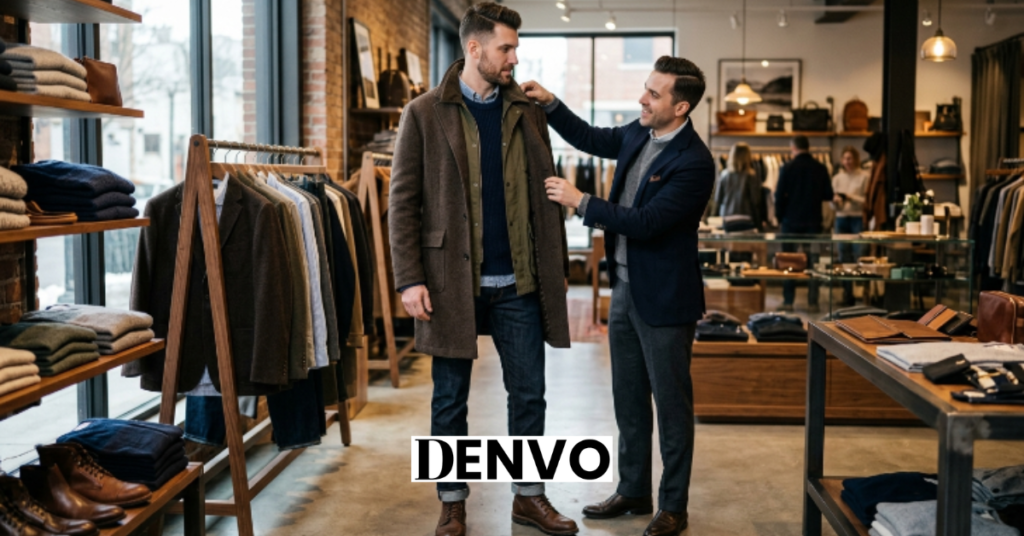
Blazers and jackets are brutal for tall guys because sleeve length, torso length, and shoulder width all have to line up at once — get one wrong and the whole piece looks off. The number one giveaway of an ill-fitting blazer isn’t the shoulders, though. It’s the sleeve stopping three inches above your wrist.
I’d argue the blazer is the single most worth-tailoring item in a tall man’s closet. Buy for shoulder fit first, since that’s the hardest and most expensive thing to alter, then have the sleeves, body length, and taper adjusted by a tailor. Expect to spend $60 to $100 on alterations for a blazer that originally cost $150 to $300 — and it will look custom-made once it’s done, because functionally, it is.
Building a Wardrobe: Where to Actually Spend Your Money
You don’t need every category perfectly tailored. You need the two or three pieces people see up close — shirts, blazers, and pants — to fit like they were made for you, and everything else can be a little more forgiving.
Here’s how I’d prioritize a budget if I were starting over:
- Dress shirts and button-downs: Buy tall-specific, tailor the cuffs if needed. This is what people notice first in professional settings.
- Blazers and jackets: Worth the alteration cost every time. A well-fitted blazer instantly reads as intentional style.
- Trousers and jeans: Buy long inseams from tall-specific brands rather than altering shorter ones — there’s rarely enough fabric to let down.
- T-shirts and casual basics: Slightly less critical since they’re more forgiving on length, but still check sleeve and body length against your measurements.
Practical Steps to Fix Your Wardrobe This Month
Start with measuring, not shopping. Grab a tape measure, note your sleeve length (shoulder seam to wrist), inseam (crotch to ankle bone), and torso length (nape of neck to hip), and keep those three numbers in your phone. Every future purchase gets checked against them before you click “buy.”
Next, audit your closet and pull anything with sleeves ending above your wrist bone or pants that show more than an inch of sock. Donate what genuinely doesn’t fit — don’t keep “maybe someday” pieces that never worked in the first place. Then build a short list of two or three tall-specific brands that consistently hit your measurements, and find one local tailor for the pieces that need small adjustments. That’s a complete system, and it costs less over a year than constantly buying and returning ill-fitting clothes.
FAQs
What brands are best for tall man fashion?
Bonobos, American Tall, Uniqlo, and J.Crew Tall all offer genuinely extended sizing with published sleeve and inseam measurements. Bonobos and American Tall skew toward guys 6’3″ and up, while Uniqlo and J.Crew work well for the 6’0″ to 6’4″ range.
Do I need a tailor even if I buy tall-sized clothing?
Often, yes, especially for blazers and dress shirts. Tall sizing solves length but doesn’t always account for individual proportions like arm length relative to torso, so small adjustments still make a noticeable difference.
How much taller do I need to be before “tall” sizing actually helps?
Most tall lines start becoming genuinely useful around 6’2″, though some brands extend usefully from 6’0″. Below that, regular “long” or “long and lean” fits in standard sizing usually cover the gap.
Is it more expensive to dress well as a tall guy?
Slightly, mostly due to tailoring costs, but it evens out because tall-specific pieces fit right the first time, cutting down on returns and wasted purchases. Budget an extra $50 to $150 a year for alterations on your key pieces.
Where should I start if my whole wardrobe feels wrong?
Start with measuring yourself accurately, then replace dress shirts and pants first since they cause the most visible fit problems. [LINK TO RELATED POST] has a deeper breakdown of measuring yourself correctly at home.
Conclusion
Dressing well as a tall guy isn’t about finding some secret brand nobody else knows about. It’s about knowing your actual measurements, shopping length-first instead of size-first, and putting your tailoring budget toward the two or three pieces that get seen up close. Once you build that system, shopping stops being a guessing game and starts being pretty quick.
What’s the worst fit fail you’ve had — sleeves, ankles, or something else entirely? Drop it in the comments, I guarantee you’re not alone.