

INTRODUCTION
If dinnertime with your toddler feels like a battle you keep losing, you’re not alone. Between picky eating phases, tiny appetites, and the pressure to pack in enough nutrients, finding good toddler meal ideas for 1 to 2 year old kids can feel exhausting.
The good news? Feeding a toddler doesn’t need to be complicated. At this age, your child is transitioning from purees to table foods, and they need small, frequent meals packed with nutrition—not perfection.
In this guide, you’ll find practical, kitchen-tested meal ideas for breakfast, lunch, dinner, and snacks, along with tips to handle picky eating and food safety basics every parent should know.\
Breakfast Ideas Toddlers Will Actually Eat
Mornings are chaotic, so breakfast needs to be quick but nourishing. At 1-2 years old, toddlers need foods that are soft, easy to grip, and not too sugary.
Try these toddler breakfast ideas:
- Mini banana pancakes – mash one banana, mix with one egg and a few tablespoons of oats, cook into small pancakes
- Soft scrambled eggs with cheese – a great source of protein and easy to chew
- Greek yogurt with mashed berries – packed with calcium and probiotics
- Oatmeal with cinnamon and soft fruit – warm, filling, and customizable
- Whole wheat toast fingers with avocado – healthy fats for brain development
Pro tip: Keep portions small. A toddler’s stomach is roughly the size of their fist, so overloading the plate often backfires. Offer small amounts and let them ask for more.
One mom I know struggled for weeks until she switched to serving food in muffin tins—each compartment held a tiny portion of something different. Her son suddenly became more interested because the meal felt like exploration, not obligation.
Lunch Ideas for Busy Days
Lunch is often the meal parents stress about most, especially if your toddler is in daycare or you’re juggling work. The key is balance: a protein, a carb, and something colorful.
Easy toddler lunch ideas include:
- Mini quesadillas – shredded cheese and black beans in a soft tortilla, cut into strips
- Pasta with hidden veggie sauce – blend carrots or zucchini into tomato sauce
- Soft-cooked chicken strips with sweet potato mash
- Veggie and cheese muffins – bake in mini muffin tins for easy grab-and-go portions
- Rice and lentil mash – soft, mild, and protein-rich
These meals work because they’re soft enough to chew safely but still introduce new textures gradually. Avoid hard raw vegetables, whole grapes, or popcorn at this age due to choking risk.
Dinner Ideas That Don’t Require a Separate Meal
You don’t need to cook two different dinners every night. Many family meals can be adapted for toddlers with small tweaks.
Try these dinner ideas for toddlers:
- Shepherd’s pie with mashed sweet potato topping
- Soft fish (like salmon) flaked with steamed peas
- Mini meatballs in mild tomato sauce over small pasta shapes
- Stir-fried soft vegetables with rice and shredded chicken
- Baked sweet potato fries with a side of yogurt dip
Important reminder: Toddlers don’t need added salt or strong spices. Season your portion separately, then plate theirs before adding extras.
Healthy Snacks Between Meals
Toddlers have small stomachs and high energy needs, so snacks matter just as much as main meals. Aim for 2-3 snacks daily between main meals.
Good options include:
- Cheese cubes and soft fruit slices
- Hummus with soft-steamed carrot sticks
- Whole grain crackers with cream cheese
- Smoothies with spinach, banana, and yogurt
- Homemade oat bars (no added sugar)
Avoid: whole nuts, hard candy, and large chunks of raw fruit or vegetables, as these are common choking hazards for children under 3.
Handling Picky Eating Without the Stress
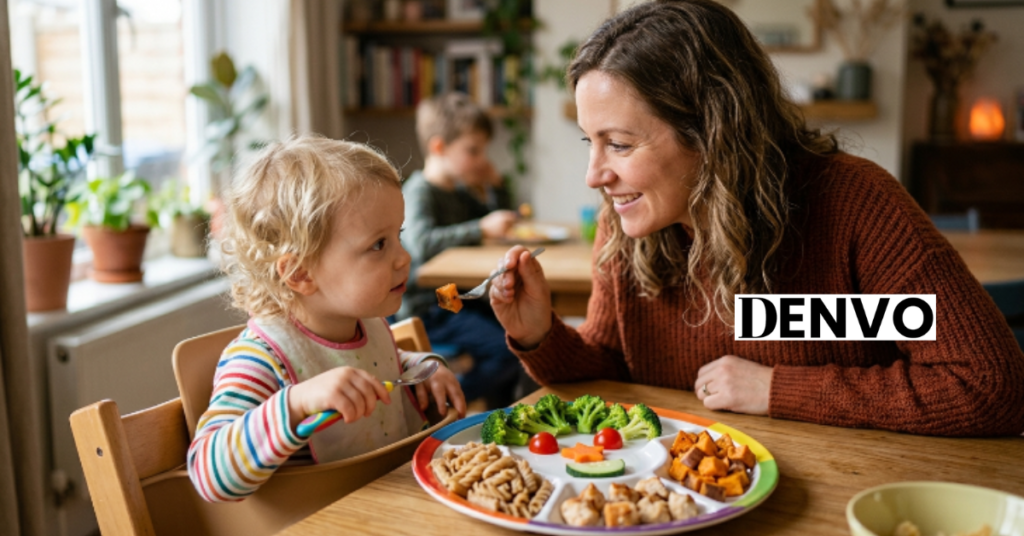
Picky eating is developmentally normal between 1-2 years old. It’s not a reflection of your parenting—it’s a phase most toddlers go through.
Strategies that actually help:
- Offer the same food multiple times. Research shows it can take 8-10 exposures before a toddler accepts a new food.
- Pair new foods with familiar favorites on the same plate.
- Let them help. Toddlers who assist with simple food prep (like stirring or pouring) are often more willing to try it.
- Avoid pressure or bribery. This can create negative associations with mealtime.
Consistency matters more than variety in the short term. A toddler who eats the same five healthy meals on repeat is doing just fine.
CONCLUSION
Feeding a toddler between 1 and 2 years old doesn’t have to mean stress, mess, or mealtime battles. With the right mix of simple toddler meal ideas—from soft breakfasts to balanced dinners and smart snacks—you can build a routine that works for your family.
Remember: progress over perfection. Some days will go smoothly, others won’t, and that’s completely normal. Focus on offering variety, staying consistent, and keeping meals stress-free for both you and your toddler.
Try rotating a few of these recipes into your weekly meal plan and see what sticks. Your toddler’s preferences may surprise you.
FAQs
What are the best toddler meal ideas for 1 to 2 year old kids who are picky eaters?
Start with foods that combine something familiar with something new, like pairing a new vegetable with a pasta shape your toddler already loves. Soft textures like mashed sweet potatoes, scrambled eggs, and small pasta shapes tend to be well accepted. Avoid forcing or bribing; instead, offer the same rejected food again in a few days without comment. Many toddlers need repeated, pressure-free exposure before accepting new flavors. Consistency in offering, not consistency in eating, is the goal at this stage.
How many meals and snacks should a 1 to 2 year old eat per day?
Most toddlers do well with three small meals and two to three snacks daily. Their stomachs are small, so frequent, modest portions work better than three large meals. A general guideline is offering about one tablespoon of each food per year of age, though appetite varies daily. Don’t worry if intake seems inconsistent from day to day—toddlers regulate their hunger naturally. Focus on offering balanced options at each sitting rather than monitoring exact amounts eaten.
What foods should I avoid for toddlers aged 1 to 2?
Avoid choking hazards like whole grapes, nuts, popcorn, hard candy, and large chunks of raw vegetables. Limit added sugar, salt, and honey (honey should be avoided entirely until after age 1 due to botulism risk). Processed snacks high in sodium aren’t ideal as regular staples. Always cut round foods like grapes or cherry tomatoes into quarters. When introducing new foods, watch for allergic reactions, especially with common allergens like eggs, dairy, and peanuts.
How can I make toddler meals more nutritious without extra effort?
Simple swaps make a big difference: use whole grain pasta instead of white, blend vegetables into sauces, and choose plain yogurt over sugary varieties. Batch-cooking proteins like shredded chicken or lentils on weekends saves time during the week. Adding healthy fats like avocado or olive oil supports brain development at this age. Small, consistent upgrades to familiar meals are more sustainable than overhauling your toddler’s entire diet at once.
Is it normal for toddlers to refuse vegetables completely?
Yes, this is extremely common between ages 1 and 2, often called the “picky eating phase.” Toddlers are developing food preferences and may reject foods based on texture, color, or simply asserting independence. Continue offering vegetables alongside accepted foods without pressure. Hiding small amounts in sauces or muffins can help increase exposure while you continue offering them visibly too. Most children gradually expand their food acceptance with patience and repeated, low-pressure exposure.
How do I transition my toddler from purees to solid table foods?
Start by introducing soft, easy-to-chew table foods alongside familiar purees, gradually reducing puree portions over several weeks. Offer foods cut into toddler-safe sizes, like small strips or soft chunks, to encourage self-feeding and chewing skills. Mixing a small amount of puree texture into mashed table food can ease the transition. Most toddlers fully transition to table foods by 18 months, though timelines vary. If your toddler resists all solids past 18 months, consult your pediatrician.