

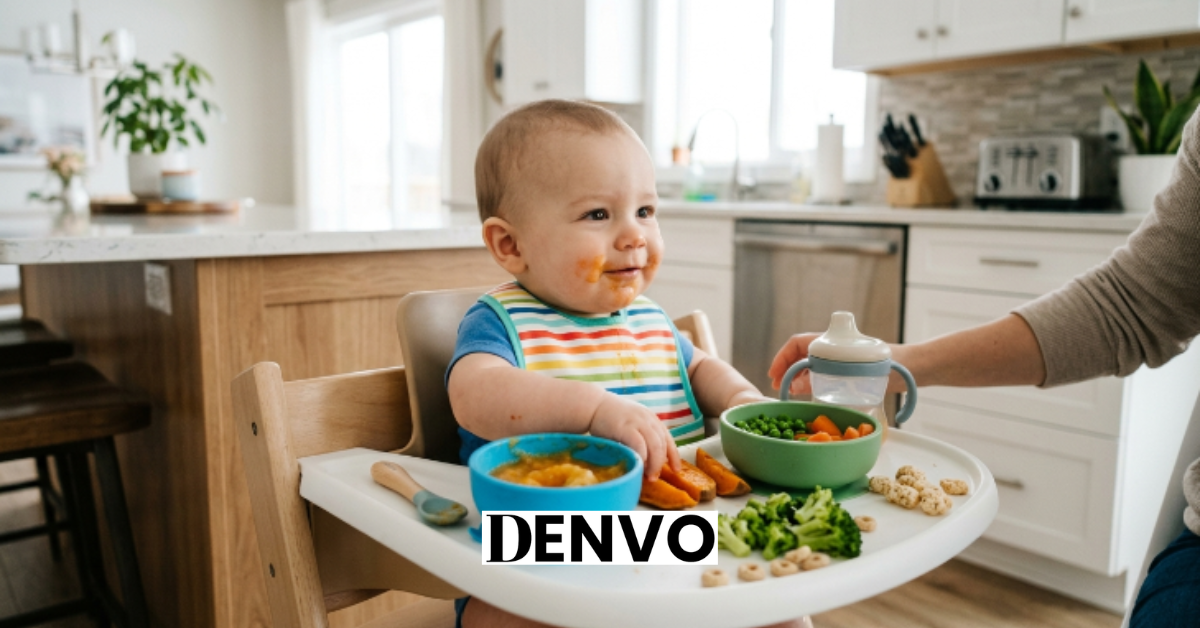
Feeding an 8-month-old can feel like a guessing game. One day they gobble up sweet potatoes, the next day they throw the spoon across the room. You’re not alone.
By 8 months, your baby needs more than mushy purees — they need a real baby food schedule that balances milk, solids, and new textures. This guide breaks down exactly what to feed your baby, when to feed them, and how much, so you can stop second-guessing every meal.
By the end, you’ll have a simple, flexible routine you can start using today.
Why Your 8-Month-Old Needs a Structured Feeding Schedule
At this age, babies are shifting from trying food to actually relying on solids for nutrition. Breast milk or formula is still important, but it’s no longer the only source of calories and iron your baby needs.
A predictable baby food schedule for an 8 month old helps in several ways:
- It supports healthy growth by ensuring your baby gets enough iron, protein, and calories
- It reduces mealtime stress because everyone knows what to expect
- It helps establish sleep routines, since hungry babies sleep poorly
- It introduces variety, lowering the risk of picky eating later
Example: Many parents notice that once they switch from random snack-feeding to a set schedule with three meals and two milk feeds, naps and night sleep improve within a week or two. This isn’t a coincidence — a full, satisfied tummy at consistent times helps regulate a baby’s internal clock.
At 8 months, most babies are ready for three solid meals a day, plus milk feeds spaced throughout. They’re also ready to try soft finger foods, not just purees, which builds chewing skills and independence.
Keep in mind every baby develops differently. Some 8-month-olds eat three full meals eagerly; others still prefer mostly milk with small solid tastes. Watch your baby’s cues, not just the clock.
Sample Baby Food Schedule for 8 Months Old (Hour-by-Hour)
Here’s a realistic, easy-to-follow 8 month old feeding schedule you can adapt to your family’s routine:
- 7:00 AM – Wake up, breast milk or formula (6-8 oz)
- 8:00 AM – Breakfast: iron-fortified cereal mixed with fruit puree, or mashed banana with yogurt
- 10:00 AM – Morning nap
- 11:30 AM – Lunch: a protein (like pureed chicken or lentils) + a vegetable + soft finger foods (steamed carrot sticks)
- 12:30 PM – Breast milk or formula (6-8 oz)
- 1:00 PM – Afternoon nap
- 3:00 PM – Small snack: soft fruit pieces or a teething biscuit
- 5:30 PM – Dinner: a grain (soft rice or pasta) + vegetable + small protein
- 6:30 PM – Breast milk or formula (6-8 oz)
- 7:30 PM – Bedtime routine, final milk feed if needed
This schedule isn’t a rulebook — it’s a starting template. Some babies need an extra milk feed; others may skip the afternoon snack entirely.
Pro tip: Try to offer solids about 30-60 minutes after a nap, when your baby is alert and hungry, not overtired or cranky.
What Foods to Include in Your 8-Month-Old’s Diet
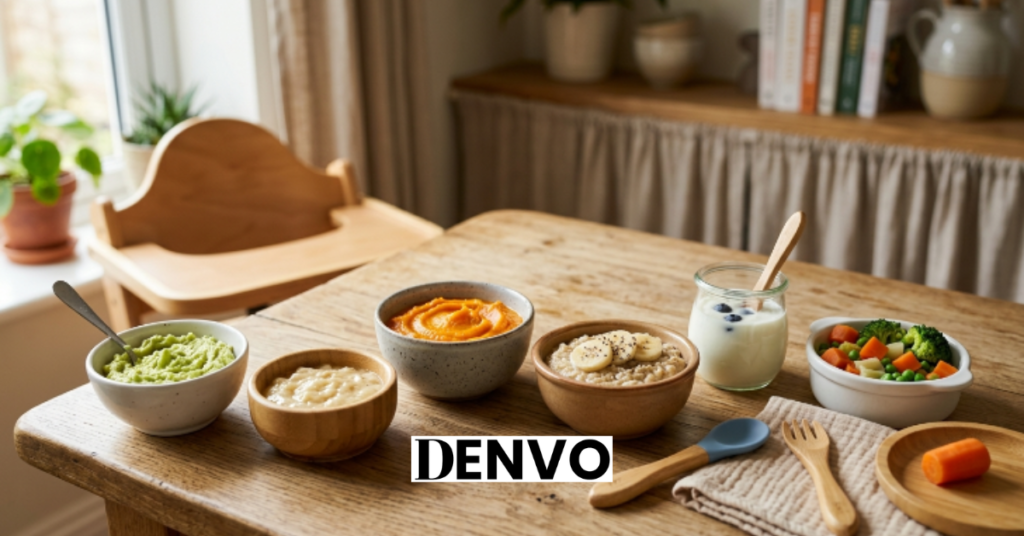
By 8 months, your baby’s menu should be expanding well beyond single-ingredient purees. Here’s what to focus on:
Proteins (Crucial for Growth)
- Pureed or finely shredded chicken, turkey, or fish (boneless, no added salt)
- Mashed lentils, chickpeas, or beans
- Scrambled egg (if no allergies have been flagged by your pediatrician)
Fruits and Vegetables
- Soft steamed vegetables cut into finger-sized pieces (sweet potato, carrot, zucchini)
- Mashed or soft fruit pieces (banana, avocado, ripe pear)
Grains
- Iron-fortified infant cereal
- Soft rice, oatmeal, or small pasta shapes
Dairy (in small amounts)
- Plain whole-milk yogurt
- Small amounts of mild cheese
Foods to avoid at this stage: honey, whole nuts, choking-hazard foods like whole grapes, raw hard vegetables, and anything with added sugar or salt.
Real example: A common 8-month lunch plate looks like this — a few cubes of soft sweet potato, a spoonful of mashed lentils, and a couple of avocado slices for the baby to pick up themselves. This combination covers iron, healthy fat, and fiber in one sitting.
Introducing a wide variety of flavors and textures now genuinely helps reduce picky eating down the road, so don’t be afraid to offer something new each week.
Portion Sizes: How Much Should an 8-Month-Old Eat?
Portion confusion is one of the biggest stressors for new parents. Here’s a simple breakdown:
- Breast milk or formula: Around 24-32 oz total per day, spread across 3-4 feeds
- Solid meals: Roughly 2-4 tablespoons per food item, per meal (this will vary widely)
- Snacks: A small handful of soft finger foods
Important: Babies are excellent at self-regulating intake. If your baby turns their head away, closes their mouth, or pushes the spoon back, that’s a clear “I’m full” signal — don’t force extra bites.
It’s also normal for appetite to fluctuate day to day. Growth spurts, teething, or minor illness can all reduce or increase how much your baby wants to eat. Don’t panic over one off day; look at intake across a full week instead.
A practical tip many parents find useful: offer slightly more food than you expect them to eat, then let your baby decide the amount. This avoids both overfeeding and the frustration of running out mid-meal.
Common Mistakes Parents Make With an 8-Month Feeding Schedule
Even with the best intentions, parents often run into a few avoidable pitfalls:
- Sticking too rigidly to the clock instead of watching hunger cues
- Skipping finger foods out of fear of choking, which delays important motor skill development
- Offering too much juice or sweet snacks, which can reduce appetite for nutrient-dense meals
- Not introducing allergenic foods early enough (current guidance actually supports early, careful introduction of common allergens like peanut butter and egg, under pediatrician guidance)
- Comparing schedules with other babies instead of adjusting based on your own child’s signals
Case in point: A parent following a strict three-meals-a-day schedule found their baby crying from hunger an hour before “lunch time.” Once they shifted the schedule slightly earlier and added a small mid-morning snack, the meltdowns stopped completely.
Flexibility is key. Use the schedule above as scaffolding, not a strict law.
Conclusion
Building a reliable baby food schedule for an 8-month-old doesn’t have to be complicated. Focus on offering three balanced meals, two to three milk feeds, and a variety of textures including soft finger foods. Pay attention to your baby’s hunger and fullness cues rather than chasing a perfect timetable.
Every baby is different, so treat this guide as a flexible starting point you can adjust as your little one grows. With a bit of consistency and patience, mealtimes will start to feel a lot less stressful — for both of you.
FAQs
How many meals should an 8-month-old eat per day?
Most 8-month-olds are ready for three solid meals a day, along with one or two small snacks if needed. This should be paired with continued breast milk or formula feeds, typically totaling 24-32 oz daily. Some babies may only manage two solid meals comfortably at first, and that’s completely normal — gradually build up to three as their appetite and interest grow.
Should I follow a strict feeding schedule or feed on demand at 8 months?
A loose schedule works best at this age. Structure helps with routine, but rigidly following clock times can ignore real hunger cues. Aim for consistent meal windows (like breakfast around 8 AM, lunch around noon) while staying flexible if your baby seems hungry earlier or isn’t interested at the “usual” time.
Can my 8-month-old eat finger foods?
Yes, and they should. By 8 months, most babies have developed the pincer grasp needed to pick up small, soft pieces of food. Offer soft, steamed vegetables, ripe fruit pieces, or small pasta shapes cut into manageable sizes. This builds chewing skills and hand-eye coordination, both important for self-feeding later.
How much milk does an 8-month-old need alongside solids?
Even with three solid meals, breast milk or formula should still total around 24-32 oz per day. Milk remains the primary source of calories and key nutrients at this stage, so don’t reduce milk feeds too quickly just because solids are increasing.
What if my baby refuses certain foods on the schedule?
Food refusal is extremely common and usually temporary. Keep offering the rejected food alongside familiar favorites without pressure — research suggests it can take 8-10 exposures before a baby accepts a new taste. Avoid forcing bites, as this can create negative associations with mealtime.
Is it normal for an 8-month-old’s appetite to change daily?
Yes, completely normal. Growth spurts, teething discomfort, and minor illnesses can all cause appetite to fluctuate day to day. Instead of judging intake meal by meal, look at your baby’s eating pattern across a full week to get a more accurate picture of their nutrition.