
Introduction
Waking up with your eyebrows, eyeliner, or lip color already “done” sounds like a dream — and that’s exactly what permanent makeup, also called cosmetic tattoo, promises to deliver.
But before you book an appointment, you probably have questions. Does it hurt? How long does it actually last? Is it safe?
If you’ve been Googling “permanent makeup cosmetic tattoo” and getting more confused with every article, you’re not alone. This guide breaks it down in plain English — no jargon, no scare tactics, just what you need to know to make a confident decision.
By the end, you’ll understand exactly what happens during the procedure, what it costs, how to pick a safe technician, and how to care for your results.
What Is Permanent Makeup (Cosmetic Tattoo), Exactly?
Permanent makeup is a form of cosmetic tattoo that deposits pigment into the upper layers of your skin to mimic the look of makeup — think filled-in eyebrows, defined eyeliner, or tinted lips.
Unlike a traditional body tattoo, permanent makeup uses a finer needle and lighter pigment application, since the goal is a soft, natural look rather than bold, saturated color.
How It’s Different From a Regular Tattoo
- Depth: Cosmetic tattoo pigment sits in the upper dermis, while body tattoos go deeper.
- Fading: Because it’s shallower, permanent makeup fades over 1–3 years, unlike body tattoos that are truly permanent.
- Purpose: It’s designed to enhance facial features, not create standalone art.
Common Types of Permanent Makeup
- Microblading / powder brows — fills in sparse or over-plucked eyebrows
- Permanent eyeliner — adds definition along the lash line
- Lip blushing — adds a soft, natural tint and defines the lip border
- Scalp micropigmentation — creates the look of fuller hair for thinning areas
Real example: Many people with alopecia or chemotherapy-related hair loss use eyebrow microblading to restore a natural brow shape when hair won’t grow back on its own. This is one of the most common — and genuinely life-improving — uses of cosmetic tattoo.
The bottom line: permanent makeup isn’t one single procedure. It’s a category, and each type has its own technique, healing time, and price point.
Does Permanent Makeup Hurt? What to Expect During the Procedure
This is the question almost everyone asks first — and it’s a fair one.
Most reputable studios apply a topical numbing cream before starting, so discomfort is usually described as mild scratching or pressure rather than sharp pain.
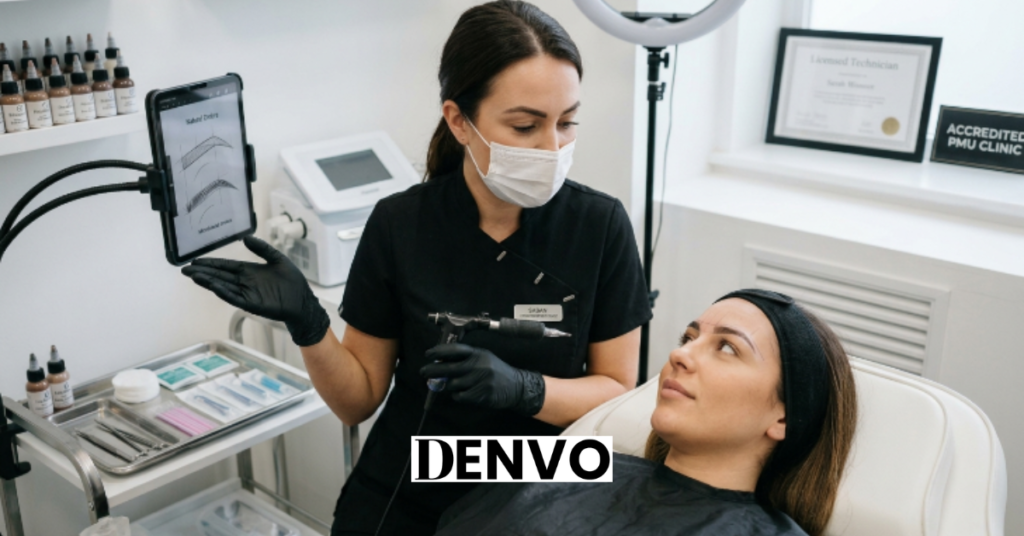
What Actually Happens Step by Step
- Consultation — the technician discusses your desired shape, color, and expectations.
- Mapping — for brows especially, the shape is drawn on first so you can approve it before any pigment touches your skin.
- Numbing — a topical anesthetic is applied and left to sit for 15–30 minutes.
- Pigment application — using a handheld tool or machine, pigment is deposited in fine strokes or shading patterns.
- Touch-up appointment — booked 4–8 weeks later, since pigment always fades slightly during initial healing.
Pain Level by Procedure
- Eyebrows: Generally the most tolerable — often described as a 2–3 out of 10.
- Eyeliner: Slightly more sensitive due to the thin skin near the eyes.
- Lips: Can be the most uncomfortable area, though numbing cream helps significantly.
Tip: Avoid caffeine, alcohol, and blood-thinning medication (like ibuprofen) for 24–48 hours before your appointment. Thinner blood can increase bleeding and pigment loss during healing.
Pain tolerance varies person to person, but most clients report it’s far more manageable than they expected.
How Much Does Permanent Makeup Cost — and How Long Does It Last?
Cost is often the deciding factor for people considering cosmetic tattoo, and prices vary widely depending on location, technician experience, and procedure type.
Average Price Ranges (US-Based)
- Microblading/powder brows: $300–$800
- Permanent eyeliner: $300–$600
- Lip blushing: $400–$800
- Scalp micropigmentation: $600–$2,000+ (priced by session and area covered)
Most studios include one touch-up session within the first two months in the original price — always confirm this before booking.
How Long Results Actually Last
- Eyebrows: 1–3 years, depending on skin type and sun exposure
- Eyeliner: 2–5 years (tends to fade slower than brows)
- Lips: 1–2 years, since lips regenerate skin cells faster
Why it fades: Your skin naturally exfoliates and regenerates over time, gradually pushing pigment particles out or breaking them down. Oily skin types tend to see faster fading than dry or normal skin.
Budget Reality Check
A cheap price often signals inexperience or unsafe practices — this is not the category to shop for the lowest bidder. A botched cosmetic tattoo (uneven brows, wrong color, migrated ink) can cost far more to fix or remove than the original procedure would have cost done right.
Practical tip: Ask to see the technician’s healed results (not just fresh, swollen photos) before booking. Healed photos show you the true, honest outcome.
How to Choose a Safe, Qualified Technician
This step matters more than any other decision in the process — an experienced technician is the difference between a natural, flattering result and months of frustration.
Questions to Ask Before Booking
- Are you licensed and certified in your state/country for permanent makeup?
- What pigments do you use, and are they safe for my skin tone?
- Can I see a portfolio of healed results, not just day-one photos?
- What’s your sterilization process for needles and equipment?
- What happens if I’m unhappy with the results — do you offer corrections?
Red Flags to Avoid
- No visible license or certification displayed
- Reused needles or unclear sterilization practices
- Pressure to book immediately without a consultation
- Portfolio that only shows fresh, unhealed photos (these always look more dramatic than the final result)
- Prices dramatically below the local market average
Real example: A common cautionary story in the beauty industry involves clients who booked a “budget” microblading deal, only to end up with brows that turned blue-gray as they healed — a sign of low-quality pigment reacting poorly under the skin. Correcting this required laser tattoo removal sessions before starting over, costing significantly more than doing it right the first time.
Take your time here. A good technician will never rush your consultation or discourage you from asking questions.
Aftercare: How to Protect Your Investment
Healing correctly is just as important as the procedure itself — poor aftercare can cause patchy fading, infection, or color distortion.
The First 7–10 Days
- Keep it dry — avoid excessive sweating, swimming, and steamy showers.
- Don’t pick or scratch scabbing, even if it itches. Picking pulls out pigment unevenly.
- Apply the aftercare ointment your technician recommends, in a thin layer only.
- Avoid makeup directly on the treated area until it’s fully healed.
Long-Term Care for Lasting Results
- Use SPF daily — UV exposure is one of the biggest causes of premature fading.
- Avoid harsh exfoliants or retinols directly on the pigmented area.
- Book your touch-up appointment on schedule, since this locks in even, long-lasting color.
Bold reminder: The healing process typically looks worse before it looks better — color often appears darker in the first few days, then softens as it heals over 2–4 weeks. This is normal, not a sign something went wrong.
Conclusion
Permanent makeup (cosmetic tattoo) can genuinely simplify your routine and boost your confidence — but it’s a decision worth researching properly, not rushing into.
To recap: understand which type suits your needs, expect mild discomfort rather than serious pain, budget realistically, and prioritize a licensed, experienced technician over a bargain price. Aftercare is just as important as the procedure itself for long-lasting, natural results.
If you’re ready to move forward, start by booking consultations with two or three studios, compare their healed-result portfolios, and ask plenty of questions. A little homework now saves you months of correction work later.
FAQs
Is permanent makeup actually permanent?
Not entirely — despite the name, cosmetic tattoo pigment fades over time because it sits in the upper layers of skin rather than as deep as a traditional body tattoo. Most people see noticeable fading within 1–3 years depending on the area, skin type, and sun exposure. This is actually a benefit for many people, since it allows you to adjust shape or color as trends or preferences change. Regular touch-ups every 1–2 years keep the color and shape looking fresh.
Can permanent makeup be removed if I don’t like it?
Yes, though removal is harder than the original application. Options include laser tattoo removal, saline removal, or having a skilled technician camouflage/correct the color. Removal typically takes multiple sessions spaced weeks apart. This is another reason choosing an experienced technician upfront is so important — it minimizes the chance you’ll need correction work at all.
Who should avoid getting permanent makeup?
People who are pregnant or breastfeeding, have active skin infections, keloid-prone skin, or certain autoimmune conditions are generally advised to wait or avoid it. Always disclose your full medical history during your consultation, since some medications (like blood thinners or Accutane) affect healing. A responsible technician will ask about this before starting and may recommend medical clearance if needed.
How is microblading different from powder brows?
Microblading uses a handheld tool to create fine, hair-like strokes for a natural look, while powder brows use a machine to create a soft, filled-in, makeup-like effect (similar to brow pencil or powder). Microblading tends to suit dry-to-normal skin better, while powder brows often last longer on oily skin. Many technicians now offer a “combo brow” that blends both techniques.
How painful is a permanent makeup procedure compared to a regular tattoo?
Most clients describe cosmetic tattoo procedures as noticeably less painful than a traditional body tattoo, largely due to topical numbing cream and shorter session times. Eyebrows tend to be the most tolerable, while lips and eyeliner can be slightly more sensitive due to thinner skin. Pain tolerance is individual, so what feels mild to one person may feel more intense to another.
How soon can I wear regular makeup after the procedure?
Most technicians recommend avoiding makeup directly on the treated area for 7–10 days, or until the skin has fully healed and scabbing has naturally resolved. Applying makeup too early can introduce bacteria, cause infection, or pull out pigment during healing. You can typically resume full makeup routines once your technician confirms the area is completely healed.