
You’re rushing out the door, coffee in hand, when your sleeve brushes against your cheek. There it is — a smudge of foundation right on your favorite blouse.
If you’ve ever stared down a makeup stain wondering whether to panic or Google it, you’re not alone. Makeup stains are some of the trickiest to remove because they combine oil, pigment, and wax all in one mess.
The good news? You don’t need a trip to the dry cleaner every time. In this guide, you’ll learn exactly how to remove makeup stains from different fabrics and surfaces using things you probably already have at home — plus what not to do, because some “hacks” actually make stains worse.
Let’s get that stain out before it sets in for good.
Why Makeup Stains Are So Hard to Remove
Before you grab a random cleaning product, it helps to understand why makeup stains behave differently from, say, a coffee spill.
Most makeup products — foundation, concealer, lipstick, mascara — are made with a mix of oils, waxes, and pigments. Each of these needs a different removal approach:
- Oils and waxes repel water, so plain water alone won’t lift them.
- Pigments (the color) can bind to fabric fibers, especially on light-colored clothing.
- Heat — like a dryer or iron — can literally “cook” the stain into the fabric, making it permanent.
This is why the golden rule of stain removal applies here more than anywhere: treat it before it dries, and never apply heat to an unset stain.
The Type of Makeup Matters
Not all makeup stains are created equal:
- Liquid foundation and concealer — oily, spreads easily, needs a degreaser.
- Lipstick and lip liner — waxy and heavily pigmented, needs solvent-based pretreatment.
- Powder products (blush, eyeshadow) — surprisingly easier, since powders sit on top of fibers rather than soaking in.
- Mascara — waterproof formulas are the hardest since they’re designed to resist moisture.
Knowing which category your stain falls into will save you time and prevent you from using the wrong method.
How to Remove Makeup Stains From Clothes
This is the most common scenario, so let’s break it down step by step.
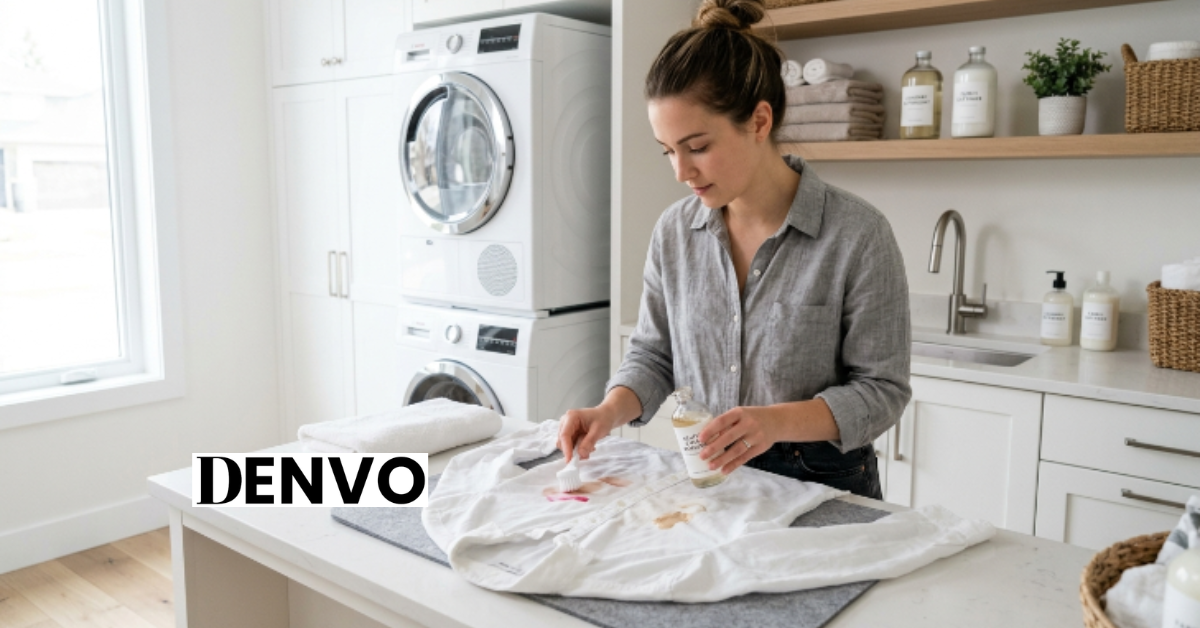
Step 1: Scrape, Don’t Rub
If there’s excess product, gently scrape it off with a spoon or dull knife. Rubbing spreads the stain deeper into the fibers — always scrape from the outside in.
Step 2: Apply a Pretreatment
For oily stains (foundation, concealer, lipstick):
- Apply a small amount of dish soap (like Dawn) directly to the stain — it’s designed to cut grease.
- Let it sit for 5–10 minutes.
- Gently work it in with a soft toothbrush.
For powder-based stains (eyeshadow, blush):
- Shake or brush off excess powder first.
- Dab — don’t rub — with a slightly damp cloth.
Step 3: Wash With Cold Water
Always use cold water, never hot. Hot water sets protein and oil-based stains permanently. Wash the item as usual, but check the stain before putting it in the dryer.
Step 4: Check Before Drying
This step gets skipped constantly, and it’s the reason stains become permanent. If any trace of the stain remains after washing, repeat the pretreatment — do not dry the garment yet.
Real example: A reader once shared that she used a stain-remover pen on a foundation smudge, then dried her blouse without checking. The heat set the oil residue permanently, turning a light stain into a faint but unremovable mark. A second wash before drying would have solved it completely.
How to Remove Makeup Stains From Carpet and Upholstery
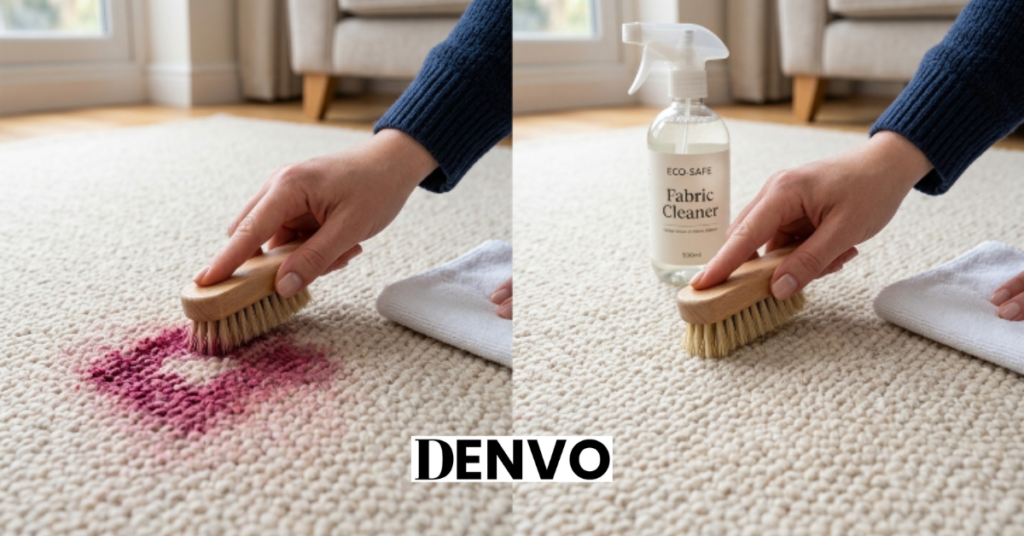
Fabric on furniture or flooring needs a gentler approach since you can’t just throw it in the wash.
For Fresh Stains
- Blot (don’t rub) with a clean, dry cloth to absorb as much product as possible.
- Mix one tablespoon of dish soap with two cups of warm water.
- Dab the solution onto the stain using a clean cloth, working from the outer edge inward.
- Blot with a dry towel to lift moisture and repeat until the stain fades.
For Dried or Set-In Stains
- Use a rubbing alcohol solution (mix equal parts alcohol and water) for oil-based makeup like foundation or lipstick.
- Test on a hidden area first — some fabrics and dyes react poorly to alcohol.
- Apply with a cotton swab, then blot with a damp cloth to rinse.
Pro tip: Never soak carpet or upholstery. Excess moisture can seep into the padding underneath and cause mold or mildew — a much bigger problem than the original stain.
Natural and Household Remedies That Actually Work
If you don’t have specialty stain removers on hand, several everyday items double as effective treatments.
- Baking soda paste — mix with water to form a paste; great for absorbing oily foundation stains before washing.
- White vinegar — effective for lipstick stains; apply directly, let sit for 10 minutes, then wash.
- Shaving cream — surprisingly good for lipstick; the foam breaks down waxy pigments.
- Cornstarch or talcum powder — sprinkle on fresh, oily stains to absorb excess product before it sets.
These options are budget-friendly and reduce the need for harsh chemicals, especially useful for delicate or sensitive fabrics like silk.
READ THIS: What are the best makeup tutorials, tips, trends and reviews for 2026?
What to Avoid
- Bleach on colored fabrics — it can cause discoloration rather than removing the stain.
- Hot water on any unset stain — it locks pigment into fibers.
- Excessive scrubbing — this can damage fabric weave and push the stain deeper.
Removing Makeup Stains From Specific Fabrics
Different fabrics react differently, so a one-size-fits-all approach doesn’t always work.
Delicate Fabrics (Silk, Wool, Lace)
- Avoid dish soap or alcohol-based treatments — they can damage fibers.
- Use a gentle enzyme-based stain remover made for delicate fabrics.
- When in doubt, take it to a professional cleaner rather than risk ruining the garment.
Denim and Cotton
- These are the most forgiving fabrics.
- Dish soap and a soft brush handle most foundation and lipstick stains well.
- Cotton can tolerate slightly warmer (not hot) water if the stain persists.
Synthetic Fabrics (Polyester, Nylon)
- These fabrics resist staining better since they’re less absorbent.
- However, oil-based makeup can leave a greasy shadow even after washing.
- A pretreatment with dish soap, followed by a full wash cycle, usually resolves this.
Case in point: Many workwear blazers are polyester blends. A common mistake is using strong stain removers meant for cotton, which can leave a bleached patch. Testing on an inside seam first prevents this.
Conclusion
Makeup stains feel stressful in the moment, but most are fixable if you act quickly and use the right method for the fabric and product type. Remember the key rules: scrape before you treat, use cold water, avoid heat until the stain is gone, and always test new products on a hidden area first.
Whether it’s a foundation smudge on a blouse or a lipstick mark on the carpet, you now have a step-by-step plan to tackle it without panicking or reaching for the dry cleaner every time.
Bookmark this guide so it’s ready the next time makeup meets fabric unexpectedly — because it will happen again.
FAQs
What is the fastest way to remove a fresh makeup stain?
Act within the first few minutes for the best results. Blot (don’t rub) excess product with a cloth, then apply a small amount of dish soap directly to the stain and let it sit for 5–10 minutes before washing in cold water. Speed matters most with oil-based products like foundation, since they start bonding with fabric fibers quickly. Avoid using hot water or a hair dryer to “speed up” the process — heat sets the stain rather than removing it. If you’re not near a washing machine, a damp cloth with a bit of soap can hold the stain off until you get home.
Does hairspray really remove makeup stains?
This is a popular myth, but it’s outdated and often inaccurate for modern fabrics. Older hairspray formulas contained higher alcohol content, which sometimes helped break down pigment. Most modern hairsprays contain oils and conditioning agents that can actually make the stain worse. A better alternative is rubbing alcohol mixed with water, which offers similar solvent power without the added residue. Always test on a hidden area first, since alcohol can affect certain dyes and fabrics.
Can toothpaste remove makeup stains?
Toothpaste is sometimes suggested for lipstick stains because of its mild abrasive texture, but results are inconsistent. It can help with fresh, light stains on sturdy fabrics like cotton, but it’s not reliable for oil-based foundation stains or delicate materials. Baking soda paste or dish soap tends to be more effective and predictable. If you try toothpaste, use a plain white (non-gel, non-whitening) formula and test it on a hidden area first.
How do you remove old, set-in makeup stains?
Set-in stains need a stronger pretreatment since the pigment has bonded with the fabric. Soak the item in a mixture of warm water and enzyme-based detergent for at least 30 minutes before washing. For stubborn spots, apply a small amount of rubbing alcohol with a cotton swab, then wash as usual. Set-in stains may take two or three treatment cycles to fully disappear, so patience is key — and avoid drying the item until the stain is completely gone.
Is it safe to use makeup remover to treat stains on clothes?
Yes, in many cases makeup remover — especially micellar water or oil-based cleansers — can help break down foundation and mascara stains, since it’s designed to dissolve the same ingredients. Apply a small amount to a cotton pad and dab the stain before washing normally. This works especially well for waterproof mascara stains, which resist plain soap and water. As always, test on an inconspicuous area first, particularly with colored or delicate fabrics.
How do you get lipstick stains out of white clothing?
White fabric shows lipstick stains more clearly, but the removal process is the same — just skip the bleach. Apply white vinegar or shaving cream directly to the stain, let it sit for 10 minutes, then gently work it in with a soft toothbrush before washing in cold water. Avoid bleach even on white fabric, since it can react with the pigment and set an orange or yellow tint instead of removing the color. If the stain persists after one wash, repeat the treatment rather than drying the garment.