

Introduction
You’ve typed “best cocido gallego near me” into Google more than once, and you keep landing on the same three tapas bars that serve everything except cocido. That’s not a coincidence — and it’s not your fault either.
Cocido gallego is one of Spain’s heartiest, most soul-warming dishes, but it’s also one of the hardest to find outside Galicia, its home region in northwest Spain. Unlike paella or patatas bravas, it rarely makes it onto a typical “Spanish restaurant” menu.
This guide will help you do two things: spot a genuinely authentic cocido gallego if a restaurant near you actually serves it, and make it at home if nothing nearby comes close. Either way, you’re about to understand this dish better than 90% of the people searching for it.
What Exactly Is Cocido Gallego?
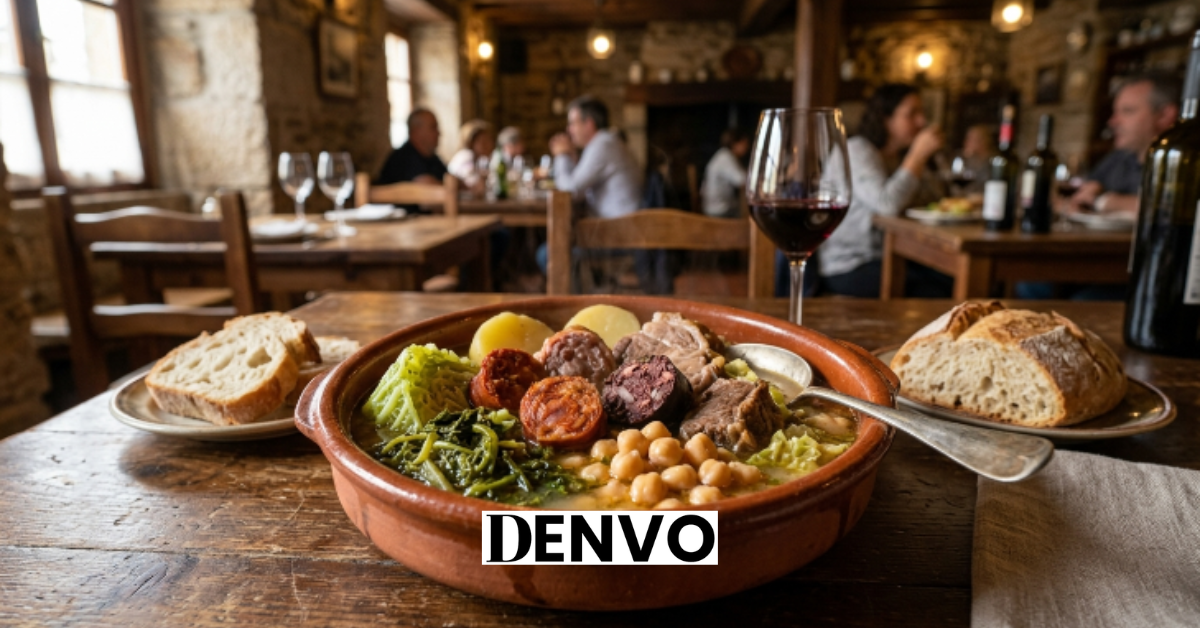
Before you can find the best cocido gallego near you, it helps to know what you’re actually looking for. Cocido gallego is a slow-cooked Galician stew built around chickpeas, potatoes, and a mountain of cured and fresh pork.
It’s not the same as Madrid’s cocido madrileño (more on that in the FAQ), and it’s a heartier, meatier cousin of the simpler soup caldo gallego.
The defining ingredients are:
- Lacón – cured, salted pork shoulder, similar to ham but tougher and more savory
- Unto – a small amount of cured pig fat that gives the broth its signature depth
- Chorizo – Spanish-style smoked sausage, usually added near the end of cooking
- Grelos – bitter turnip greens that are essential to the dish’s flavor (collard greens or cabbage are the usual substitutes outside Spain)
- Chickpeas and potatoes – cooked separately, then combined
What makes cocido gallego distinct is the cooking method: the meats, greens, and legumes are often simmered in separate pots and then served together, sometimes even in separate dishes at the table — meat on one plate, vegetables and chickpeas on another.
It’s traditionally a cold-weather, special-occasion dish. Galician families often save it for Sunday lunches, festivals, or the depths of winter, which is exactly why it’s harder to find on a random Tuesday than you’d expect. If your “near me” search keeps coming up short, this is usually why.
How to Spot the Best Cocido Gallego Near Me
Not every restaurant claiming to serve cocido gallego is doing it justice. Before you commit to a reservation, look for these signs of the real thing.
1. They mention grelos by name. If the menu just says “greens” or “vegetables,” that’s a red flag. Authentic places will specifically call out grelos, because they know regulars will ask.
2. Lacón and unto are listed as ingredients. A cocido made only with ham and chorizo is closer to a generic pork stew than the real Galician dish. Lacón and unto are non-negotiable for an authentic version.
3. It’s served as a multi-part presentation. Many traditional spots bring the broth first, then the meats and vegetables separately. If everything’s dumped into one bowl, it’s likely a simplified or Americanized version — still tasty, but not quite the same dish.
4. It’s seasonal or limited-availability. Counterintuitively, a restaurant that only serves cocido gallego on weekends or in winter is often more authentic than one offering it daily year-round, since that mirrors how it’s actually eaten in Galicia.
5. The reviews mention Spanish or Galician customers specifically. Search review sites for phrases like “tastes like home” or “reminds me of Galicia.” That kind of specific praise is a far stronger signal than generic five-star ratings.
Practical tip: Call ahead before visiting. Asking “Do you use grelos and lacón in your cocido?” takes 30 seconds and instantly tells you whether the kitchen knows what it’s doing.
Where Cocido Gallego Comes From — And Where It Still Thrives
If your local search for cocido gallego near you isn’t turning up much, it’s worth understanding where this dish actually lives.
Galicia itself — particularly the inland provinces of Lugo, Ourense, and Pontevedra — is the dish’s true home. The town of Lalín is famous for hosting an annual cocido festival each February, drawing huge crowds for a dish that, for one town, is basically a cultural identity.
Outside Spain, your best odds of finding it are in places with strong Galician immigrant communities. Historically, large numbers of Galicians emigrated to:
- Argentina and Uruguay (Buenos Aires and Montevideo both have Galician social clubs and restaurants)
- Cuba and Puerto Rico, where you’re more likely to encounter the lighter caldo gallego on regular menus
- Major U.S. cities with Spanish immigrant history, like New York and Miami, occasionally feature it at Spanish (not generic “tapas”) restaurants
If you live somewhere without a Galician or Spanish immigrant community, your honest odds of finding an authentic cocido gallego near you are genuinely low — and that’s not a failure of your search skills, it’s just geography. This is exactly the gap the next section solves.
How to Make Authentic Cocido Gallego at Home
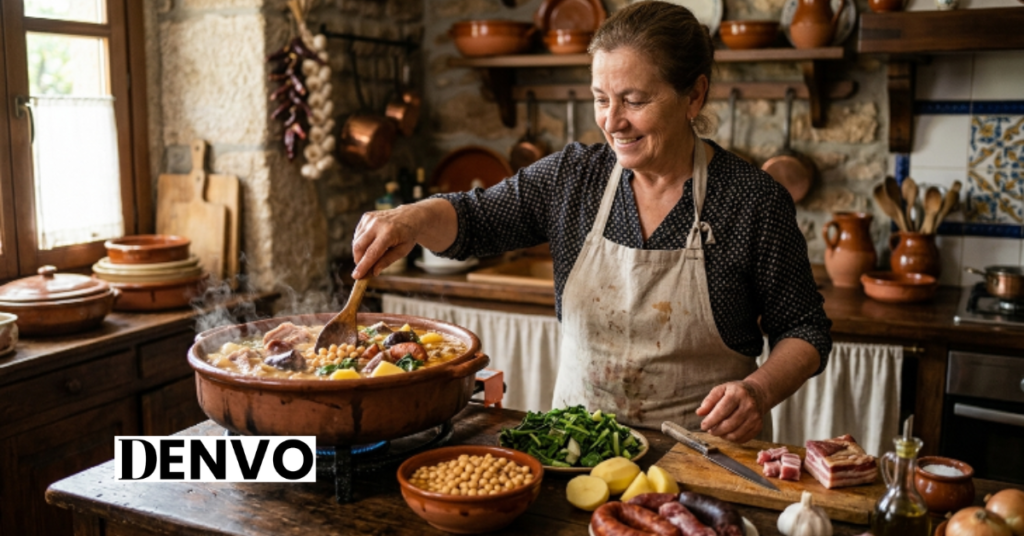
When “near me” doesn’t deliver, making cocido gallego yourself is often the most reliable path to the real flavor — and it’s more forgiving than it looks.
What you’ll need to source:
- Lacón (or a substitute like smoked pork shoulder if unavailable)
- Unto, if you can find it through a Spanish or specialty butcher; pancetta is a common stand-in
- Spanish chorizo (look for the cooking variety, not the cured slicing kind)
- Dried chickpeas, soaked overnight
- Grelos, or collard greens/cabbage as a substitute
- Potatoes
Where to source ingredients:
- Spanish or Latin American grocery stores are your best bet for chorizo and lacón
- Online specialty retailers ship unto, lacón, and Spanish chorizo to most countries
- Farmers markets often carry turnip greens in cooler months, a close stand-in for grelos
The basic process:
- Desalt the lacón by soaking it in water for several hours (changing the water a couple of times).
- Simmer the lacón and chorizo together in a large pot for about 1.5–2 hours.
- In a separate pot, cook the chickpeas in some of that broth until tender.
- In a third pot (or staggered in the same one), cook the potatoes and greens.
- Serve everything together, ladling broth over the top.
Total time: Plan for roughly 3 hours, most of it hands-off simmering. It’s a weekend project, not a weeknight dinner — which, fittingly, is exactly how Galicians treat it too.
Pairing, Serving, and Enjoying Your Cocido Gallego
Once you’ve got a pot of cocido gallego — homemade or from the best restaurant near you — how you serve and pair it matters more than people expect.
Wine pairing: Galicia is known for crisp white Albariño wines, but cocido’s rich, fatty broth actually pairs better with a light, slightly acidic red, like a young Mencía. The acidity cuts through the meat without overpowering the broth.
Serving order: Traditionally, the broth comes first as a starter, almost like a soup course. The meats, chickpeas, and vegetables follow as the main event. Don’t rush this — it’s meant to be a long, unhurried meal.
Leftovers: Cocido broth makes an excellent base for soup the next day. Leftover meat can be shredded and reused in sandwiches or a simple fried rice. Nothing in this dish is meant to go to waste, which fits its origins as peasant food made from whatever was on hand.
Conclusion
Finding the best cocido gallego near you isn’t always straightforward — it’s a regional, seasonal dish that doesn’t travel as easily as paella or tortilla española. But now you know exactly what to look for: grelos, lacón, unto, and a kitchen that treats the dish with patience.
If your search comes up empty, you’re not out of luck. With the right ingredients and a free weekend afternoon, you can recreate an authentic cocido gallego in your own kitchen — and honestly, it might end up better than anything “near you” anyway.
Bookmark this guide before your next cocido craving hits, and if you try making it yourself, you’ll never look at a restaurant menu the same way again.
FAQs
What’s the difference between cocido gallego and caldo gallego?
They’re related but not the same dish. Caldo gallego is a simpler, soupier dish made mainly with white beans, greens, and some pork or chorizo for flavor — it’s closer to a hearty soup. Cocido gallego is the heavier, meat-forward version, built around chickpeas instead of white beans, with a much larger quantity and variety of pork (lacón, unto, chorizo, and sometimes more). If you’re searching for the best cocido gallego near you and a menu only lists “caldo gallego,” you’re likely getting the lighter soup, not the full stew. Both are delicious, but they’re different experiences — caldo gallego works as an everyday comfort food, while cocido gallego is reserved for bigger, more festive meals.
Is cocido gallego the same as Spanish cocido madrileño?
No, though they share a name and a similar concept. Cocido madrileño, from Madrid, also features chickpeas and meat, but it typically uses beef and a different mix of cured meats, and it’s often served in three distinct courses (broth, then chickpeas/vegetables, then meat). Cocido gallego skews more toward pork, especially lacón and unto, and leans heavily on grelos for its signature bitter-green flavor. If you’re specifically craving the Galician version, make sure any restaurant you call isn’t actually serving the Madrid-style dish under a similar name — they’re cousins, not twins.
What does cocido gallego taste like?
Expect a rich, salty, slightly smoky broth with a deep porky flavor, balanced by the mild bitterness of grelos and the earthiness of chickpeas and potatoes. The unto adds a subtle, almost nutty fattiness that rounds out the broth. It’s a heavier, more savory profile than most people expect from a “stew,” closer to a Sunday roast in liquid form. First-timers often describe it as comforting but intense — this isn’t a light lunch dish.
Can I find authentic cocido gallego outside Spain?
Yes, but your odds depend heavily on location. Cities with historic Galician or Spanish immigrant communities — parts of Argentina, Uruguay, Puerto Rico, Cuba, and a handful of U.S. cities like New York or Miami — are your best bets. Outside those areas, genuinely authentic versions are rare, since the dish requires specific ingredients (lacón, unto, grelos) that aren’t widely stocked. If your local search for the best cocido gallego near you keeps falling short, that’s usually why — and it’s a strong sign you should consider making it at home instead.
What’s the best time of year to eat cocido gallego?
Winter, hands down. In Galicia, cocido is traditionally a cold-weather dish, often centered around Sunday family lunches between roughly November and February. Many authentic restaurants only offer it seasonally rather than year-round, which can actually work in your favor when judging authenticity — a place serving it in July, every day, with no seasonal variation, may be simplifying the dish for convenience rather than tradition.
Can I make cocido gallego vegetarian?
Not in any traditional sense — the dish is fundamentally built around cured pork and its rendered fat, which gives the broth its entire flavor base. That said, you can make a plant-based dish inspired by cocido’s structure: chickpeas, potatoes, and grelos (or a similar bitter green) simmered in a well-seasoned vegetable stock with smoked paprika to mimic some of the chorizo’s smokiness. It won’t replicate the real flavor, but it captures the spirit of the dish for those avoiding meat.