
Quick Answer — Featured Snippet
Capsule wardrobe essentials 2026 focus on 30–35 versatile, high-quality pieces that cover every occasion. The core includes neutral basics, one statement outerwear, tailored trousers, quality denim, and functional footwear. The goal: maximum outfits, minimum clutter, and a wardrobe that never feels empty.
Most people own over 100 clothing items — and wear fewer than 20% of them regularly. That’s not a wardrobe. That’s a storage problem.
The concept of capsule wardrobe essentials has been around since the 1970s, but in 2026 it has evolved into something far more intelligent, personal, and financially smart. It’s not about minimalism for the sake of it. It’s about owning pieces that genuinely work together, serve multiple purposes, and make getting dressed feel effortless instead of exhausting.
In this article, you’ll learn exactly which pieces belong in a 2026 capsule wardrobe, which so-called “essentials” you should skip, the biggest mistakes people make when building one, and a step-by-step process you can follow today. Whether you’re starting from scratch or refining what you already have, this guide has you covered.
What a Capsule Wardrobe Actually Is (And Why 2026 Changed the Rules)
A capsule wardrobe is a curated collection of timeless, mix-and-match clothing pieces that cover your lifestyle needs without excess. The term was coined by Susie Faux in the 1970s and popularized by designer Donna Karan, but the original definition — roughly 37 pieces — has been flexible ever since.
Here’s what nobody tells you: there is no magic number. The “perfect” capsule wardrobe has between 25 and 40 pieces depending on your lifestyle, climate, and how often you do laundry. A remote freelancer and a corporate lawyer don’t need the same wardrobe. Stop trying to copy someone else’s list.
What changed in 2026 specifically? Three things: the rise of hybrid dressing (workwear that transitions to evenings), the collapse of fast fashion’s dominance as quality-conscious consumers shift spending, and a growing demand for pieces that perform in both digital video calls and real-world social settings. Your capsule needs to work everywhere now.
Pro Tip: Before building your capsule wardrobe, spend one week noting what you actually reach for. Those 7–10 pieces are your wardrobe’s backbone. Build around them, not around a list you found online.
How to Declutter Your Closet Without Regret
The 2026 Capsule Wardrobe Essentials: The Exact Pieces You Need
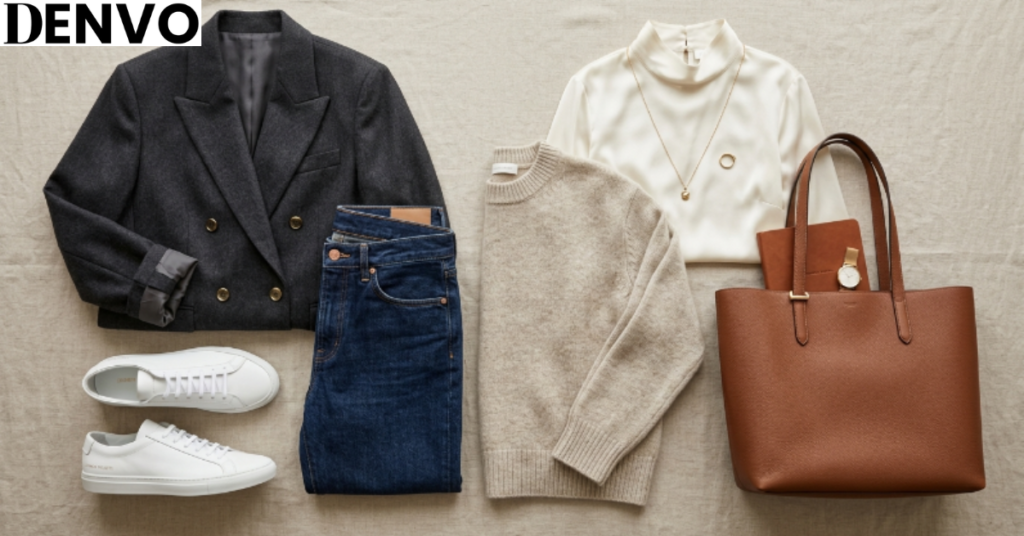
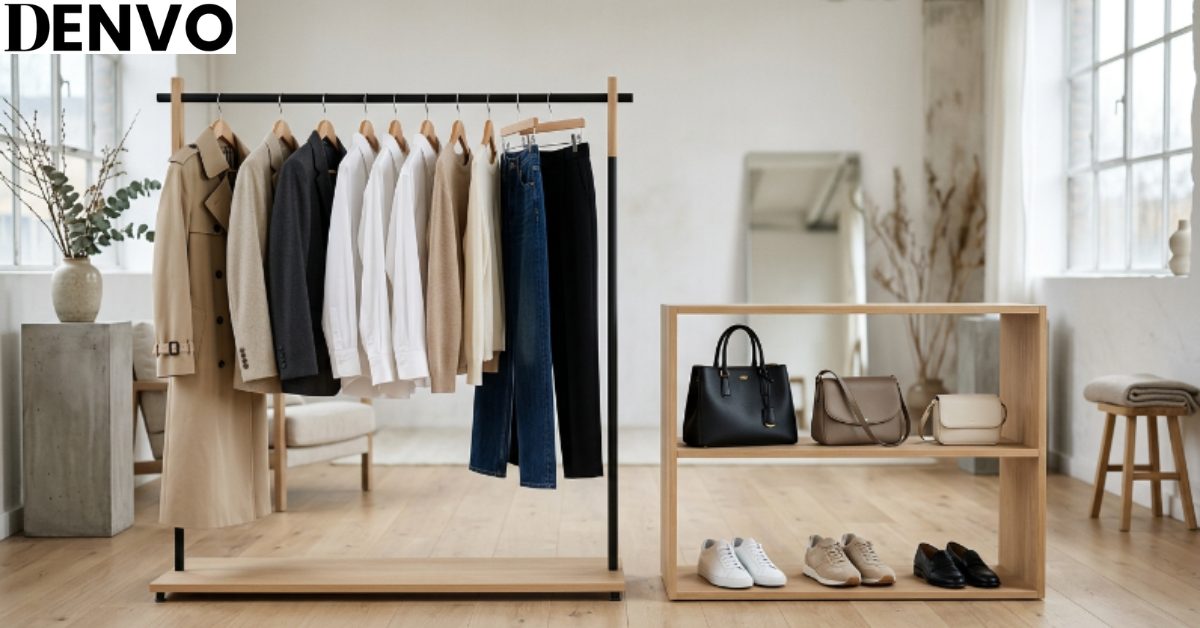
Let’s be specific. Vague lists full of “a classic white shirt” and “versatile trousers” don’t help anyone. Here’s what the 2026 capsule actually looks like — broken into categories with context for each one.
Tops (7–8 pieces)
Three high-quality T-shirts in neutral shades (white, grey, navy). One fitted long-sleeve in a warm tone like camel or rust. Two button-down shirts — one crisp white, one subtle pattern or chambray. One quality knit or lightweight sweater. These form the base of nearly every outfit you’ll build.
Bottoms (5–6 pieces)
One dark wash straight-leg denim (not skinny, not ultra-wide — straight is the denim cut with the longest lifespan). One tailored trouser in charcoal or navy. One casual chino or relaxed pant. One versatile skirt or shorts depending on your climate. That’s genuinely all you need for infinite combinations.
Outerwear (3–4 pieces)
A well-fitted blazer is the single piece with the highest outfit-transformation power in 2026. Throw it over a T-shirt and jeans — instantly polished. Add it to a slip dress — event-ready. One classic trench or structured coat. One casual layer like a quality zip jacket or overshirt for everyday ease.
Footwear (4–5 pairs)
Clean white or beige sneakers. Classic leather or leather-look shoes or loafers. Ankle boots. One strappy or elevated sandal if your climate or lifestyle calls for it. Footwear has an outsized effect on outfit feel — one pair of quality shoes changes the entire look.
Accessories (5–6 pieces)
Two bags — one structured tote or shoulder bag for daytime, one smaller crossbody or clutch for evenings. A belt. Two to three jewelry pieces you wear without thinking. One scarf in a neutral that adds warmth and visual interest simultaneously.
Pro Tip: The “cost per wear” formula is your best shopping filter. A $180 coat worn 90 times costs $2 per wear. A $40 impulse buy worn twice costs $20 per wear. Price alone is never the right metric.
| Category | Essential? (2026) | Pieces Needed | Trending Color 2026 | Skip If… |
|---|---|---|---|---|
| Classic T-Shirts | ✔ Yes | 3 | Warm whites, clay | Your job is always formal |
| Tailored Blazer | ✔ Yes | 1–2 | Oatmeal, deep plum | Never |
| Straight Denim | ✔ Yes | 1–2 | Dark indigo, vintage wash | Denim doesn’t suit your climate |
| Trendy Statement Pieces | ✘ No | 0–1 max | Whatever’s viral | Always — skip or rent |
| White Button-Down | ✔ Yes | 1 | Crisp white, soft ivory | You work creative/casual only |
| Classic Trench Coat | ✔ Yes | 1 | Camel, taupe, dark olive | You live in a very hot climate |
| Matching Sets / Co-ords | ✘ Optional | 1 max | Earthy neutrals | Already have full coverage |
The Biggest Mistakes People Make With a Capsule Wardrobe
Most people get this completely wrong, and the mistake usually happens before a single piece is bought. They chase someone else’s aesthetic — a minimalist influencer in a white Scandinavian apartment — instead of building for their actual life.
The second most common error: buying cheap versions of quality basics. A $15 white T-shirt turns transparent after two washes, pills on contact with a bag strap, and looks deflated within months. One well-made shirt at $60–$80 that lasts five years is infinitely smarter than replacing a cheap one four times. Quality fabric is non-negotiable in a capsule wardrobe — everything is worn more frequently, so wear shows faster.
The third mistake is ignoring fit. A $200 blazer that doesn’t fit properly is worthless. A $50 blazer tailored for $20 will outperform it every time. Fit is the silent currency of style that most people dramatically underinvest in.
Pro Tip: Before adding anything new to your capsule, ask: “Can this piece be worn with at least 5 other items I already own?” If the answer is no, it doesn’t belong in the capsule — no matter how much you love it.
Expert Tips and Proven Strategies for Building Yours in 2026
Here’s what the stylists, wardrobe consultants, and intentional dressing experts consistently say — and it differs significantly from generic fashion advice.
Think of it this way: your capsule wardrobe is a system, not a shopping list. Systems have rules. The most effective rule is the “one in, one out” principle — every new piece that enters your wardrobe displaces one that leaves. This single habit prevents wardrobe drift, where a functional capsule slowly accumulates clutter until it no longer functions.
Professional stylists also emphasize building around a color palette of no more than four to five shades. When every piece shares a color language, everything mixes effortlessly. The most effective palettes in 2026 center around warm neutrals: ivory, camel, warm grey, deep navy, and one accent shade that reflects your personality — a dusty olive, a muted burgundy, or a soft cobalt.
The Business of Fashion (businessoffashion.com) — “The Science of the Perfectly Curated Wardrobe”
Real-World Capsule Wardrobe in Action: Three Lifestyle Examples
Abstract advice is useless without context. Let me show you how capsule wardrobe essentials play out across three genuinely different lifestyles.
The Remote Professional
Sophia works from home four days a week and occasionally visits clients in the city. Her capsule prioritizes comfort-with-polish: quality knit jumpers, straight trousers that look intentional on video calls, two blazers, clean sneakers, and loafers. She runs 32 pieces and hasn’t bought anything new in seven months. Every morning takes under three minutes.
The Active Traveler
James travels for work 12 times per year, packing carry-on only. His capsule focuses on lightweight fabrics, pieces that resist wrinkles, and a color palette where everything works with everything else. His entire wardrobe fits in one medium suitcase. He spent considerably more per piece upfront — and spends far less each year than he did before.
The Student/Early Career Professional
Priya is building her capsule on a tight budget. She started with five pieces — a quality secondhand blazer from a thrift app, two good T-shirts, dark jeans, and ankle boots — and adds one considered piece per month. In eight months, she has a fully functional 28-piece wardrobe without ever feeling stretched. A capsule wardrobe can be built gradually. It doesn’t require a complete overhaul on day one.
Pro Tip: Secondhand and resale platforms have become a legitimate first-stop for capsule building in 2026. Quality pieces from brands like COS, Arket, or classic tailors appear regularly at 60–80% below retail. Patience in sourcing is as valuable as taste in selection.
Step-by-Step: Build Your Capsule Wardrobe in 2026
Here’s a process you can start this weekend. Not theory — an actual sequence that works.
- The Inventory Audit:Pull every piece of clothing out of your wardrobe. Every item. Categorize into Keep, Donate/Sell, and Unsure. Be honest. If you haven’t worn it in 12 months, you probably won’t.
- Identify Your Core Lifestyle Needs:Write down the five main contexts you dress for each week — work meetings, casual days, exercise, social events, travel. Your capsule must cover these specifically.
- Choose Your Color Palette:Pick three neutral base colors and one accent. Every future purchase must fit this palette before you even consider it.
- Assess Your Keep pile against the essentials list:Map what you have against the categories above. Identify genuine gaps — not wish-list additions, actual gaps.
- Fill gaps intentionally:Shop from the gap list only. One piece at a time. Research before buying — read reviews, check fabric content, read return policies.
- Wear everything together before removing tags:Test combinations before committing. A piece that doesn’t combine with at least five others in your wardrobe goes back.
- Review every six months:Lifestyle changes. Capsules evolve. A seasonal review — what’s worn out, what’s shifted out of rotation — keeps the system honest.
Myths vs. Facts: What Nobody Gets Right About Capsule Wardrobes
The internet has layered a significant amount of mythology onto the capsule wardrobe concept. Some of it is genuinely harmful advice — it leads people to buy the wrong things or abandon the concept after one frustrated attempt.
✘ Myth
✔ Fact
A capsule wardrobe means boring, all-neutral clothes.
A capsule can include color and personality — it’s about versatility, not monotony.
You need to buy everything at once.
The best capsules are built over 6–12 months with intentional, slow shopping.
Capsule wardrobes are only for minimalists.
Anyone who values time, money, and daily ease benefits from a capsule approach.
You can’t keep any trendy pieces.
One or two trend pieces are fine — just don’t let them become the majority.
Expensive always means better for a capsule.
Fabric quality, construction, and fit matter more than brand or price point.
Once built, a capsule is permanent.
Life changes. Review and adjust your capsule every six months.
💡 Pro TipThe truth is, the best capsule wardrobe is the one you’ll actually maintain. Rigidly perfect systems that don’t fit your personality fail within months. Build with honesty about who you are, not who you want to become.
The Bottom Line
Three things make or break a capsule wardrobe in 2026: ruthless honesty about your actual lifestyle, a commitment to quality over quantity, and the patience to build it slowly rather than impulsively.
The capsule wardrobe isn’t a trend or a lifestyle aesthetic for Instagram. It’s a practical system that saves time, reduces decision fatigue, and — over two to three years — saves a meaningful amount of money. It works because simplicity is a multiplier, not a constraint.
The single most powerful thing you can do right now is the wardrobe audit. Pull everything out. Be honest. Start there — because you can’t build something good on top of something broken.What’s the one piece you always reach for first? Tell us in the comments — it might be the key to your entire capsule. → Next Read: “How to Find Your Personal Style in 30 Days”
Step-by-Step: Build Your Capsule Wardrobe in 2026
Here’s a process you can start this weekend. Not theory — an actual sequence that works.
- The Inventory Audit: Pull every piece of clothing out of your wardrobe. Every item. Categorize into Keep, Donate/Sell, and Unsure. Be honest. If you haven’t worn it in 12 months, you probably won’t.
- Identify Your Core Lifestyle Needs: Write down the five main contexts you dress for each week — work meetings, casual days, exercise, social events, travel. Your capsule must cover these specifically.
- Choose Your Color Palette: Pick three neutral base colors and one accent. Every future purchase must fit this palette before you even consider it.
- Assess Your Keep pile against the essentials list: Map what you have against the categories above. Identify genuine gaps — not wish-list additions, actual gaps.
- Fill gaps intentionally: Shop from the gap list only. One piece at a time. Research before buying — read reviews, check fabric content, read return policies.
- Wear everything together before removing tags: Test combinations before committing. A piece that doesn’t combine with at least five others in your wardrobe goes back.
- Review every six months: Lifestyle changes. Capsules evolve. A seasonal review — what’s worn out, what’s shifted out of rotation — keeps the system honest.
Myths vs. Facts: What Nobody Gets Right About Capsule Wardrobes
The internet has layered a significant amount of mythology onto the capsule wardrobe concept. Some of it is genuinely harmful advice — it leads people to buy the wrong things or abandon the concept after one frustrated attempt.
✘ Myth
A capsule wardrobe means boring, all-neutral clothes.
You need to buy everything at once.
Capsule wardrobes are only for minimalists.
You can’t keep any trendy pieces.
Expensive always means better for a capsule.
Once built, a capsule is permanent.
✔ Fact
A capsule can include color and personality — it’s about versatility, not monotony.
The best capsules are built over 6–12 months with intentional, slow shopping.
Anyone who values time, money, and daily ease benefits from a capsule approach.
One or two trend pieces are fine — just don’t let them become the majority.
Fabric quality, construction, and fit matter more than brand or price point.
Life changes. Review and adjust your capsule every six months.
Pro Tip: The truth is, the best capsule wardrobe is the one you’ll actually maintain. Rigidly perfect systems that don’t fit your personality fail within months. Build with honesty about who you are, not who you want to become.
The Bottom Line
Three things make or break a capsule wardrobe in 2026: ruthless honesty about your actual lifestyle, a commitment to quality over quantity, and the patience to build it slowly rather than impulsively.
The capsule wardrobe isn’t a trend or a lifestyle aesthetic for Instagram. It’s a practical system that saves time, reduces decision fatigue, and — over two to three years — saves a meaningful amount of money. It works because simplicity is a multiplier, not a constraint.
The single most powerful thing you can do right now is the wardrobe audit. Pull everything out. Be honest. Start there — because you can’t build something good on top of something broken.
What’s the one piece you always reach for first? Tell us in the comments — it might be the key to your entire capsule. → Next Read: “How to Find Your Personal Style in 30 Days”
FAQs
How many pieces should a capsule wardrobe have in 2026?
Most wardrobe experts in 2026 recommend between 25 and 40 pieces as the practical range. The exact number depends on your lifestyle complexity — someone with three distinct dressing contexts (work, casual, formal) needs more than someone with a uniform daily routine. What matters more than the number is that every piece earns its place by combining with at least five others.
What are the most important capsule wardrobe essentials for 2026 specifically?
The standout pieces for capsule wardrobe essentials 2026 include: (1) a well-fitted blazer in a neutral, (2) straight-leg dark denim, (3) at least two quality cotton T-shirts, (4) tailored trousers, (5) a classic trench or structured coat, and (6) clean leather or leather-look shoes. These pieces account for the majority of high-functioning outfit combinations in the current style landscape.
Is a capsule wardrobe suitable for different body types?
Entirely. The capsule concept is about personal curation, not a standardized uniform. The pieces recommended — blazers, straight trousers, quality knits — exist in cuts designed for a full range of bodies. The key shift is prioritizing fit over trend when selecting pieces. A capsule wardrobe built around what flatters your proportions will function better and feel more personal than one copied directly from a style influencer.
Can a capsule wardrobe work for all four seasons?
Yes, with layering as your primary strategy. A well-designed year-round capsule wardrobe has a core of 20–25 pieces that work across seasons, supplemented by 5–8 climate-specific items (heavy coats for winter, linen or lightweight pieces for summer). Many stylists suggest a “base capsule” plus small seasonal additions rather than a complete seasonal swap, which reduces cost and decision fatigue significantly.
How much does it cost to build a capsule wardrobe from scratch in 2026?
Realistic ranges: a budget-conscious capsule wardrobe using a mix of secondhand and mid-range brands can be built for $400–$700. A mid-range capsule with new quality basics from brands like COS, Uniqlo premium lines, or similar runs $800–$1,500. A premium capsule from heritage brands or tailors: $2,000–$4,000+. Most people don’t need the premium tier — mid-range brands now consistently offer excellent fabric and construction. Resale platforms can cut costs by 40–60% at any tier.
What colors work best for a capsule wardrobe in 2026?
The most versatile capsule wardrobe color palette in 2026 centers on warm neutrals rather than the cooler grey-white palette that dominated the 2010s minimalism trend. Think ivory, camel, warm taupe, deep navy, and charcoal as your base. Add one accent — dusty terracotta, muted sage, soft cobalt, or a deep burgundy — to give the wardrobe personality without limiting combination potential. Warm neutrals mix more naturally with each other than cooler tones do.