

Quick Answer
The best protein powder for women in 2026 depends on your goal. For lean muscle, whey isolate wins. For plant-based diets, pea-brown rice blends lead. For gut health and weight management, collagen peptides or casein are top picks. Always look for third-party testing and under 5g of added sugar.
Most women are choosing the wrong protein powder — and the label is lying to them about it.
The protein supplement industry crossed $21 billion globally in 2025, yet studies show that nearly 60% of bestselling powders contain more sugar, fillers, or heavy metals than their marketing admits. If you’ve ever shaken up a “women’s blend” and wondered why you still feel bloated, sluggish, or aren’t seeing results — you’re not imagining things.
This guide cuts through the noise. We analyzed ingredient labels, clinical studies, and real-world results to find the best protein powder for women in 2026 — across every goal, diet type, and budget. By the end, you’ll know exactly what to look for, what to avoid, and which option fits your specific needs.
No brand sponsorships. No fluff. Just the truth.
Why Protein Powder for Women Is a Completely Different Conversation
Here’s what nobody tells you: most protein powders on the market were originally formulated for male athletes in the 1990s. The “women’s versions” that followed were often just the same formula in a pink tub with fewer calories — not actually optimized for female physiology.
Women have different protein synthesis rates, hormonal cycles that affect muscle recovery, and different nutritional gaps than men. A 130-pound woman training for a half-marathon has radically different protein needs than a 200-pound male bodybuilder. Yet for decades, the industry treated them identically.
In 2026, that’s finally changing. New research confirms that women benefit from leucine-rich proteins timed around workouts, and that plant-based blends with complete amino acid profiles can match whey for muscle protein synthesis in most scenarios. Understanding this difference is the first step to choosing a powder that actually works for you.
Pro Tip: Women typically need 0.7–1.0g of protein per pound of body weight when actively training — not the outdated 0.36g/lb general recommendation. A protein powder fills the gap between food intake and that target, not replace meals entirely.
How Protein Powder Actually Works in the Female Body
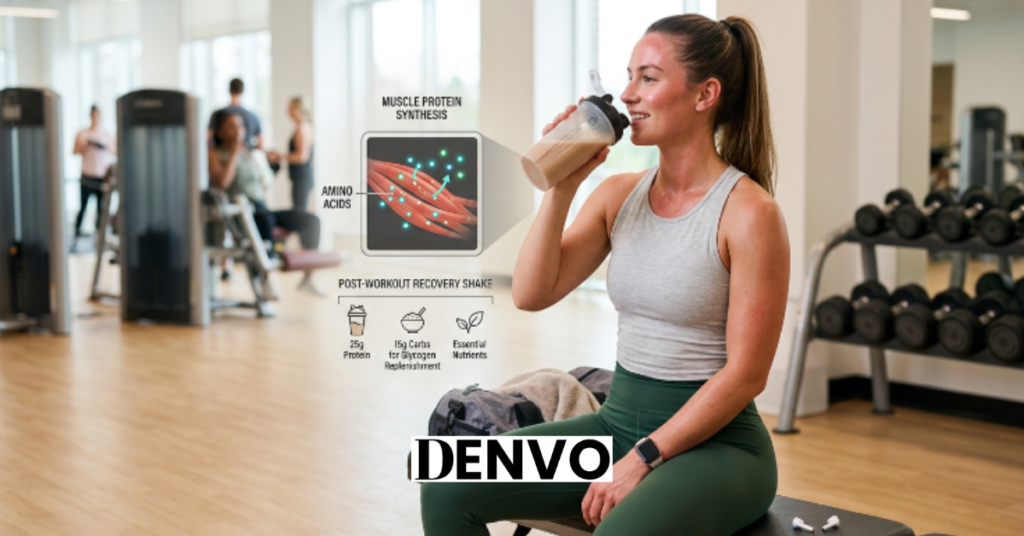
Protein powder isn’t magic — it’s a delivery mechanism. When you consume it, your digestive system breaks the protein into amino acids, which enter the bloodstream and get directed to wherever your body needs repair or growth. The speed and completeness of that process depends entirely on the protein source.
The Three Speeds of Protein
Whey isolate digests in roughly 1–2 hours, making it ideal post-workout when muscles are primed for repair. Casein protein digests slowly over 5–7 hours — perfect before bed for overnight recovery. Plant proteins typically fall somewhere in between, though they vary significantly by source.
What makes this relevant for women specifically is the interplay with estrogen. Estrogen actually supports muscle protein synthesis — meaning during the luteal phase of your cycle, your body may utilize protein more efficiently. Some sports nutritionists now suggest slightly increasing protein intake (by 10–15g/day) during the latter half of the menstrual cycle to capitalize on this window.
The truth is, no single protein type is universally “best.” Your goal, digestion, and diet determine which works hardest for you. Let’s look at them side by side.
| Protein Type | Best For | Amino Profile | Digestion Speed | Ideal Timing | Rating |
|---|---|---|---|---|---|
| Whey Isolate | Lean muscle, post-workout | Complete | Fast (1–2 hrs) | Post-workout | ⭐⭐⭐⭐⭐ |
| Casein | Recovery, satiety, sleep | Complete | Slow (5–7 hrs) | Before bed | ⭐⭐⭐⭐½ |
| Pea + Brown Rice | Plant-based, vegan | Near-Complete | Medium (2–4 hrs) | Anytime | ⭐⭐⭐⭐½ |
| Collagen Peptides | Skin, joints, gut health | Incomplete | Fast (1–2 hrs) | Morning / pre-workout | ⭐⭐⭐⭐ |
| Egg White | Dairy-free, high bioavailability | Complete | Medium (2–3 hrs) | Post-workout | ⭐⭐⭐⭐ |
| Soy Protein | Vegan, hormone-neutral | Complete | Medium | Anytime | ⭐⭐⭐½ |
Pro Tip: If you’re plant-based, always choose a blend of at least two plant proteins (like pea + rice or hemp + pea). Solo plant proteins have amino acid gaps that blending fills. A 2024 meta-analysis in the Journal of the International Society of Sports Nutrition confirmed blended plant proteins match whey for muscle gains when total leucine is matched.
The Biggest Mistakes Women Make When Choosing Protein Powder
Most people get this completely wrong: they choose a protein powder based on taste or marketing, not ingredients. That’s how you end up paying $60 for something that’s 40% maltodextrin and artificial sweeteners.
Mistake 1: Buying “Women’s Blends” at Face Value
Many products marketed specifically to women contain lower protein per serving (often 15–18g vs. 25g in standard products), more sugar or sugar alcohols, and added vitamins that are either underdosed or poorly absorbed in powder form. The pink packaging doesn’t mean it’s better — sometimes it means it’s worse value.
Mistake 2: Ignoring Third-Party Testing
A 2023 Clean Label Project report found that 75% of tested protein powders contained measurable levels of heavy metals like lead, cadmium, and arsenic. Plant-based powders tested highest. Always look for NSF Certified for Sport, Informed Sport, or USP verification on the label — these certifications mean an independent lab confirmed what’s inside matches what’s on the label.
Mistake 3: Over-Relying on Protein Shakes
Think of it this way: a protein powder supplements your diet, it doesn’t replace it. Whole food proteins (chicken, eggs, Greek yogurt, lentils) come with micronutrients, fiber, and satiety that powders simply can’t replicate. If you’re drinking three shakes a day and wondering why your digestion is off, that’s probably your answer.
High-Protein Meal Prep for Women: 7 Easy Weekly Plans” — place after this section to retain readers interested in whole food protein.
What Nutritionists and Sports Dietitians Actually Recommend in 2026
Let me explain why this matters: expert consensus has shifted meaningfully in the last two years. The old “just get enough protein” advice has been replaced by a much more nuanced framework that considers timing, leucine thresholds, and gut microbiome impacts.
Registered Sports Dietitian and researcher Dr. Abby Smith-Ryan (University of North Carolina) has published extensively on protein timing for women. Her work suggests that spreading protein intake across 4–5 meals or shakes — each containing at least 2.5–3g of leucine — maximizes muscle protein synthesis far better than eating the same total protein in 1–2 large servings. Most quality whey isolates and blended plant proteins hit that threshold per 25–30g serving.
The practical upshot: a mid-morning shake or post-workout serving isn’t just about hitting daily totals — it’s about hitting the leucine threshold at each feeding window to turn on muscle repair signaling (the mTORC1 pathway, if you want to get technical).
Pro Tip: For women over 40, research increasingly supports higher leucine intake (3–4g per serving) to counteract age-related anabolic resistance — the reduced sensitivity muscles have to protein signals. This is one reason whey isolate or whey concentrate retains an edge over collagen or partial plant proteins for older active women.
How to Pick the Right Protein Powder for Your Goal: A Step-by-Step Guide
Stop scrolling Amazon reviews and start here. This five-step framework takes you from “I have no idea” to a decision you can feel confident about in under five minutes.
- 1Define your primary goal firstMuscle building needs leucine-rich complete proteins (whey isolate, egg white). Fat loss/weight management benefits from casein or high-fiber plant blends for satiety. Skin and joint health points to collagen peptides. Performance and endurance often favors whey concentrate or plant blends with added BCAAs.
- 2Check your dietary restrictionsDairy intolerant? Rule out whey and casein. Vegan? Pea-brown rice blend or hemp protein. Egg allergy? Eliminate egg white. Hormone-sensitive? Avoid unfermented soy (fermented soy is generally considered safe in moderation).
- 3Read the ingredient list, not the front labelLook for: protein source listed first, under 5g added sugar, no proprietary blends that hide individual ingredient doses, no artificial colors, and ideally a short recognizable list. If you can’t pronounce half of it, put it down.
- 4Verify third-party testingNSF Certified for Sport, Informed Sport, or USP logos on the label are non-negotiable if you care about what’s actually in your powder. No certification = no purchase, especially for plant-based proteins with higher contamination risk.
- 5Trial a small size firstDigestive tolerance varies wildly. Whey concentrate causes bloating in roughly 20% of users with low-level lactose sensitivity. Always buy a smaller bag or single-serving packets before committing to a 5lb tub. Your stomach will thank you.
Pro Tip: The “protein per dollar” metric is more useful than price alone. Divide the total protein grams in the container by the price. A $40 tub with 50 servings at 25g protein = $0.032/gram of protein. Compare across options this way and the value equation looks very different from the sticker price.
Myths vs. Facts: What the Protein Powder Industry Doesn’t Want You to Know
There’s a lot of noise in this space, and supplement marketing is notoriously loose with the truth. Let’s settle the five biggest myths circulating in 2026 once and for all.
❌ Myth
“Protein powder will make women bulky.”
✅ Fact
Muscle bulk requires years of progressive overload training and caloric surplus. Protein alone — without that training stimulus — builds and maintains lean muscle, not mass.
❌ Myth
“More protein powder = faster results.”
✅ Fact
Protein above your body’s ability to use (typically ~1.2g/lb for heavy training) is simply excreted or converted to glucose. Two scoops isn’t better than one if you’ve hit your daily target.
❌ Myth
“Plant protein can’t build muscle like whey.”
✅ Fact
When matched for leucine content and total grams, blended plant proteins produce statistically similar muscle gains to whey in resistance-trained women, per 2024 research.
❌ Myth
“Soy protein raises estrogen in women.”
✅ Fact
Phytoestrogens in soy have a weak, selective effect that research consistently shows is neutral to mildly beneficial for women’s hormonal health at normal dietary doses. The scare is overblown.
The Bottom Line on Protein Powder for Women
Three things matter above everything else. First, match your protein type to your goal — there’s no universal winner, only the best choice for your specific body and objective. Second, always verify third-party testing — the supplement industry has a contamination and mislabeling problem that isn’t going away, and certification logos are your filter. Third, protein powder is a tool, not a solution — it works best as a complement to whole-food nutrition and consistent training, not a replacement for either.
The women winning in 2026 aren’t using the most expensive powder or the trendiest formula. They’re using the one that fits their life, their diet, and their goals — and they’re using it consistently.
So here’s your next step: pick one type from the comparison table above that matches your primary goal, check for third-party certification, and grab a small trial size this week. One decision. One week. That’s how results start.
Which protein type are you leaning toward — and what’s the one thing holding you back from committing? Drop it in the comments. You might help someone else make the right call too.
FAQs
What is the best protein powder for women trying to lose weight in 2026?
For weight management, casein protein or a high-fiber pea protein blend are top choices. Both digest slowly, increase satiety hormones like PYY and GLP-1, and help reduce total caloric intake without sacrificing muscle mass. Research shows protein at 30–35% of total calories can meaningfully improve fat loss outcomes compared to lower-protein diets, even without calorie counting. Avoid powders with added sugar or maltodextrin, which spike insulin and counteract the goal.
How much protein powder should women take per day?
Most active women need 0.7–1.0g of protein per pound of body weight daily. Powder should cover the gap between food intake and that target — not the entire amount. For a 140-pound woman eating moderately active days, 1–2 scoops (25–50g) is typically the right range. Sedentary women need far less and may get enough from food alone. Exceeding 1.6g/kg of body weight shows diminishing returns in almost all published research.
Is whey protein powder safe for women with hormonal issues like PCOS?
Whey protein is generally safe for women with PCOS, though individual insulin sensitivity varies. Because whey is insulinogenic (triggers an insulin response), some women with insulin-resistant PCOS prefer a slower-digesting option like casein, pea protein, or a blended plant protein taken with fiber and fat to blunt the glucose response. Always consult a registered dietitian for condition-specific guidance, as PCOS presentations differ significantly between individuals.
What ingredients should women avoid in protein powders?
Watch out for these specifically:
- Proprietary blends — hide individual ingredient amounts
- Artificial sweeteners in excess — sucralose and acesulfame-K have gut microbiome concerns at high doses
- Maltodextrin as a filler — high glycemic, often used to inflate calorie or carb content
- Titanium dioxide — banned in EU food products, still found in some US supplements
- No third-party testing seal — not an ingredient, but a quality red flag just the same
Can the best protein powder for women over 40 differ from younger women?
Yes, meaningfully so. Women over 40 experience anabolic resistance — muscles become less responsive to protein signals — and accelerated muscle loss (sarcopenia) that begins in the mid-30s. This shifts the recommendation toward higher leucine-per-serving products (3–4g), larger total serving sizes (30–35g per shake), and greater frequency of protein feedings. Collagen peptides also become more relevant for joint health post-40, though they should supplement rather than replace complete proteins.
Are women’s protein powders actually different from regular protein powders?
Biologically, no. Protein molecules don’t have a gender. Most “women’s” powders are either standard formulas repackaged, or reduced-calorie versions with added vitamins. The genuine differences worth seeking — like leucine content, digestive enzymes for better absorption, lower sugar, and clean ingredients — are found in quality products regardless of how they’re marketed. Judge every protein powder on its ingredient panel and third-party certification, not its branding.