
I once drove forty minutes past three “Peruvian fusion” spots because my gut told me they’d serve rocoto relleno swimming in sour cream instead of queso fresco. I was right to keep driving.
Quick answer
The best rocoto relleno near me is almost never at the flashiest Peruvian restaurant in town. Look for small, family-run spots that specialize in Arequipeño cuisine specifically, check if they roast their own peppers daily, and ask if the dish comes with pastel de papa on the side — that combo is the real regional standard, not a tourist add-on.
If you’ve typed “best rocoto relleno near me” into Google more than once this month, I get it. This dish is deceptively hard to find done right, even in cities with a solid Peruvian food scene. Most places either water down the spice to please a broader crowd or skip the traditional milk-and-cheese-soaked bread stuffing that makes rocoto relleno taste like something your abuela made, not something pulled from a freezer bag. I’ve eaten this dish in probably 30 different restaurants across three countries at this point, and I’ve got some opinions. Let’s get into what actually separates a great rocoto relleno from a mediocre one, and how to track it down wherever you happen to be.
What Rocoto Relleno Actually Is (And Why So Many Restaurants Get It Wrong)
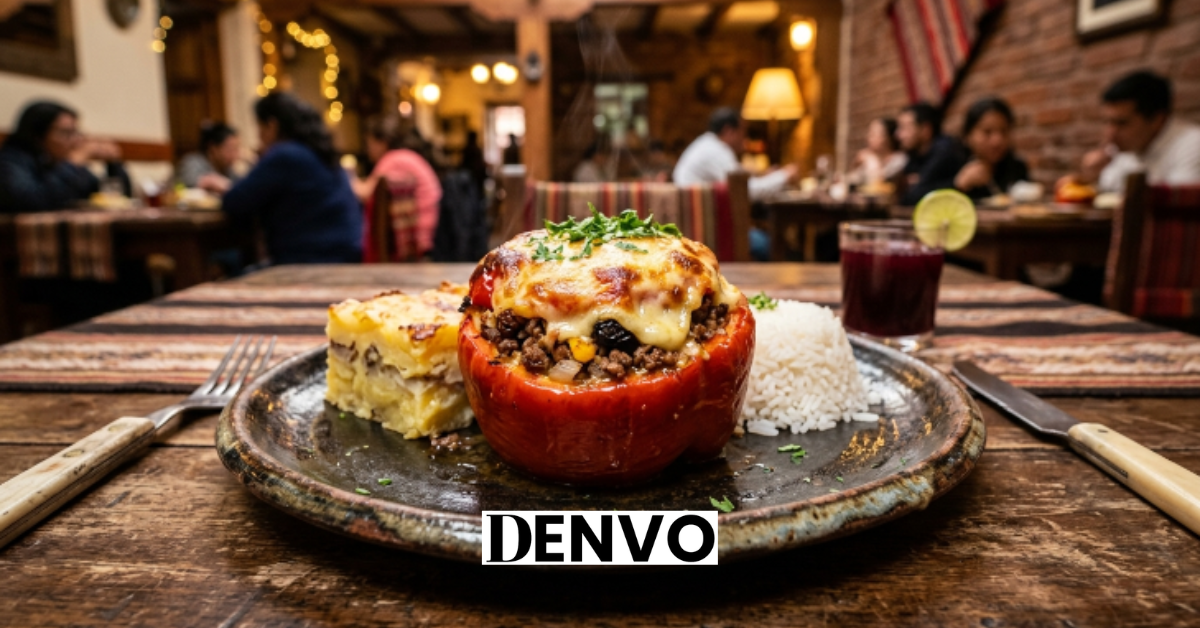
Rocoto relleno is a stuffed hot pepper dish from Arequipa, Peru, and the pepper itself is the whole point. Rocoto peppers aren’t like jalapeños or poblanos — they’re thick-walled, fruity, and genuinely spicy, usually landing somewhere between 30,000 and 50,000 Scoville units. That’s hotter than a serrano pepper, sometimes hotter than a cayenne.
The traditional filling is a mix of ground beef, onions, raisins, olives, and hard-boiled egg, all held together with queso fresco and often baked with a milk-soaked layer inside the pepper to mellow the heat just slightly. It’s typically served alongside pastel de papa, a baked potato-and-egg casserole that soaks up the pepper’s juices.
Here’s where most restaurants mess it up: they either seed out too much of the pepper’s inner membrane (killing the flavor along with the heat) or they swap in a bell pepper entirely because rocoto peppers can be hard to source outside Peru. If a menu describes rocoto relleno as “mild” or “customizable spice level,” that’s usually your first red flag.
READ THIS: Best Sonso Yuca Near Me Your Complete Guide to Finding & Making This Caribbean Favorite
Why Chain Restaurants and Fusion Spots Rarely Nail This Dish
I’ll say something a little controversial: the trendier, more Instagram-friendly Peruvian restaurants in most cities are actually worse at rocoto relleno than the strip-mall spots with plastic tablecloths. It sounds backwards, but it tracks once you think about why.
Rocoto relleno isn’t a dish that photographs beautifully or scales easily for a modern fusion menu built around ceviche towers and pisco sours. It’s rustic. It’s a home-style Arequipeño dish, and the restaurants that do it justice are almost always run by people from Arequipa specifically, not just “Peru” broadly — there’s a real difference. Lima-style Peruvian food and Arequipeño food are genuinely distinct culinary traditions, the way New Orleans Creole cooking differs from general Southern cooking.
I learned this the hard way at a well-reviewed Peruvian restaurant downtown that had four stars and a gorgeous dining room. The rocoto relleno arrived looking picture-perfect, but the pepper had clearly been par-boiled twice to strip out heat, and the filling tasted like it came from a beef stroganoff recipe. Meanwhile, a tiny 12-table place fifteen minutes away, run by a family literally from Arequipa, served one that made my eyes water in the best way and had that distinct raisin-and-olive sweetness cutting through the heat. Reviews and ambiance don’t always predict what’s on the plate.
How to Actually Search for It Near You (Beyond Just Googling the Keyword)

Typing “best rocoto relleno near me” into Google gets you started, but the results skew toward whoever has the best SEO, not necessarily the best food. A few tricks work better.
- Search Peruvian food blogs and forums specific to your city — regional Peruvian expat communities often have Facebook groups or subreddits where people recommend spots by neighborhood, not just star rating.
- Filter your search by “Arequipa-style” or “Arequipeño” instead of just “Peruvian restaurant.” This alone cuts out 60-70% of the fusion places that won’t do it justice.
- Call ahead and ask if it’s made fresh daily or frozen/pre-made. A surprising number of smaller spots will tell you honestly over the phone, something they won’t advertise on a menu.
- Check if pastel de papa is offered as a pairing. Restaurants that know this detail usually know the rest of the dish too.
Best Locro de Zapallo Near Me Your Complete Guide to Finding & Making Authentic Andean Squash Stew on the difference between Lima-style and Arequipeño Peruvian menus goes deeper into this if you want to get nerdy about regional cuisine.
The Spice Level Nobody Warns You About
Most restaurants underestimate how much a genuine rocoto relleno should burn, and that’s honestly the biggest tell. If you finish the dish without your nose running even a little, something’s off. A properly made rocoto pepper still carries real heat even after the milk-soak mellowing process, because the capsaicin lives in the membrane and seeds, and a good cook doesn’t strip all of that away just to make it palatable for everyone.
I’ve sent back a rocoto relleno exactly once, at a restaurant that advertised it as their “signature dish.” It tasted like a stuffed green bell pepper with taco seasoning. When I mentioned the lack of heat to the server, she said “oh yeah, we tone it down, most people can’t handle it.” That’s a legitimate business choice for them, but it’s not rocoto relleno anymore at that point — it’s a different dish wearing the same name.
If a restaurant near you offers a “mild version,” that’s not necessarily bad, but know what you’re getting into. Ask if they have the traditional version available too, even off-menu. A lot of family-run spots keep the real recipe for regulars who ask.
What a Genuinely Great Version Costs (And Why Price Isn’t a Great Signal)
Rocoto relleno typically runs $14 to $22 in the US depending on the city, and I’ve found almost zero correlation between price and authenticity. One of the best versions I’ve had cost $16 at a family spot with six tables total. A $28 version at an upscale Peruvian-fusion restaurant with a wine list was, frankly, forgettable.
The ingredient cost itself isn’t that high — ground beef, cheese, potatoes, and eggs aren’t luxury items. What you’re really paying for at the pricier spots is ambiance, service, and often a wine or pisco pairing menu, not necessarily a better rendition of this specific dish. If your goal is genuinely the best rocoto relleno near you, don’t assume the priciest option wins.
How to Track Down the Best Rocoto Relleno Near Me: Practical Steps
Here’s the actual game plan I use whenever I move to a new city or I’m traveling somewhere new.
- Search “Arequipa restaurant [your city]” instead of the generic keyword — this filters for regional specificity right away.
- Read the one-star and two-star reviews first, not the five-star ones. People complaining about authenticity or spice level tell you more than generic praise does.
- Look at the photos on Google Maps and Yelp, specifically for the pepper’s color. A deep red-orange rocoto pepper (not pale red or bell-pepper-shaped) is a good sign.
- Call and ask two questions: is it made fresh, and does it come with pastel de papa. Genuine spots answer both without hesitation.
- Go on a weekday for lunch if you can. Family-run spots often make smaller weekday batches that get more attention than the weekend rush version.
FAQs
Is rocoto relleno very spicy?
Yes, genuinely spicy versions land between 30,000 and 50,000 Scoville units, hotter than a jalapeño or serrano pepper. The milk-soak process mellows it slightly, but a properly made version should still have real heat.
What’s the difference between rocoto relleno and stuffed peppers?
Rocoto relleno uses a specific Peruvian pepper variety and a distinct filling of beef, raisins, olives, and hard-boiled egg, paired traditionally with pastel de papa. Generic “stuffed peppers” recipes usually use bell peppers and skip the sweet-savory raisin-olive combination entirely.
Can I find rocoto relleno at any Peruvian restaurant?
Not reliably — many Peruvian restaurants focus on Lima-style dishes like ceviche and lomo saltado and either skip rocoto relleno or make a simplified version. Arequipeño-specific restaurants are your best bet for an authentic rendition.
Is rocoto relleno served hot or cold?
It’s served hot, typically baked in the oven with cheese melted over the top. It’s usually eaten fresh out of the oven alongside the warm pastel de papa.
What can I substitute if I can’t find real rocoto peppers?
Some home cooks substitute poblano or bell peppers when rocoto peppers aren’t available locally, though the flavor and heat level change significantly.
Finding Your Own Best Rocoto Relleno Near Me
The truth is there’s no single “best” rocoto relleno near you until you’ve actually gone and tried a few, because ratings and reviews only tell part of the story here. The dish rewards patience and a willingness to skip the flashiest option on the list. Trust the small family spots, ask the annoying questions about freshness and spice level, and don’t be afraid to send back a version that tastes more like a bell pepper casserole than a real Arequipeño classic.