

INTRODUCTION
Ever stayed in a hotel room, Airbnb, or dorm and felt like the lock on the door just… wasn’t enough? You’re not imagining it. Standard door locks are often easy to pick, and not every space you sleep in has a deadbolt you can trust.
That’s exactly where a portable lock for door comes in. It’s a small, lightweight security device you can carry in your bag and use on almost any door — no locksmith, no drilling, no landlord permission needed.
In this guide, you’ll learn what these locks are, the different types available, how to pick the right one for your situation, and how to install one in under a minute. By the end, you’ll know exactly how to add a real layer of security to any room you walk into.
What Is a Portable Lock for Door (and Who Actually Needs One)?
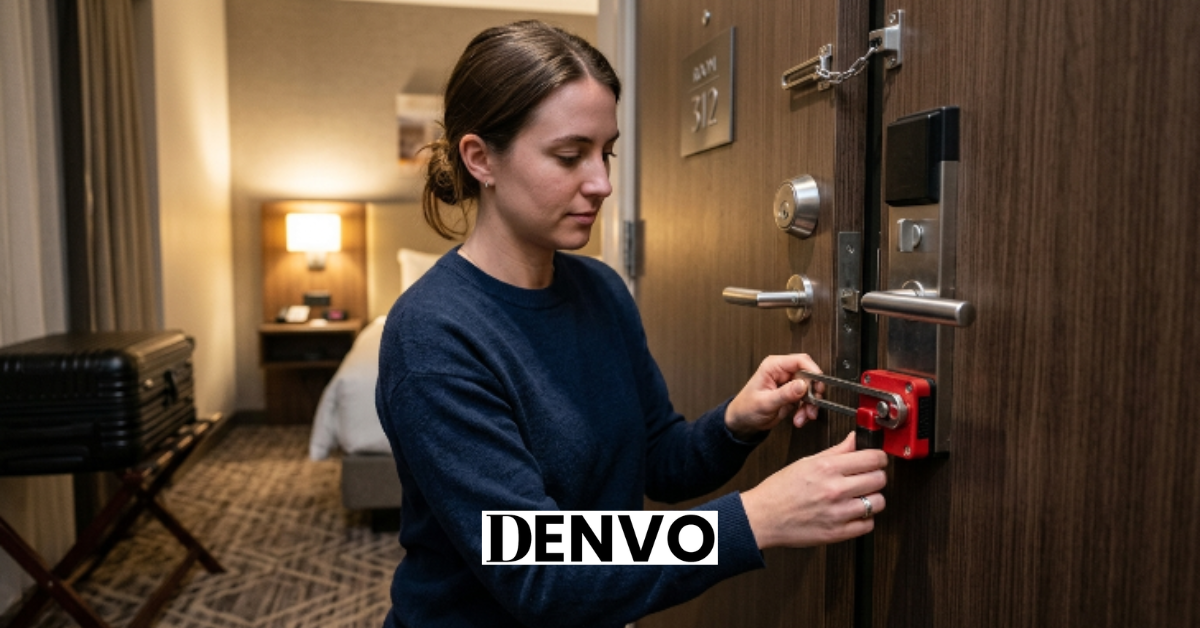
A portable lock for door is a compact security device that adds an extra layer of protection to any door — without permanent installation. Most models work by wedging, clamping, or bracing against the door and frame, making it physically much harder to open from the outside, even if someone has a key.
Unlike a built-in deadbolt, you don’t need a screwdriver, a drill, or a property manager’s approval. You just attach it, use it, and pack it away when you leave.
Who tends to use a portable door lock the most?
- Solo travelers and backpackers staying in hostels or guesthouses with basic locks
- Airbnb and short-term rental guests who don’t know who else might have a copy of the key
- College students living in dorms with shared hallways
- Renters who aren’t allowed to change their apartment’s existing locks
- Parents traveling with kids who want extra peace of mind at night
- Anyone working remotely from short-term stays, like digital nomads or RV travelers
The common thread? None of these people own the door. A portable lock gives you control over your own safety without touching the building’s actual hardware.
A quick real-world picture: Imagine you’re staying in a hostel dorm room with a basic latch lock. Housekeeping staff, other guests, and management may all have access. A portable door lock added to your room door means even if someone has a key, they still can’t easily get in while you’re sleeping or showering down the hall.
This is exactly why portable locks have become a normal item in travel safety kits, right alongside power banks and first-aid pouches. They’re cheap, small, and solve a problem that a “trust the building” approach simply can’t.
Types of Portable Door Locks Explained
Not all portable locks work the same way. Understanding the main types helps you pick the right one instead of guessing.
1. Door Wedge / Travel Door Stopper Locks
These slide under the door and use leverage to stop it from swinging open, even if someone has a key. They’re small, light, and usually the cheapest option.
- Best for: hotel rooms, Airbnbs, hostels
- Limitation: works best on doors that open inward and have flat flooring underneath
2. Door Security Bars
A bar that braces between the door handle (or a bracket) and the floor, blocking the door from being pushed open.
- Best for: apartments, rental homes, ground-floor rooms
- Limitation: bulkier to pack in a suitcase than other types
3. Portable Lock with Chain or Strap
These loop around the door handle or hinge area and lock with a small padlock or combination mechanism, similar in spirit to a bike lock but for doors.
- Best for: dorms, shared housing, sliding doors
- Limitation: strength depends heavily on the door handle’s own durability
4. Door Jammer Alarms
A hybrid device — it physically blocks the door and sounds a loud alarm if someone tries to force it open.
- Best for: solo travelers, especially at night
- Limitation: needs batteries, so check power level before each trip
Quick comparison at a glance:
| Type | Setup Time | Best Use Case | Portability |
|---|---|---|---|
| Door wedge lock | Under 30 sec | Hotels, Airbnbs | Excellent |
| Security bar | 1–2 min | Apartments, rentals | Good |
| Chain/strap lock | 1 min | Dorms, shared housing | Excellent |
| Door jammer alarm | Under 1 min | Solo night travel | Excellent |
How to Choose the Right Portable Lock for Your Door

Picking a portable door lock isn’t one-size-fits-all. Here’s what actually matters before you buy one.
1. Check your door type first. Inward-swinging doors work well with wedge locks and security bars. Outward-swinging or sliding doors usually need a chain/strap lock instead. Measure or photograph your typical door setup if you’re shopping online.
2. Think about your travel style. If you’re backpacking with a small bag, weight and folded size matter more than extra features. If you’re driving or staying in one place longer (like an extended Airbnb stay), a slightly bulkier security bar is fine.
3. Decide if you want an alarm feature. An alarm-equipped lock adds a second layer of protection — it doesn’t just block the door, it alerts you and anyone nearby. This is especially useful for solo travelers staying somewhere unfamiliar.
4. Look at the materials. Steel and reinforced plastic components tend to hold up better under pressure than thin aluminum. You don’t need to buy the most expensive option, but avoid anything that feels flimsy out of the box.
5. Confirm it’s genuinely no-drill and reversible. Since most people using a portable lock for door situations don’t own the property, make sure the product doesn’t require permanent modification, adhesive that damages paint, or screws into the frame.
Pro tip: Test any new lock at home on your own door before your trip. You want to know how it works while you’re calm and not fumbling with instructions at 11 p.m. in an unfamiliar room.
How to Install and Use a Portable Door Lock (Step-by-Step)
Most portable locks are designed for speed, but it still helps to know the general process.
For a door wedge lock:
- Close the door fully.
- Slide the wedge under the door, angled side facing the door.
- Push firmly with your foot until it’s snug against the floor and door.
- Test by gently pushing the door from inside — it shouldn’t budge.
For a door security bar:
- Position the base of the bar against the floor, a few inches from the door.
- Angle the top of the bar under or against the door handle/knob.
- Adjust the bar’s length until it’s wedged tightly at the correct angle.
- Push the door slightly to confirm the bar holds firm without sliding.
For a chain or strap lock:
- Loop the strap around the inside door handle or hinge bracket.
- Secure the lock or clasp according to the product’s mechanism.
- Pull gently to test resistance before relying on it overnight.
General safety tips:
- Always test the lock immediately after installing it, not the next morning.
- Keep a flashlight or phone light nearby in case you need to remove it quickly in an emergency.
- Don’t block your only fire escape route — if your room has just one door, make sure you can still exit fast if needed.
- Pack the lock in an easy-to-reach part of your bag, not buried at the bottom.
Best Use Cases and Real-World Examples
Let’s look at how a portable lock for door plays out in everyday situations.
Scenario 1: The Airbnb Guest You’ve booked an Airbnb for a week. The host says only they have a key, but you have no way to verify that. A door wedge lock at night means you control access to your own space, regardless of who else might have a copy.
Scenario 2: The College Student Dorm rooms often share hallways with dozens of other students, maintenance staff, and visitors. A chain or strap lock added to your room door gives you a layer of privacy and security that the standard dorm lock doesn’t.
Scenario 3: The Solo Backpacker Hostels are great for meeting people, but room turnover is high and not every guest is vetted closely. A lightweight door jammer alarm means you’ll hear it immediately if someone tries to enter while you’re asleep.
Scenario 4: The Remote Worker on the Road If you’re working from short-term rentals or RV parks, a security bar gives your workspace and laptop an extra buffer, especially in unfamiliar areas where you’re stepping out for food or errands.
In every one of these cases, the common need is the same: control over a door you don’t own. That’s the entire value of a portable lock — it travels with you, fits in a bag, and works on almost any standard door you’ll encounter.
CONCLUSION
A portable lock for door isn’t about being paranoid — it’s about having a backup plan for the doors you can’t fully control. Whether you’re staying in a hostel, an Airbnb, a dorm, or a short-term rental, these small devices give you a fast, no-drill way to feel more secure wherever you sleep.
To recap: figure out your door type, decide how much portability versus strength you need, consider an alarm feature if you travel solo, and always test your lock before you actually need it.
It’s a small addition to your travel or moving-day checklist, but it’s one that can make a real difference in how safe you feel. If you found this guide useful, bookmark it before your next trip — and consider sharing it with anyone you know who travels or rents often.
FAQs
Does a portable lock for door work on every type of door?
Not every lock works on every door, but most situations are covered if you pick the right type. Door wedge locks need a flat floor and an inward-swinging door, while security bars work on most standard hinged doors. Chain or strap locks are more flexible and can work on sliding doors or doors with handles instead of knobs. Before buying, check whether your door swings in or out, and whether it has a gap underneath for a wedge to slide through. If you’re unsure, a chain/strap lock is usually the most universal option for unusual door styles.
Are portable door locks actually strong enough to stop a break-in?
A portable door lock significantly slows down and often completely deters someone trying to force a door open, but no lock — portable or built-in — is 100% unbreakable under extreme force. The real value is the extra time and resistance it creates, plus the noise involved in trying to break through it, which discourages most opportunistic attempts. Pair it with common-sense habits, like keeping valuables out of sight and choosing well-reviewed accommodations, for the best overall protection.
Can I use a portable lock for door on hotel room doors?
Yes, and this is one of the most common uses. Hotel doors are almost always standard hinged doors that work well with wedge locks, security bars, or door jammer alarms. Just make sure the lock doesn’t interfere with the door’s electronic card reader or peephole, and always remove it before checkout to avoid leaving it behind or damaging hotel property. Many travelers keep one packed permanently in their travel bag specifically for hotel stays.
Is it legal to use a portable door lock in a rental or Airbnb?
In most cases, yes — since portable locks don’t involve drilling, permanent attachment, or modifying the property’s existing locks. However, it’s worth quickly checking your rental agreement or messaging your host, especially for longer stays, since policies can vary by location and landlord. The key advantage of a portable lock for door situations like these is that it’s removable and leaves no lasting damage, which keeps you on the right side of most lease and rental terms.
How much do portable door locks usually cost?
Prices vary by type and brand, but portable locks are generally an affordable security option compared to professional lock installation. Simple wedge locks tend to be the cheapest, while security bars and alarm-equipped models cost more due to added materials and electronics. Rather than focusing on the lowest price, prioritize durable materials and a no-drill, reversible design, since a lock that fails when you need it most isn’t worth the savings.
Can I bring a portable lock for door through airport security?
Most portable door locks, including wedges, straps, and security bars, are allowed in both carry-on and checked luggage since they don’t contain blades or restricted materials. Alarm-equipped versions are also generally fine, though it’s smart to keep batteries installed correctly and avoid loose battery packs in carry-on bags. If you’re ever unsure about a specific product, checking your airline or airport’s official guidelines beforehand is the safest move.