

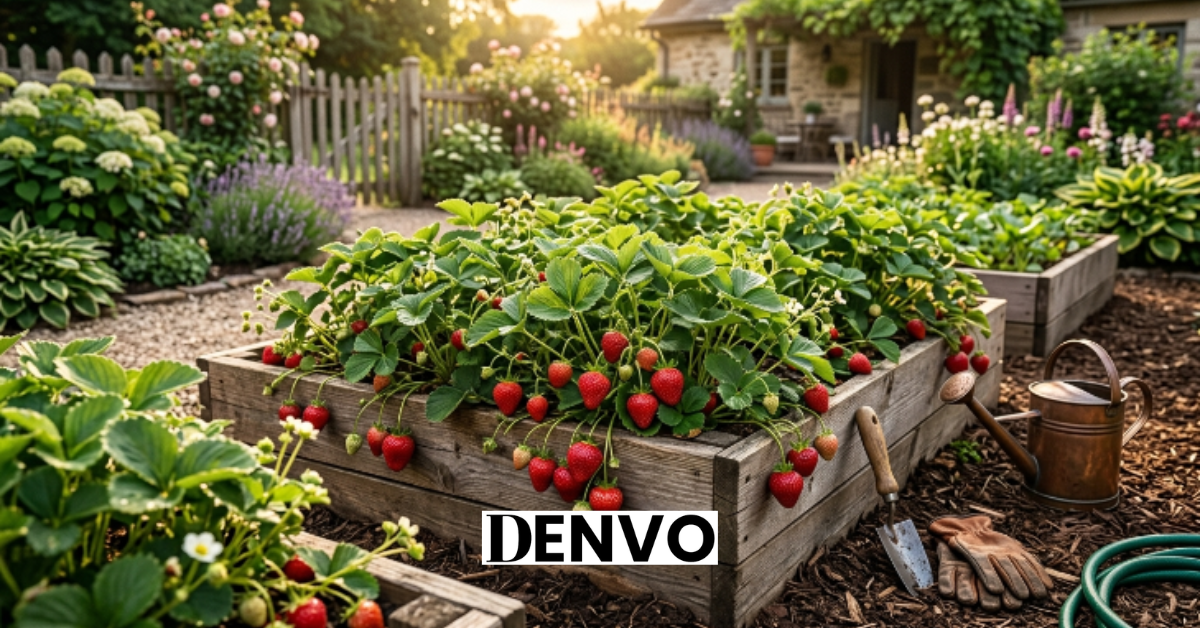
I killed three strawberry plants before I figured out the one mistake nearly every beginner makes. Turns out, the internet’s “easy fruit for beginners” advice leaves out the part that actually matters.
Quick answer
To grow strawberries, plant them in well-draining soil with 6+ hours of sun, space plants 12-18 inches apart, water 1-2 inches weekly, and remove runners early on. Most varieties produce fruit within 4-6 weeks of flowering, and a single healthy plant can yield 1-2 pounds of berries per season.
If you’ve ever bought a strawberry plant from a garden center, felt hopeful for about two weeks, and then watched it shrivel into a sad little stick — you’re not alone. I’ve been there. Growing strawberries isn’t hard, but it’s not quite as foolproof as the seed packets make it sound either. There’s a handful of details that separate a plant that limps along from one that hands you bowls of fruit all summer. Let’s get into what actually works.
How to Grow Strawberries Starts With Choosing the Right Soil
Soil is where most people go wrong, and it happens before the plant even goes in the ground. Strawberries hate wet feet. Their roots are shallow and fine, and if water pools around them, they’ll rot within days, not weeks.
You want soil that’s loose, sandy-loamy, and slightly acidic — somewhere around a pH of 5.5 to 6.8. If your soil is heavy clay (mine was, in my first backyard), mix in compost and coarse sand until it crumbles easily in your hand instead of forming a solid clump.
Raised beds or containers solve this problem instantly if your native soil is stubborn. I switched to a raised bed after my second dead plant, and the difference was almost embarrassing — my yield went from a handful of berries to nearly three pounds off four plants.
Sunlight Requirements Matter More Than People Admit
Six hours of direct sun is the minimum, not a suggestion. Strawberries grown in partial shade will survive, technically, but they’ll produce smaller, less sweet fruit — and fewer of it.
I once tucked a few plants along a fence line that got about four hours of morning light. They looked healthy enough, green and full, but the berries stayed small and a little sour all season. The plants just a few feet away in full sun produced berries nearly double the size.
If your yard is shady, don’t force it. Move plants into large containers you can shift throughout the day, or find the sunniest patch you’ve got, even if it’s small. A tiny sunny corner beats a big shady one every time.
Watering Strawberries the Right Way Prevents Most Common Problems
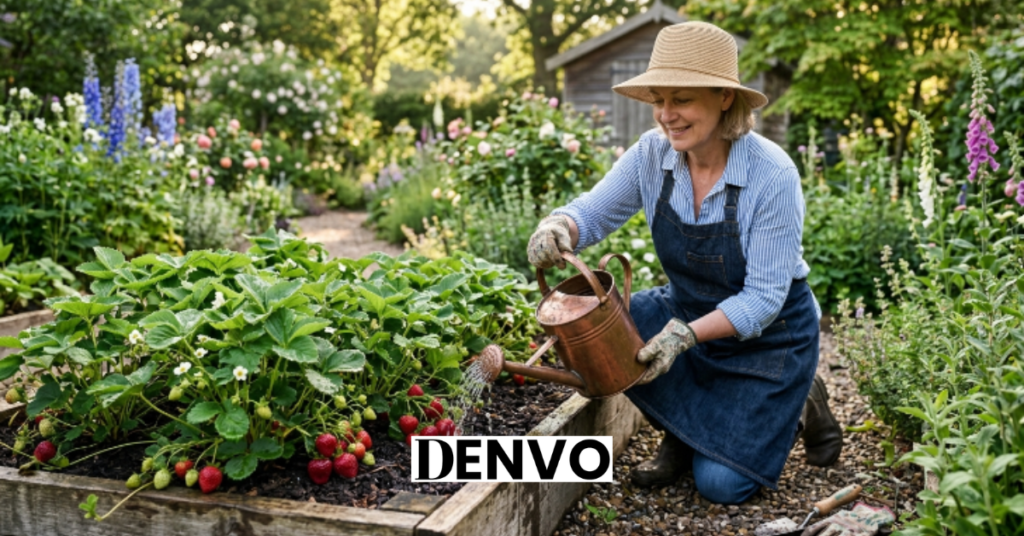
Strawberries need consistent moisture, not soaked soil. Aim for about 1 to 1.5 inches of water per week, whether that comes from rain or your hose. Inconsistent watering — bone dry one week, drenched the next — is one of the fastest ways to trigger blossom rot or stunted fruit.
Morning watering is best because it gives leaves time to dry before evening, which cuts down on fungal issues significantly. Drip irrigation or a soaker hose works better than overhead sprinklers here; wet leaves overnight are basically an invitation for mold.
Here’s the surprising part most guides skip: overwatering kills more strawberry plants than underwatering does. People panic when leaves droop and flood the soil, when often the plant just needs a day to recover from heat stress. Stick your finger two inches into the soil — if it’s still damp, hold off.
Spacing and Planting Depth Determine Your Entire Harvest
Plant strawberries too close together, and you’ll spend the whole season fighting for airflow and sunlight between crowded leaves. Space them 12 to 18 inches apart, with rows about 2 feet apart if you’re planting several.
Planting depth trips people up constantly. The crown — that woody bit where the leaves meet the roots — needs to sit exactly at soil level. Bury it too deep, and it rots. Plant it too shallow, and the roots dry out and the plant topples over in a strong wind.
- June-bearing varieties produce one large harvest, typically in early summer
- Everbearing varieties produce two to three smaller harvests spread through the season
- Day-neutral varieties produce fruit continuously as long as temperatures stay moderate
Pick based on whether you want one big strawberry event or a steady trickle all summer. I grow both now — June-bearing for jam-making binges, day-neutral for snacking straight off the vine.
Pruning Runners Is the Step Nobody Tells You About
This is the contrarian bit that surprised me most: letting your strawberry plant grow freely actually reduces your fruit yield. Strawberries send out runners — long stems that root into new plants — and if you let every single one take hold, your original plant spends its energy on babies instead of berries.
Snip most runners off as soon as you spot them, unless you’re deliberately trying to expand your patch. I let my first-year plants run wild because I thought more plants meant more strawberries. Instead, I got a tangled mat of leaves and barely a dozen berries total. The next year, I cut runners weekly, and that same bed produced over six pounds of fruit.
Keep one or two runners per plant if you want to propagate new ones for next season, and remove the rest. It feels counterintuitive to cut away growth, but it works.
Practical Action Steps: Planting Strawberries From Start to Harvest
If you want the short version to actually go do this weekend, here’s the order that works:
- Test your soil pH and amend with compost if it’s heavy or alkaline
- Choose a site getting at least 6 hours of direct sun
- Plant crowns at soil level, spaced 12-18 inches apart
- Water deeply once or twice a week rather than lightly every day
- Mulch with straw to keep berries clean and retain moisture
- Remove runners weekly unless you want to propagate
- Feed with a balanced fertilizer in early spring and again after the first harvest
Stick to that list and you’ll skip the mistakes that took me two full growing seasons to figure out on my own.
Dealing With Pests Without Losing Your Whole Crop
Birds and slugs will find your strawberries before you do — that’s just reality. Netting is the simplest fix for birds; drape it over the plants once berries start turning pink, since that’s exactly when birds start paying attention too.
For slugs, crushed eggshells or diatomaceous earth around the base of plants works surprisingly well without chemicals. I lost nearly half a harvest to slugs one rainy June before I started doing this, and the difference the following year was dramatic.
Aphids show up occasionally too, usually on the undersides of leaves. A strong spray of water knocks most of them off, and it rarely escalates into a real infestation if you catch it early.
FAQs
How long does it take to grow strawberries from planting to harvest?
Most bare-root strawberry plants take about 4 to 6 weeks from flowering to ripe fruit. If you’re planting in early spring, expect your first real harvest by late spring to early summer, depending on your variety and climate.
Can you grow strawberries in containers or pots?
Absolutely, and it’s often easier for beginners since you control the soil completely. Just make sure the container has drainage holes and is at least 8 inches deep, since strawberry roots need room to spread.
Do strawberry plants come back every year?
Yes, strawberries are perennials and will typically produce for 3 to 5 years before yields start declining. After that, it’s worth replacing older plants with new runners you’ve propagated along the way.
What’s the biggest mistake beginners make when learning how to grow strawberries?
Overwatering and poor drainage cause more failed strawberry patches than anything else. The second most common mistake is letting runners take over instead of pruning them, which quietly steals energy away from fruit production.
Why are my strawberry plants growing leaves but no fruit?
This usually points to too much nitrogen in your fertilizer, which pushes leafy growth at the expense of flowers and fruit. Switch to a fertilizer lower in nitrogen and higher in phosphorus and potassium once plants are established.
Conclusion
Growing strawberries really comes down to a few things: good drainage, plenty of sun, consistent water, and the discipline to cut back runners even when it feels wrong. Get those basics right, and the rest tends to fall into place on its own. My own patch went from three dead plants to pounds of fruit once I stopped overthinking it and started paying attention to what the plants were actually telling me.
Have you tried growing strawberries before, and what tripped you up? Drop a comment below — I’d genuinely like to know what part gave you the most trouble, and I’m happy to help troubleshoot.