
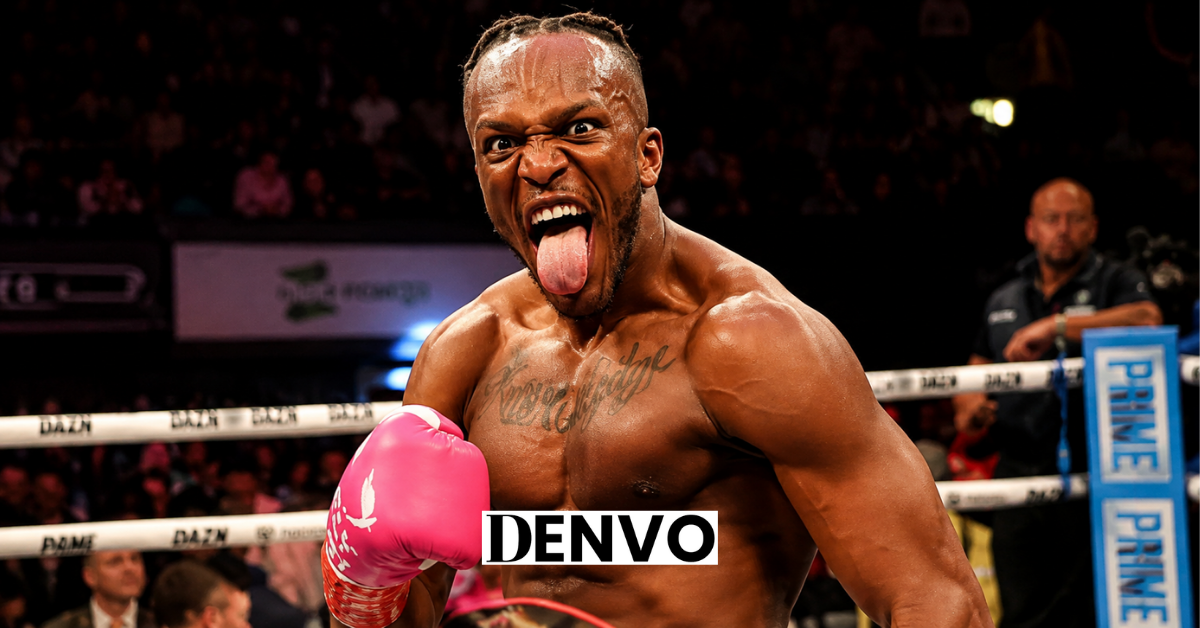
If you’ve seen the name “Misfits Boxing” trending after a YouTuber knocked someone out, or you’ve stumbled across a DAZN card featuring people you recognize from TikTok rather than the sports pages, you’re not imagining things. Misfits Boxing is a real, sanctioned boxing promotion — just not the kind boxing fans grew up watching. This guide explains exactly what it is, how the fights are structured, who runs it, whether it’s safe, and how to actually watch an event, without the hype or the dismissiveness that usually surrounds the topic.
What Is Misfits Boxing?
Misfits Boxing (often shortened to MFB or simply “Misfits”) is a London-based crossover boxing promotion. Instead of matching career professional boxers against each other, it primarily books fights between internet personalities, content creators, musicians, and social media influencers, with a growing number of trained professional boxers mixed into the same event cards.
The promotion runs under the banner “MF & DAZN: X Series,” reflecting its broadcast partnership with the streaming service DAZN, which has carried Misfits events since the company’s launch. Fights take place under standard boxing rules — gloves, a referee, judges, a ring — but the matchmaking philosophy is different. A Misfits card might feature a YouTuber with a few months of training in one bout and a genuine professional prospect building a 10-0 record two fights later.
This dual identity is the single most important thing to understand about Misfits Boxing: it’s simultaneously an entertainment product built around personalities with existing online audiences, and, through its newer MF Pro division, an actual pathway into professional boxing.
Who Founded Misfits Boxing (and Why)
Misfits Boxing was founded in 2022 by British YouTuber and musician KSI (Olajide “JJ” Olatunji), his manager Mams Taylor, and boxing promoters Kalle Sauerland and Nisse Sauerland of Wasserman Boxing. KSI had already boxed twice against fellow YouTuber Logan Paul in 2018 and 2019, and those fights proved that internet-famous personalities could sell tickets and pay-per-views on a scale that surprised the traditional boxing industry. Misfits Boxing was built to formalize and scale that model into a repeatable promotion rather than a one-off novelty event.
The promotion’s first show, MF & DAZN: X Series 001, took place on 27 August 2022 at The O2 Arena in London, headlined by KSI facing Swarmz and Luis Alcaraz Pineda on the same night. That event set the template Misfits has followed since: a mix of influencer-vs-influencer fights, occasional exhibition-style bouts, and undercard fighters trying to establish real boxing records.
KSI serves as CEO, with Taylor and Kalle Sauerland acting as co-presidents. The promotion is headquartered in London but has since staged events across the UK, the United States, and the Middle East, including a card in Doha, Qatar.
How Misfits Boxing Fights Work
Misfits fights follow modified professional boxing rules rather than a completely separate rulebook. A few structural details set them apart from a typical night of professional boxing:
Round length and count. Most Misfits bouts run three or four rounds at two minutes each, which is shorter than the three-minute rounds standard in professional boxing. Main events and title fights are sometimes extended to five or six rounds. The shorter format reflects the more limited training background of many competitors.
Weight classes. Misfits uses its own set of weight divisions, adapted for a roster that includes far more first-time fighters than a conventional boxing card. These titles — Misfits cruiserweight champion, for example — exist inside the promotion’s own ecosystem and are not recognized by the sport’s major sanctioning bodies (the WBC, WBA, IBF, or WBO).
Sanctioning and medical oversight. Misfits events are licensed through recognized boxing associations in the country where they’re held, which means fighters go through standard pre-fight medical screening, weigh-ins, and licensed officiating, the same baseline safety infrastructure used in professional boxing.
Tag-team boxing. In 2023, Misfits introduced a tag-team format in which two-boxer teams alternate fighters mid-bout, similar in spirit to tag-team wrestling. It’s one of the promotion’s more unconventional experiments and has drawn both curiosity and criticism from boxing purists who see it as drifting toward scripted entertainment rather than sport.
Judging and stoppages. Fights are scored using the standard 10-point must system, and referees can stop a bout on safety grounds exactly as they would in any professional contest.
Misfits Boxing vs. Traditional Boxing
The clearest way to understand what makes Misfits different is to compare it directly to a conventional professional boxing card.
| Aspect | Misfits Boxing | Traditional Professional Boxing |
|---|---|---|
| Who competes | Mostly influencers/content creators, plus a growing professional (MF Pro) roster | Career boxers, typically with amateur backgrounds |
| Round length | Usually 2 minutes | 3 minutes |
| Titles | Misfits’ own belts, not recognized by WBC/WBA/IBF/WBO | Sanctioning-body world and regional titles |
| Path to competing | Built-in social media following, matched by promoters | Amateur record, rankings, sanctioning body approval |
| Broadcast | DAZN (MF & DAZN: X Series) | Varies: DAZN, ESPN, Sky Sports, PPV networks |
| Primary goal | Entertainment first, competition second (though improving) | Competitive ranking and world title progression |
Neither format is inherently more legitimate as a business; they’re built to satisfy different audiences. Misfits is closer to a hybrid of sports and reality entertainment, while traditional boxing is organized around a fighter’s long-term ranking and title trajectory.
MF Pro: The Professional Boxing Division
In 2024, Misfits launched MF Pro, a dedicated professional boxing division that signs boxers with genuine amateur pedigree who are turning professional, rather than influencers. This is arguably the most significant shift in the promotion’s short history, because it puts Misfits in direct competition with established professional boxing promoters for young talent, not just with other entertainment brands for online attention.
MF Pro events run under standard professional boxing conventions and feature fighters building legitimate records, weight-class by weight-class, the same way a prospect would under any traditional promoter. In 2026, for example, MF Pro staged “MF Duel 2: Mitchell vs. Rosado,” a light heavyweight title fight between professional boxers Ty Mitchell and Gabriel Rosado, which Mitchell won by unanimous decision.
The practical effect for readers trying to understand Misfits today: a single event poster might list an influencer fight, a tag-team novelty bout, and a serious MF Pro title fight on the same card. Checking whether a specific bout is billed under “MF Pro” is the fastest way to tell whether you’re about to watch two trained boxers or two content creators.
Misfits Boxing vs. Jake Paul’s Promotion — Clearing Up the Confusion
This is one of the most common points of confusion, and most competing articles skip over it entirely. Misfits Boxing and Jake Paul’s boxing ventures are not the same organization.
Misfits Boxing is KSI’s promotion, co-founded with Mams Taylor and the Sauerland brothers. Jake Paul, meanwhile, has fought under various banners over the years and later built his own promotional company, Most Valuable Promotions (MVP), which has staged separate high-profile crossover cards, including bouts against Mike Tyson and Anthony Joshua. Logan Paul, Jake’s brother, has appeared on Misfits cards as an opponent (notably in the 2023 “Prime Card” against Dillon Danis), but that doesn’t make Misfits and MVP the same company.
The short version: KSI runs Misfits Boxing. Jake Paul runs his own separate promotional operation. Both compete in the same broad “crossover boxing” space and sometimes share broadcast partners like DAZN or Netflix, but they are independent businesses with different owners, rosters, and event calendars.
Notable Misfits Boxing Fighters and Fights
A handful of names recur across Misfits cards and are useful reference points if you’re trying to follow the promotion:
- KSI — Co-founder and the promotion’s biggest draw, though he stepped back from actively defending his own Misfits title in 2024 to focus on other projects.
- Deji — KSI’s brother, also a YouTuber, who has fought regularly on Misfits cards and remains a consistent audience draw.
- Salt Papi — One of the promotion’s most talked-about fighters, known for a flashy in-ring persona alongside a genuinely developing skill set.
- Slim Albaher — A recurring middleweight competitor who has built one of the more credible in-ring records among Misfits’ influencer roster.
- AnEsonGib — A YouTuber-turned-fighter whose only professional-style loss on record came against Jake Paul, and who has remained active in Misfits’ middleweight scene.
- Ty Mitchell — An MF Pro light heavyweight titleholder representing the promotion’s push into legitimate professional boxing.
The promotion has also featured established combat sports names moving into the crossover format, including MMA fighters Darren Till and Dillon Danis, and former professional boxers such as Tommy Fury and Gabriel Rosado.
How to Watch Misfits Boxing
Misfits events are broadcast almost exclusively through DAZN, the same streaming service that carries other major boxing promotions like Golden Boy and Matchroom. There are two ways events are typically sold:
As part of a standard DAZN subscription. Many regular fight-night cards are included at no extra cost if you already have an active DAZN plan.
As a separate pay-per-view (PPV) purchase. The promotion’s biggest cards — main events featuring top names — are often sold as an additional PPV fee on top of a DAZN subscription, historically ranging from roughly $10 to $70 depending on the specific card, region, and whether you’re on a promotional pricing tier.
DAZN’s subscription structure has changed over time, so it’s worth checking current pricing directly on DAZN before an event. As of 2026, DAZN offers a Standard tier (around $20–$31 per month depending on billing term) that requires separate PPV purchases for premium cards, and a DAZN Ultimate tier (around $45 per month or roughly $450 per year) that bundles a set number of PPV events into the subscription. Availability, exact pricing, and which specific Misfits cards are included versus sold separately vary by country, so confirming details on DAZN’s own site or app close to an event date is the most reliable approach.
Some free content — prelim fights, weigh-ins, and highlight clips — is occasionally shown on the official Misfits Boxing YouTube channel, but full main cards are reserved for DAZN.
Is Misfits Boxing Safe? The Criticism, Fairly Explained
This is the question most competing articles either avoid or answer with pure opinion. Here’s a balanced look at both sides.
The safety case in Misfits’ favor: Events are held under licensed boxing sanctioning bodies, which means fighters undergo standard medical screening, licensed referees can stop fights, and judging follows the conventional 10-point system. Compared to an unregulated exhibition, this gives Misfits meaningfully more structural oversight than a backyard or unsanctioned bout.
The legitimate criticism: Boxing writers and industry figures have repeatedly raised two concerns. First, that matching untrained influencers against each other, some with only a few months of preparation, creates avoidable risk that wouldn’t be permitted for professional fighters with comparable experience levels. Second, that referees on some cards have been criticized for letting one-sided fights continue longer than they should, which increases the risk of unnecessary injury regardless of how the fight is ultimately scored.
It’s worth being precise here: boxing carries inherent risk of serious injury at every level of the sport, from amateur club shows to world title fights, and that risk is not unique to Misfits. The debate around Misfits specifically centers on whether matching inexperienced fighters for entertainment value, rather than competitive merit, raises that baseline risk further. Reasonable people in the boxing industry disagree on how large that gap actually is, and no independent, peer-reviewed injury-rate comparison between Misfits and traditional novice boxing currently appears to exist publicly. If you’re specifically weighing whether to attend or participate in a similar amateur event, that’s a conversation worth having directly with a licensed boxing coach or your state/national boxing commission, since the risk profile depends heavily on the specific fighters and card in question.
Why Misfits Boxing Matters
Whatever your view of the format, Misfits Boxing has measurably changed how boxing promotions think about audience-building. It proved that a fighter’s existing social media following can translate directly into pay-per-view buys and arena attendance, a lesson that traditional promoters have since started applying to their own events by featuring more crossover-style undercards.
The launch of MF Pro also signals where the promotion is heading: rather than staying purely in influencer-fight territory, Misfits is positioning itself to develop and promote genuine professional talent, competing more directly with established boxing promoters for the next generation of fighters. Whether that division eventually produces a sanctioning-body world champion will likely determine how seriously the traditional boxing world ends up treating Misfits Boxing in the long run.
FAQ
Is Misfits Boxing real boxing?
Yes, in the sense that fights use standard boxing rules, licensed officials, and sanctioned medical protocols. The titles awarded are Misfits’ own, not recognized by the WBC, WBA, IBF, or WBO, and many competitors are not career professional boxers, which is why it’s classified as “crossover boxing” rather than mainstream professional boxing.
Who owns Misfits Boxing?
It was founded by KSI (Olajide Olatunji), Mams Taylor, and boxing promoters Kalle and Nisse Sauerland of Wasserman Boxing. KSI serves as CEO.
Is Misfits Boxing the same as Jake Paul’s boxing promotion?
No. Misfits Boxing is KSI’s company. Jake Paul competes independently and also runs his own separate promotion, Most Valuable Promotions. They are distinct organizations that occasionally share broadcast partners or opponents.
How many rounds are Misfits fights?
Most undercard fights are three or four rounds of two minutes each. Main events and title fights sometimes extend to five or six rounds.
Where can I watch Misfits Boxing in the US?
Primarily through DAZN, either included with certain subscription tiers or as a separate pay-per-view purchase for bigger cards. Check DAZN’s site directly for current pricing before an event, since it changes by card and region.
What is MF Pro?
MF Pro is Misfits Boxing’s professional division, launched in 2024, which signs boxers with real amateur backgrounds turning professional, distinct from the promotion’s influencer-focused bouts.
Has anyone been seriously injured in a Misfits Boxing fight?
Boxing at every level carries a risk of serious injury, and Misfits fights are no exception. Specific injury reports vary by event and are best verified through contemporaneous sports reporting rather than general summaries, since claims about individual incidents can be exaggerated on social media.
Conclusion
Misfits Boxing is best understood as two things happening under one roof: an entertainment-driven crossover boxing promotion built on influencer star power, and, increasingly, a legitimate professional boxing operation through its MF Pro division. It runs under real sanctioning oversight, but it prioritizes audience appeal in ways traditional boxing does not, which is exactly why it draws both massive pay-per-view numbers and consistent criticism from boxing purists. If you’re deciding whether to watch, check the card first: an MF Pro-billed fight means trained professionals building real records, while the rest of the bill is closer to sanctioned entertainment. Either way, DAZN remains the only reliable place to watch the full broadcast.