
You’ve typed “fast food near me” into your phone at least a hundred times this year, and half the time you still end up somewhere disappointing. Sound familiar?
Quick answer
The fastest way to find good fast food near you is to combine map apps with real-time filters (open now, delivery, ratings 4+), check photos from the last 30 days instead of old stock images, and cross-reference with a delivery app for wait times. This takes under two minutes and saves you from soggy fries and cold burgers.
I’ve ordered fast food more times than I’d like to admit — road trips, late-night cravings, lunch breaks when I forgot to meal prep (again). Somewhere along the way, I got tired of rolling the dice on whatever popped up first in search results. So I started paying attention to what actually works when you’re standing there, hungry, phone in hand, trying to decide where to go. Turns out there’s a smarter way to search than just typing “fast food near me” and clicking the first blue pin.
Fast food near me searches usually fail because of stale data
The number one reason your search results let you down is outdated information. A place might show up as open, but it closed six months ago, or the menu photos are from 2019 and don’t match what they actually serve now.
I learned this the hard way in Austin, standing outside a “24-hour” drive-thru at 11 PM that had clearly shut its doors for the night. The lights were off, the app said open, and I was starving. That’s when I started checking the “updated” timestamp on reviews before trusting a listing.
- Look for reviews posted within the last 2-4 weeks
- Check if the listing has recent photos, not just the default ones
- Confirm hours match across at least two platforms (Google and the delivery app)
The best fast food near me results come from combining three data points
Relying on just one app gives you a partial picture. Google Maps shows proximity, but Uber Eats or DoorDash shows real-time wait estimates, and Yelp often has the most honest reviews.
When I’m actually hungry and not just browsing, I check all three in under 90 seconds. Google tells me it’s 0.8 miles away. DoorDash tells me the wait is 22 minutes. Yelp tells me three people this week said the fries were cold. That’s enough to make a real decision instead of a hopeful guess.
Here’s a surprising insight most people miss: the top-ranked result on Google isn’t always the fastest option. Sometimes it’s ranked higher because of overall popularity or ad spend, not because it’s close or currently fast. I’ve skipped the number-one spot more than once because a place ranked fourth had a 12-minute wait versus a 35-minute one.
Ratings above 4.2 stars tend to predict consistency, not just quality
A lot of people assume a 4.8-star spot is automatically better than a 4.3-star one. In my experience, that’s not quite true.
Places sitting between 4.2 and 4.6 stars often have more reviews, which means the rating reflects a bigger sample size and fewer flukes. A 4.9-star spot with only 40 reviews might just have a small, loyal crowd. A 4.3-star spot with 2,000 reviews has survived a lot more scrutiny.
I once picked a burger place with 4.9 stars over one with 4.4 stars, purely based on the number. The 4.9 place was fine, but honestly forgettable. The 4.4 place, which I tried a month later out of curiosity, had a smash burger that I still think about. Numbers matter, but context matters more.
Time of day changes which fast food near me options actually make sense
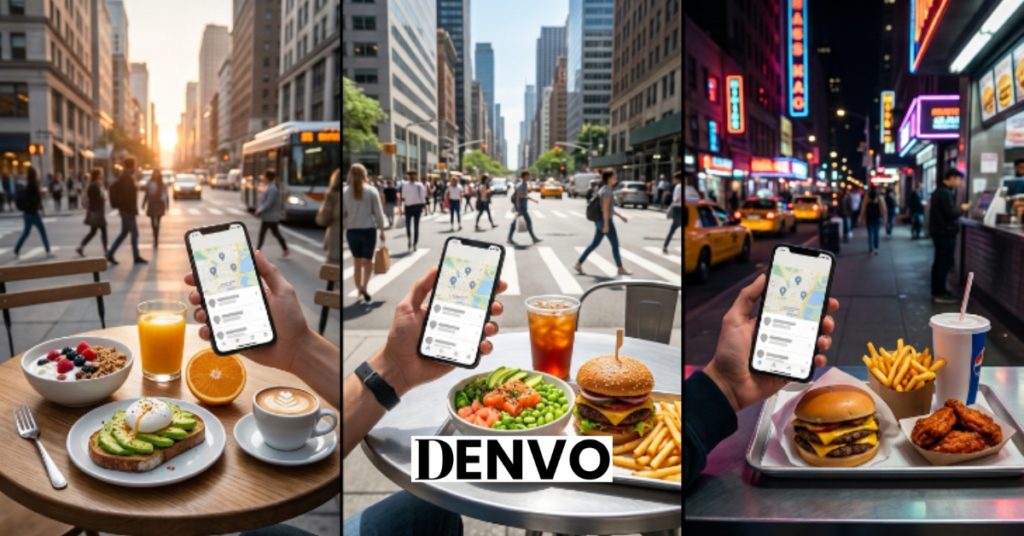
What works at noon doesn’t work at 1 AM. Lunch rushes mean longer waits at popular chains, while late-night options narrow down fast because half the places on your list have already closed.
Around 12:30 PM on a weekday, drive-thru lines at popular spots can stretch past 15 minutes easily. I’ve timed it. That’s not a guess — I sat in a Chick-fil-A line for 17 minutes once just to prove a point to myself.
If you’re searching late at night, filter specifically for “open now” rather than trusting general hours listed on a map, since holiday hours and temporary closures rarely get updated in real time. A five-minute wasted drive to a closed location is more annoying than just waiting an extra ten minutes somewhere that’s actually open.
Delivery apps often show different prices than walking in
This one surprises people every time I mention it. The same burger that costs $6.49 in-store can show up as $7.99 on a delivery app, even before fees and tips are added.
Markup exists because delivery platforms take a cut, and restaurants raise prices slightly to cover it. If you’re not in a rush and you’re close enough to drive or walk, checking the in-store price first can save you anywhere from $2 to $6 per order, depending on the place.
I started doing quick price comparisons after noticing a chicken sandwich meal jumped almost $3 between the app and the counter. Multiply that across a few orders a month, and it adds up fast.
How to actually find fast food near you in under two minutes
Here’s the exact process I use now, every single time, whether I’m at home or traveling somewhere new.
- Open Google Maps and search “fast food near me,” then sort by distance, not relevance
- Filter results to “open now” and check star ratings above 4.2 with at least 200 reviews
- Cross-check the top two or three options on a delivery app for real-time wait times
- Skim the most recent reviews (last 2-4 weeks) for complaints about closures, wait times, or quality drops
- Pick based on the combination of distance, wait time, and recent feedback — not just the first result
This takes less time than scrolling through five minutes of indecisive back-and-forth with whoever you’re eating with. Trust me, I’ve timed both.
FAQs
Is it better to search “fast food near me” on Google or a delivery app?
Google is better for finding options and checking hours, while delivery apps are better for real-time wait estimates and current pricing. I usually start on Google and confirm with a delivery app before committing.
Why do fast food near me results sometimes show closed restaurants?
Listings aren’t always updated in real time, especially for smaller franchise locations or ones that recently changed hours. Checking recent reviews is usually more reliable than trusting the listed hours alone.
Does location accuracy affect fast food near me searches?
Yes, GPS accuracy can shift results by half a mile or more, especially indoors or in dense city blocks. Turning on precise location settings on your phone usually fixes this within a few seconds.
Are drive-thru wait times listed accurately in map apps?
Not always. They’re often based on historical averages rather than live traffic in the restaurant, so a delivery app’s live estimate tends to be more accurate during peak hours.
What’s the fastest way to filter fast food near me by price?
Most delivery apps let you sort by price low-to-high, but for the most accurate numbers, check the restaurant’s own app or website since delivery platforms often mark items up.
Conclusion
Finding decent fast food nearby isn’t about luck. It comes down to checking a couple of extra data points instead of trusting the first search result you see. Once you build the habit, it takes less time than deciding what you actually want to eat.
What’s the worst fast food experience you’ve had from trusting a search result blindly? Drop it in the comments — I’d genuinely love to hear it.