
I once wore an orange puffer vest to a job interview and got asked, unprompted, if I was “doing a Marty McFly thing.” I wasn’t. But I should’ve been.
Quick answer
Back to the future fashion is the retro-futuristic style popularized by the 1988-89 trilogy — neon vests, self-lacing sneakers, oversized denim, and mismatched layers. It’s back in 2026 because Gen Z discovered it through TikTok nostalgia, and brands like Nike have leaned hard into the aesthetic with real product drops.
Here’s the thing nobody tells you about 80s movie fashion: it wasn’t actually trying to look cool in 1985. It was trying to look like the future, which is a completely different design problem, and that’s exactly why it still holds up 40 years later. I’ve spent way too many hours digging through thrift racks looking for the exact shade of that life vest Marty wears in 2015, and I’ve learned some things along the way that most “top 10 retro trends” listicles completely skip.
Back to the Future Fashion Started as Costume Design, Not Streetwear
Every piece in the trilogy was built by a costume department trying to solve a storytelling problem, not a style problem. Deborah Scott and her team weren’t chasing trends — they were inventing a visual shorthand so audiences could tell 1955 from 1985 from 2015 in half a second.
That’s why the color choices feel so loud. Marty’s puffer vest is bright enough to spot across a parking lot. His self-lacing Nike Air Mags practically glow under stage lighting. Nothing about it was subtle, and that’s the point.
Think about how weird that is compared to how we design “futuristic” clothes now. Modern sci-fi costuming tends to go monochrome and sleek — think all-black turtlenecks and matte fabrics. The 80s version of the future was loud, layered, and a little bit chaotic. Honestly? I think it aged better.
The Self-Lacing Sneaker Wasn’t a Joke — It Actually Shipped
Nike released a real, working version of Marty’s 2015 sneaker in 2016, and again with updated tech in later years, and people paid upward of $700 to $1,000 for pairs on resale. That’s not a rumor. That’s documented resale data from sneaker marketplaces tracking the Air Mag and later the HyperAdapt line.
I stood in line once — not for the shoes themselves, but for a store event tied to the anniversary re-release. The energy in that line was closer to a concert crowd than a shoe drop. People weren’t there for comfort. They were there because a movie prop from 1989 had become a real, wearable object almost 30 years later.
Here’s the contrarian part most fashion writers won’t say out loud: the actual shoe wasn’t that comfortable. Early versions had battery issues and the lacing mechanism sometimes jammed. People bought them anyway. That tells you something important — nostalgia sells harder than function ever will, and back to the future fashion proves it better than almost any other franchise-driven trend.
Why Gen Z Is Wearing 1985 Clothes They Never Actually Saw in Theaters
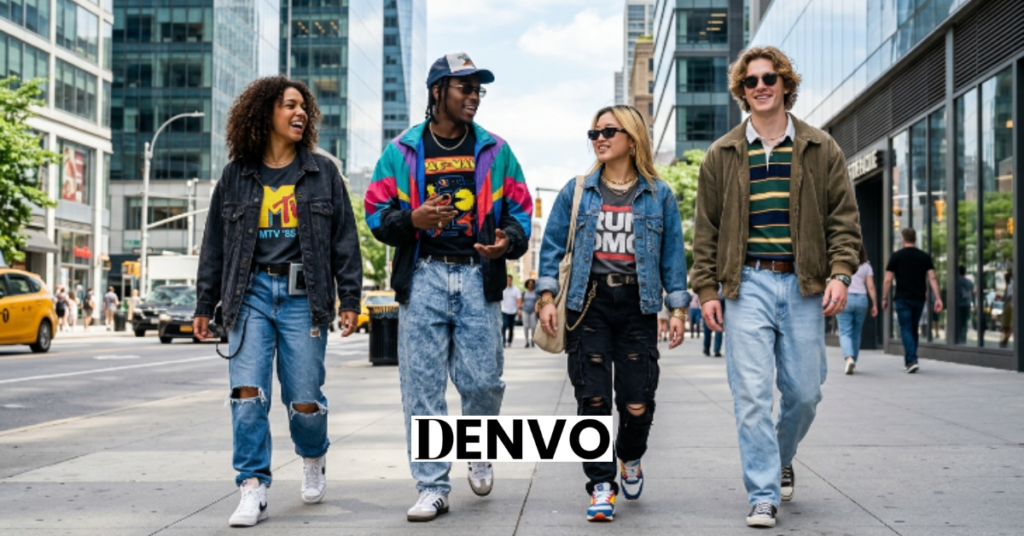
Most people born after 2000 have never seen the trilogy in a theater, and a solid chunk haven’t seen it at all. Yet TikTok videos tagged with 80s-inspired outfits and “Marty McFly style” routinely pull hundreds of thousands of views. Something’s clearly translating even without the original context.
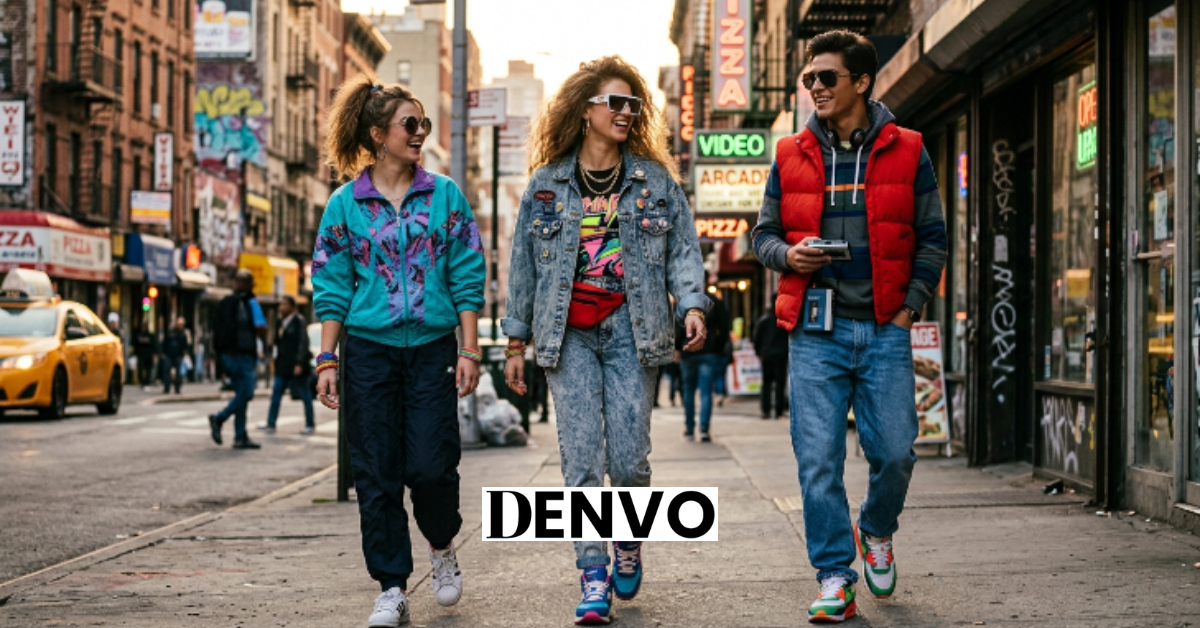
I think it comes down to layering logic. The outfits work because they’re built from separates — a denim jacket over a plaid shirt, cuffed jeans, one bold accessory. That’s basically the exact formula every “how to layer for fall” guide is teaching right now, just with better color contrast.
My niece, who is seventeen and has never sat through the full movie, showed up to a family dinner last winter in an orange vest almost identical to Marty’s 1985 look. She had no idea. She just thought it “looked like something from a show.” That’s the trend working exactly as it should — the aesthetic outlived the reference.
- Oversized denim jackets paired with fitted layers underneath
- One loud color statement piece per outfit (vest, sneaker, or jacket)
- Mismatched patterns worn with total confidence
- Function-first accessories (visible pockets, utility straps, vests)
READ MORE: Ladies 40s Fashion How to Dress Stylishly and Confidently at Any Size
The 2015 “Future” Predictions Got the Silhouette Right, Even Though the Tech Was Wrong
The movie predicted flying cars and hoverboards for 2015, and obviously that didn’t happen. But look at the clothing shapes instead of the gadgets, and the prediction gets a lot more accurate. Auto-adjusting fit, reflective materials, and tech-integrated accessories are now standard in performance and streetwear lines.
Adaptive fit technology — fabric or mechanisms that adjust to the wearer automatically — genuinely exists now in athletic wear and medical garments. It’s not sci-fi anymore. The self-lacing shoe wasn’t just a novelty item; it became a real category, with multiple brands releasing their own adaptive lacing systems in the years since.
Reflective and light-responsive fabric, once purely a costume trick to look “futuristic” under studio lights, shows up now in running gear and rainwear for actual visibility reasons. The movie guessed at form before function caught up, and it wasn’t far off.
How to Actually Wear Back to the Future Fashion Without Looking Like a Costume
This is where most guides fail you — they tell you to just “buy a vest” and call it a day. That’s how you end up looking like you’re headed to a themed office party instead of someone who just has good taste in layering.
Start with one anchor piece, not five. A single orange or red puffer vest, one pair of high-top sneakers, or a denim jacket with a bold lining is enough. Building an entire outfit around three loud pieces at once reads as costume rather than style.
Keep the base layer boring on purpose. Plain white tee, dark jeans, simple sneakers — then let your one statement piece do the work. This is the same rule stylists use for “hero pieces” in any decade, and it happens to be exactly how the costume department built Marty’s outfits in the first place.
Practical action steps if you want to try this out:
- Pick your era first. 1955 diner style, 1985 casual, or 2015 tech-layered — don’t mix all three.
- Choose one bold color piece and keep everything else neutral.
- Thrift the denim. Real vintage Levi’s from resale shops often beat new “distressed” reproductions on both price and texture.
- Add one utility detail — a visible strap, a vest pocket, or reflective trim — instead of head-to-toe branding.
- Skip the wig and goggles. That’s costume territory, not fashion territory.
For more on building a capsule wardrobe around statement pieces like this, check out ladies-40s-fashion.
FAQs
Is back to the future fashion still popular in 2026?
Yes, and arguably more than it was five years ago. Search interest and resale prices on related sneaker drops have both climbed since the trilogy’s re-releases and anniversary merchandise runs, and TikTok nostalgia content keeps pulling in new, younger viewers who never watched the original films.
What’s the easiest piece to start with if I want to try the look?
A puffer or utility vest in a bright color is the lowest-effort, highest-impact option. It layers over almost anything you already own, and it’s the single most recognizable piece from the trilogy’s wardrobe.
Are the actual self-lacing sneakers from the movie still available to buy?
Original prop replicas and licensed release versions occasionally reappear through resale marketplaces, though prices have historically ranged from several hundred to over a thousand dollars depending on condition and edition. Newer adaptive-lacing sneakers from major brands offer a similar tech concept at a fraction of the cost.
Does this style work for people who’ve never seen the movies?
Completely. The layering and color-blocking principles stand on their own as solid style fundamentals, which is exactly why younger audiences with zero context for the films are still recreating the look successfully.
What’s the biggest mistake people make trying this trend?
Overloading the outfit. Wearing the vest, the sneakers, and a loud printed shirt all at once turns it into a Halloween costume instead of an actual outfit. One statement piece, kept simple, always reads better.
Conclusion
Back to the future fashion has outlasted plenty of trends that were supposed to be more “timeless.” It survived because it was never really about the year 2015 or even 1985 — it was about bold color, confident layering, and gear that looked like it had a job to do. Whether you’re building an outfit from scratch or just adding one loud vest to your closet, the formula still holds up better than most modern “futuristic” style attempts.
Have you tried working this look into your own wardrobe, or spotted it showing up somewhere you didn’t expect? Drop a comment below and let me know what piece you’d actually wear.