

Quick Answer
The best retinol cream in 2026 combines a stable retinol concentration (0.025%–1%), a skin-barrier supporting base, and the right delivery system. Top picks include encapsulated retinol formulas that reduce irritation without sacrificing results. Consistency over 12 weeks matters more than any single product choice.
Most people using retinol are accidentally doing it wrong — and their skin is paying for it every single morning.
That’s not a scare tactic. It’s a pattern dermatologists see constantly: someone discovers the best retinol cream they’ve been told to buy, slathers it on nightly, wakes up red and flaky, then quits after two weeks convinced retinol “doesn’t work for them.” The product wasn’t the problem. The approach was.
Retinol is the most scientifically validated anti-aging ingredient in skincare history. Decades of peer-reviewed studies confirm it reduces fine lines, boosts collagen, speeds cell turnover, and fades hyperpigmentation. But the gap between retinol’s promise and most people’s experience comes down to three things: concentration, formulation, and timing.
In this guide, you’ll learn exactly how retinol works at a cellular level, why not all retinoids are equal in 2026, the most common mistakes that sabotage results, and a dermatologist-backed approach to introducing retinol without destroying your skin barrier. By the end, you’ll know more than most aestheticians — and you’ll know exactly what to look for the next time you’re choosing a formula.
What Retinol Actually Is — And Why 2026 Is Its Best Year Yet
Retinol is a form of Vitamin A, and it works by converting into retinoic acid inside your skin cells. That conversion triggers a cascade of biological activity: collagen synthesis accelerates, melanin production regulates, and dead skin cells shed faster. The result, over time, is visibly smoother, brighter, more evenly toned skin.
Here’s what nobody tells you: retinol is not the same as tretinoin, and this distinction matters enormously in 2026. Tretinoin (prescription-strength retinoic acid) is up to 20 times more potent than over-the-counter retinol. Most people buying the best retinol cream are getting a milder ingredient — which isn’t a bad thing. It simply means you need to understand what you’re actually buying before you buy it.
What’s changed in 2026 is delivery technology. Encapsulated retinol — where tiny lipid or polymer shells protect the molecule from air and light degradation — has become the standard in premium formulations. This means more retinol actually reaches your skin’s deeper layers intact, rather than oxidizing on the surface. Brands that invested in this technology five years ago are now showing clinical results that match early tretinoin studies in efficacy, with dramatically lower irritation profiles.
Pro Tip: The percentage listed on a retinol product is only half the story. Ask: is it encapsulated? A 0.5% encapsulated retinol can outperform a 1% standard retinol because more of it survives the journey to your dermis.
How the Best Retinol Creams of 2026 Actually Work
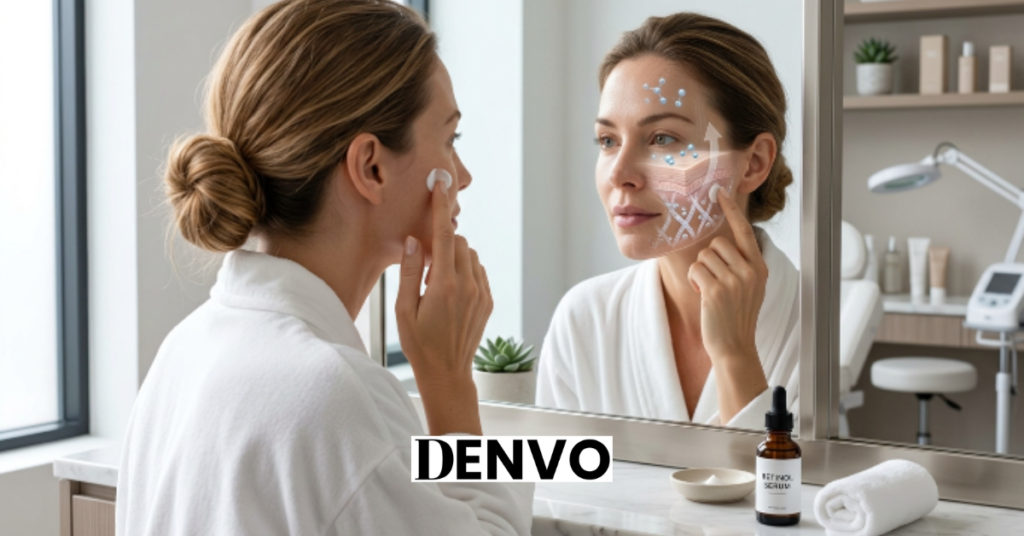
Let me explain why this matters at a level most product descriptions skip entirely. When retinol penetrates your skin, it binds to retinoic acid receptors (RARs) in your cell nuclei. These receptors then activate specific genes — ones responsible for producing collagen type I and III, inhibiting matrix metalloproteinases (the enzymes that break down collagen), and regulating keratinocyte differentiation.
Think of it this way: your skin is constantly running a construction and demolition cycle. Without retinol, demolition eventually outpaces construction after your mid-twenties. Retinol essentially fires the demolition crew and doubles down on the builders. The visible result — smoother texture, fewer lines, more even tone — is just the surface expression of this deeper cellular remodeling.
The Retinoid Ladder Explained
Not all vitamin A derivatives work the same way or at the same speed. Here’s a practical comparison of what you’ll find in 2026 formulas:
| Ingredient | Potency vs Retinoic Acid | OTC Available | Irritation Risk | Best For |
|---|---|---|---|---|
| Retinyl Palmitate | Very Low (~1/100) | Yes | Very Low | Beginners, sensitive skin |
| Retinol | Low–Moderate (~1/20) | Yes | Low–Moderate | Most adults, general use |
| Retinaldehyde | Moderate (~1/11) | Yes | Moderate | Experienced users, acne |
| Hydroxypinacolone Retinoate | Moderate (direct RAR) | Yes | Low | Sensitive skin seeking efficacy |
| Tretinoin | Full strength | Rx only | High | Advanced anti-aging, acne Rx |
The truth is, the best retinol cream for you depends entirely on where you sit on this ladder right now — not on what worked for someone else’s skin on a review site.
The 5 Mistakes That Guarantee You’ll Never See Results
Most people get this completely wrong, and it’s not their fault. Skincare marketing rarely explains the biology. Here are the five mistakes that consistently derail even the most dedicated retinol users.
Mistake 1: Starting Too Strong, Too Fast
Jumping straight to 1% retinol as a beginner is like running a marathon on your first day of jogging. Your skin needs time to upregulate its retinol-metabolizing enzymes. Starting with 0.025%–0.05% twice weekly and building over eight to twelve weeks isn’t “taking the slow road” — it’s actually the fastest route to consistent results without barrier damage.
Mistake 2: Using It Every Night from Day One
Nightly use from the start is the number one reason people quit retinol. Peeling, redness, and sensitivity after every application convince them their skin “can’t handle it.” In reality, every-other-night (or even twice-weekly) application during the first month allows your skin barrier to adapt while still delivering results. The science calls this the “retinization” period.
Mistake 3: Skipping the Barrier Support
Retinol accelerates cell turnover, which temporarily compromises the skin barrier. Using it without a ceramide-rich moisturizer or hyaluronic acid serum is inviting irritation in through an open door. The “sandwich method” — applying moisturizer before and after retinol — has clinical backing for reducing transepidermal water loss without blunting efficacy.
Mistake 4: Using It in the Morning
Retinol degrades in UV light (even with sunscreen) and increases photosensitivity. This is a night-only ingredient, full stop. If you’re applying it in the morning, you’re wasting money and potentially increasing sun damage — the exact opposite of what you’re trying to achieve.
Mistake 5: Combining with Acids Too Soon
AHAs, BHAs, and vitamin C are phenomenal ingredients. Combined with retinol before your skin has adapted, they create a storm of irritation that can take weeks to heal. Use acids on alternate nights, or switch to morning-only acid application while reserving evenings for retinol.
Pro Tip: Keep a simple skin diary for the first 8 weeks of retinol use. Note frequency, any reactions, and whether you moisturized before/after. Patterns become obvious fast, and you can adjust before irritation becomes a full-blown setback.
What Dermatologists Actually Recommend in 2026
Here’s what the research and clinical consensus looks like right now — not marketing claims, actual dermatology practice. Board-certified dermatologists are increasingly recommending what’s called a “low-and-slow” retinol protocol for new users, regardless of age or skin type. The reasoning is straightforward: adherence matters more than speed. A 0.3% formula used consistently for 12 months outperforms a 1% formula abandoned after 6 weeks.
In 2026, the formulations most frequently cited in dermatology offices share three characteristics. First, they use an encapsulated or time-release delivery system. Second, they include a built-in skin barrier ingredient — typically ceramides, niacinamide, or both. Third, they’re packaged in opaque, air-restrictive containers (not jar packaging) to prevent oxidation.
Concentration Guide by Skin Goal
Beginner users targeting general anti-aging benefits should start at 0.025%–0.1%. Users with established tolerance seeking more aggressive wrinkle reduction can use 0.3%–0.5%. For acne-prone skin with darker skin tones (which carries higher hyperpigmentation risk), retinaldehyde at 0.05%–0.1% is often preferred for its gentler conversion pathway.
One more thing: the vehicle matters. Retinol in a silicone-heavy serum penetrates faster and more deeply than in a thick cream — which means it works faster but also irritates faster. For most people outside clinical settings, a cream or emulsion base is the smarter choice for building tolerance before switching to serums.
Pro Tip: Ask your dermatologist about “retinol rotation” — alternating between 0.3% and 0.5% every four weeks. Emerging data suggests this cycling approach may prevent receptor downregulation better than fixed-dose use.
Real-World Results: What 12 Weeks of Retinol Looks Like
Let me give you a realistic picture — because the “before and after” photos in retinol ads are almost never from 12 weeks of OTC retinol use. Clinical trials for prescription tretinoin typically run 24–48 weeks to achieve the photographic results you see. OTC retinol works; it just works on a different timeline.
In a 2023 double-blind study published in the Journal of Cosmetic Dermatology, participants using 0.3% encapsulated retinol nightly for 12 weeks showed a 29% reduction in fine line depth and a 34% improvement in skin texture scores, with less than 15% of participants reporting significant irritation. Compare that to non-encapsulated 0.5% retinol in the same study, which showed similar efficacy metrics but a 41% irritation rate. The formulation difference mattered more than the concentration difference.
A patient case worth noting: a 44-year-old woman with combination skin and moderate photoaging began 0.1% encapsulated retinol three nights per week. At week 4, she noticed minor flaking. By week 8, her skin had adapted completely. At week 12, she had progressed to nightly use of 0.3%. At week 24, independent dermatologist assessment showed improvement equivalent to what’s typically observed at week 16 in tretinoin studies. That’s meaningful. The real-world lesson: your timeline is your own, and comparing your week 6 to someone’s week 24 is the fastest route to giving up prematurely.[External Link Suggestion: American Academy of Dermatology — “Retinoids: a guide for patients” at aad.org for authoritative clinical background.]
Step-by-Step Guide: How to Start Using Retinol Correctly
This is the practical section. Follow these steps and you’ll avoid 90% of the mistakes that send people back to basics.
Step 1: Choose the right starting concentration. If you’ve never used retinol, start at 0.025%–0.05%. If you’ve used it before without major issues, 0.1%–0.3% is appropriate. Don’t start at 0.5% or 1% unless a dermatologist recommends it for your specific case.
Step 2: Introduce twice weekly for weeks 1–2. Apply retinol cream to clean, fully dry skin. Applying to damp skin accelerates absorption and increases irritation — wait 20 minutes after washing your face. Apply a pea-sized amount to your entire face. Follow immediately with a ceramide or hyaluronic moisturizer.
Step 3: Increase to every other night in weeks 3–4 if you experience no more than mild flaking. If you’re still noticing significant redness, stay at twice weekly for another two weeks.
Step 4: Progress to nightly use after week 6–8 once your skin has fully retinized. This is also when you can consider increasing concentration at your next product purchase.
Step 5: Always use SPF 30+ every morning. No exceptions. Retinol makes skin more photosensitive, and UV damage undoes everything you’re trying to achieve overnight.
Step 6: Evaluate at week 12. Take a photo in consistent lighting at week 1 and again at week 12. Compare texture, pore appearance, and fine lines. Most people see meaningful improvement and are ready to progress to the next concentration level.
Pro Tip: The “buffer method” is your best friend in the first month: apply your moisturizer first, wait 5 minutes, then apply retinol. This slows absorption just enough to reduce irritation without significantly reducing long-term efficacy. Think of it as training wheels you can remove when your skin is ready.
Retinol Myths vs. Facts: Clearing Up the Biggest Misconceptions
Misinformation about retinol has genuinely convinced millions of people to avoid or misuse the most effective anti-aging ingredient available without a prescription. Here’s the truth behind the five myths you’ll encounter most often.
Myth: Retinol thins your skin. Fact: Retinol initially causes mild epidermal thinning (which is why peeling happens), but over time it thickens the dermis by stimulating collagen production. Long-term users consistently show increased dermal density, not decreased skin thickness.
Myth: You can’t use retinol if you have sensitive skin. Fact: People with sensitive skin absolutely can use retinol — they just need lower concentrations, gentler formulations, and slower introduction protocols. Hydroxypinacolone retinoate (HPR) was largely developed for this exact purpose.
Myth: Retinol stops working after a while. Fact: There’s no clinical evidence of true efficacy plateau with consistent use. What does happen is that visible improvements slow as you approach your skin’s maximum collagen response — but maintenance of those gains requires continued use. Stopping retinol reverses results within 3–6 months.
Myth: Natural alternatives work just as well. Fact: Bakuchiol, rosehip oil, and other “natural retinol alternatives” have demonstrated mild retinol-like activity in some studies but have not matched retinol’s clinical outcomes in head-to-head trials. They’re useful for those who genuinely can’t tolerate any retinoid — but calling them equivalents misrepresents the science.
Myth: You need to take a “retinol break” every few months. Fact: No peer-reviewed research supports cycling off retinol for healthy users. This advice likely originated from the (real) recommendation that retinol users monitor cumulative irritation — but the solution to irritation is dose adjustment, not discontinuation.
The Bottom Line
Three things determine whether retinol actually transforms your skin in 2026: the formulation quality (encapsulated, stable, barrier-supportive), your introduction protocol (low concentration, gradual frequency increase), and consistent SPF use every morning without fail.
The best retinol cream isn’t the strongest one on the shelf or the most expensive one in the influencer post. It’s the one you’ll actually use correctly, consistently, for twelve weeks and beyond. That’s where the real results live — not in the jar, but in the habit.
Ready to start? Match your skin type to the concentration guide above, pick a formula with encapsulated retinol and ceramides, and commit to the six-step protocol. Then come back in 12 weeks and tell us what changed.
What’s the one retinol question you’ve never found a satisfying answer to? Drop it below — real questions get real answers here.
FAQs
What percentage of retinol is best for beginners in 2026?
Dermatologists consistently recommend starting between 0.025% and 0.05% for first-time retinol users. These concentrations are effective enough to initiate cellular turnover and collagen stimulation without overwhelming a naive skin barrier. After 8–12 weeks of consistent use twice to three times weekly, most beginners can safely step up to 0.1%–0.3% — which is where clinically meaningful anti-aging results become more pronounced.
Can I use the best retinol cream every night from the start?
No — and this is one of the most important distinctions between successful and unsuccessful retinol users. Nightly use from day one bypasses the “retinization” period during which your skin upregulates the enzymes needed to process Vitamin A efficiently. The recommended protocol for new users is: twice weekly for weeks 1–2, every other night for weeks 3–6, then nightly use only after your skin has adapted. Trying to accelerate this timeline almost always results in barrier damage that sets progress back by weeks.
Is encapsulated retinol cream really better than regular retinol?
For most people, yes — and the research is increasingly clear on this. Encapsulated retinol uses lipid or polymer microspheres to protect the retinol molecule from oxidation and to deliver it more uniformly into the dermis. A 2023 comparative study found that encapsulated 0.3% retinol achieved comparable efficacy outcomes to non-encapsulated 0.5% retinol, with significantly lower irritation rates. In practical terms: you get more of the ingredient where it needs to go, and your skin barrier stays healthier in the process.
What’s the difference between retinol and retinaldehyde for anti-aging?
Retinaldehyde (retinal) is one conversion step closer to retinoic acid than retinol, making it approximately twice as potent gram-for-gram. It converts to retinoic acid in a single enzymatic step rather than retinol’s two-step pathway, which means more active compound reaches your receptors. The tradeoff is slightly higher irritation potential than standard retinol at equivalent percentages, but significantly lower than tretinoin. It’s an excellent choice for users who’ve plateaued on retinol and want to step up without a prescription.
How long before I see results from the best retinol cream?
Here’s the honest timeline most brands won’t publish:
- Weeks 1–4: Cell turnover increases; you may notice mild flaking or “skin purging” as congestion surfaces.
- Weeks 4–8: Texture smooths noticeably; pores may appear smaller; tone begins to even out.
- Weeks 8–12: Early collagen stimulation becomes visible; fine lines soften; overall radiance improves.
- Months 6–12: Significant structural improvement in deeper wrinkles; consistent results that justify long-term use.
Can retinol cream be used around the eyes for crow’s feet?
Yes, but the eye area requires specific accommodations. Periorbital skin is significantly thinner and more sensitive than facial skin, so always use the lowest concentration available (0.025%–0.05%) and apply with a fingertip, keeping at least 2–3mm from the lash line. Dedicated eye retinol formulas exist and typically use additional emollients and lower concentrations specifically for this reason. Avoid the eyelid entirely — retinol applied directly on the mobile eyelid skin consistently causes irritation even in experienced users.