

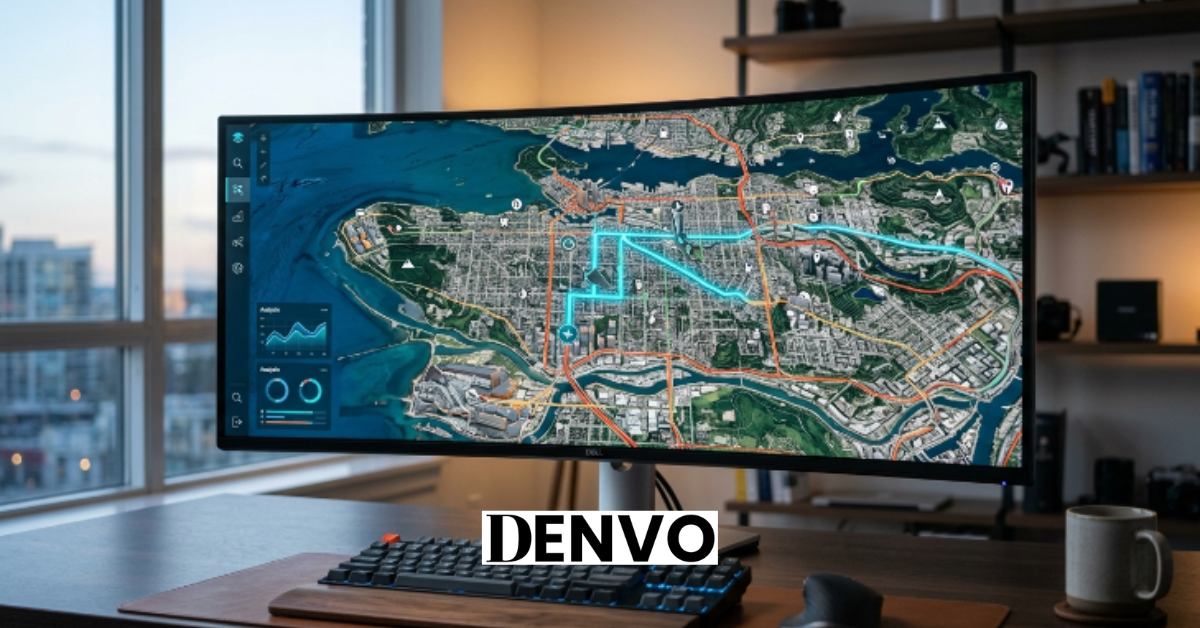
The Map Guide TweakMaps is a customisation and navigation enhancement resource that helps users modify, improve, and better understand digital map data — whether for gaming, GPS navigation, or location-based applications.
Key Points at a Glance:
- What it does: Provides structured guidance on tweaking and customising map layers, routes, and location data across various platforms.
- Who it’s for: Gamers, navigators, developers, and anyone who wants more control over how maps display and behave.
- Why it matters in 2026: With location-based apps and augmented reality growing rapidly, knowing how to adapt map data gives users a meaningful edge.
If you’ve ever wanted your maps to show exactly what you need — and nothing you don’t — The Map Guide TweakMaps is the resource worth understanding.
Introduction
Finding Your Way Around Has Never Been More Complicated
You’d think maps would be simpler by now. Decades of satellite data, billions of GPS pings every day, and yet — most of us have been sent the wrong way down a one-way street, lost signal at exactly the wrong moment, or found that the app simply doesn’t show the detail we actually need.
That’s where the map guide TweakMaps comes in.
Whether you’re a gamer trying to optimise in-game navigation, a developer building location-aware tools, or simply someone who wants better control over how digital maps behave, TweakMaps and its associated guide resources have become a go-to reference for people who want more from their mapping software.
In this article, you’ll learn exactly what the map guide TweakMaps is, how it works, why it’s become relevant in 2026, and — crucially — how to use it without making the common mistakes that trip most people up.
By the end, you’ll have a clear picture of whether this is something worth exploring and how to get the best out of it.
What Is the Map Guide TweakMaps?
Defining the Map Guide TweakMaps in Plain English
At its core, the map guide TweakMaps refers to a collection of guides, tools, and community-sourced resources designed to help users customise and modify digital map experiences across a range of platforms and applications.
The term “TweakMaps” itself describes the process of making targeted adjustments to map data — altering how routes are calculated, how layers of information are displayed, or how location data interacts with a specific app or game environment.
Think of it like this: most digital maps give you a standard view — roads, landmarks, a blue dot for your location. TweakMaps takes that baseline and lets you reshape it. You might want to highlight off-road paths, suppress motorway routes, add custom points of interest, or overlay entirely new data sets on top of existing map tiles.
The map guide, as a companion resource, provides structured documentation and community-tested instructions for doing exactly that — often in step-by-step format, aimed at both beginners and experienced users.
Related Concepts Worth Knowing
A few LSI (related) terms frequently come up alongside TweakMaps:
- Map modding — making modifications to map files, common in gaming communities
- Custom map layers — overlaying personalised or third-party data onto a base map
- GPS customisation — adjusting how routing algorithms behave in navigation apps
- Geospatial data editing — modifying the underlying coordinate and attribute data that maps are built from
In 2025 and into 2026, the line between these concepts has blurred considerably. Platforms like OpenStreetMap, Mapbox, and various game engines have made it easier than ever for non-specialists to engage with map data in ways that were once reserved for professional GIS (Geographic Information Systems) analysts.
The map guide TweakMaps sits right at the intersection of accessibility and technical depth — it’s approachable enough for a curious newcomer but detailed enough to satisfy someone with real technical goals.
Real-world example: a delivery driver in Manchester might use TweakMaps-style guidance to customise their navigation app so it avoids certain road types during peak hours. A game developer in Bristol might use it to ensure their open-world map feels geographically authentic. Both are valid, and both illustrate why the resource has found such a broad audience.
Why the Map Guide TweakMaps Matters in 2026
The Growing Importance of Map Customisation
Digital maps are no longer passive tools — they’re active infrastructure. In 2026, location data underpins everything from food delivery logistics to augmented reality experiences, smart city planning, and competitive gaming.
The map guide TweakMaps matters because it hands control back to the user. Here’s why that’s increasingly significant:
1. Location-Based Apps Are Everywhere
The UK’s app economy depends heavily on geolocation. From Deliveroo to Rightmove to Pokémon GO, nearly every consumer app now incorporates some form of mapping. Understanding how to customise or interrogate that data gives users and developers meaningful agency.
2. Gaming Communities Drive Innovation
The gaming world — particularly open-world and strategy games — has long been a breeding ground for map modding culture. Custom map tweaks in games like Cities: Skylines, Microsoft Flight Simulator, and various RPG titles have built thriving communities, many of whom apply these skills to real-world tools.
3. Privacy and Data Concerns Are Rising
Many users in 2026 are actively looking to reduce how much location data they share with apps. TweakMaps-style guidance helps users understand the data layer beneath their maps, which in turn helps them make informed choices about what to share — and what to suppress.
4. Open-Source Mapping Is Maturing
OpenStreetMap has grown into one of the most comprehensive geographic databases in the world. Map modification resources like TweakMaps guides help ordinary users contribute to and benefit from this open ecosystem without needing a degree in cartography.
The relevance isn’t theoretical — it’s practical, growing, and very much a 2026 concern.
Key Features and Components of TweakMaps Guidance
What You’ll Find Inside a Map Guide TweakMaps Resource
Layer Management and Overlay Control
One of the most immediately useful features covered in the map guide TweakMaps is layer management. Digital maps are built from stacked layers — base terrain, road networks, labels, satellite imagery, and custom data on top.
Layer control lets you decide what appears and what doesn’t. Want to see cycle paths but not bus routes? Hide commercial points of interest but keep hospitals visible? TweakMaps guidance typically walks users through the specific toggles, APIs, or file edits needed to achieve this across different platforms.
This is particularly useful for developers building bespoke applications and for gamers creating custom scenarios.
Route Algorithm Customisation
Routing — how a map decides to get you from A to B — is one of the most impactful things you can tweak. Default algorithms optimise for speed, but custom routing configurations can prioritise scenic routes, avoid toll roads, favour cycling infrastructure, or apply entirely bespoke rules.
The map guide TweakMaps resources often include worked examples of routing modifications, including how to adjust weighting factors in open-source routing engines like OSRM or Valhalla.
Map Tile and Style Editing
Map tiles are the building blocks of what you see on screen — each tile being a small image or data packet that renders a portion of the map. Custom tile styling allows users to change colours, fonts, road widths, and visual hierarchy.
For designers and developers, this opens up a world of possibilities. For everyday users, it means maps that look the way you want them to — not the way a default theme dictates.
Data Import and Export Tools
A significant section of most TweakMaps guides covers importing external data (such as GPX files from a run, KML files from Google Earth, or custom CSV location lists) and exporting edited maps for use elsewhere.
This portability is a major advantage — it means work done in one environment can be transferred, shared, or archived in another. Community-driven map edits, for instance, can be exported and contributed back to open databases.
Top Use Cases and Step-by-Step Approaches
How People Are Actually Using The Map Guide TweakMaps
Use Case 1: Gaming Map Mods — Step-by-Step
- Identify your game’s map format. Most modern games store map data in proprietary formats (e.g., .pak, .umap, .world). The map guide TweakMaps will typically reference the specific format for popular titles.
- Download the appropriate modding tool. Resources like Nexus Mods or community wikis often link to format-specific editors.
- Load the base map file into the editor and identify the layer or region you want to modify.
- Make targeted changes — altering terrain, adding custom markers, or adjusting route nodes.
- Test in-game before publishing or sharing. Stability checks matter.
- Back up originals before every session. This is non-negotiable.
Use Case 2: Navigation App Customisation
| Platform | Customisation Level | Key TweakMaps Approach |
|---|---|---|
| Google Maps | Limited (via settings) | Custom saved routes, offline maps |
| Apple Maps | Moderate (via Shortcuts) | Automation-based tweaks |
| OpenStreetMap/OsmAnd | High | Full data layer editing |
| Mapbox (developer) | Full | API-level tile and routing edits |
| HERE Maps (developer) | Full | SDK customisation and data feeds |
For most UK users, OsmAnd (Android/iOS) offers the deepest level of free customisation and is frequently referenced in TweakMaps communities.
Use Case 3: Developer API Integration
Developers using Mapbox GL JS or Leaflet.js can follow TweakMaps-style guidance to:
- Swap default map styles for custom-designed ones
- Inject real-time data feeds (traffic, weather, events) as overlay layers
- Implement geofencing logic to trigger map behaviour based on user location
- Build offline-capable maps for use in low-connectivity environments
Each of these approaches is documented at varying levels of technical depth in TweakMaps guide resources.
Use Case 4: Community Contribution to OpenStreetMap
Perhaps the most civic-minded use case — TweakMaps guidance helps ordinary people contribute accurate local knowledge to OpenStreetMap. Adding a missing footpath, correcting a closed road, or tagging a new business all improve the map for everyone.
The guide typically covers the OSM iD editor (web-based, beginner-friendly) and JOSM (desktop, advanced). Both are free, open-source, and genuinely useful.
How to Get the Best Results from TweakMaps

Making the Most of The Map Guide TweakMaps
Getting genuinely useful results from any TweakMaps guide requires a bit of preparation. Here’s how to set yourself up for success.
Start with your specific goal. The map guide TweakMaps covers a wide range of use cases. If you begin without a clear objective — “I want to customise routing in OsmAnd for cycling” or “I need to add custom markers to my Mapbox project” — you’ll spend more time browsing than doing.
Match the guide to your platform. Not all TweakMaps guidance applies to every tool. A technique for editing OpenStreetMap data won’t transfer directly to modifying a game map. Check that the resource you’re following is specific to your platform version.
Use community forums as a complement. The official guide is a starting point, but Reddit communities (r/openstreetmap, r/mapmaking), Discord servers, and GitHub issue threads often contain the practical, real-world answers to edge cases the main documentation doesn’t cover.
Test in a sandboxed environment first. Whether you’re editing game files or API configurations, always test changes in isolation before applying them to your main project. Mistakes in map editing can cascade — a misconfigured routing node, for example, can break an entire navigation flow.
Document what you change. Keep a simple changelog — even a text file will do. This makes it far easier to reverse a problematic edit or explain your work to collaborators.
Following these habits will dramatically reduce the frustration many new users experience when first exploring custom map tools.
Common Mistakes to Avoid with TweakMaps
What Goes Wrong — and How to Avoid It
Even experienced users stumble when working with map customisation. Here are the most common mistakes and why they matter.
Mistake 1: Not Backing Up Original Files This is the single most avoidable error. Before editing any map file — game or otherwise — back it up. Corrupted saves and broken configurations are almost always recoverable if you have the original. Without it, you’re starting from scratch.
Mistake 2: Applying Desktop Guides to Mobile Platforms Many TweakMaps resources were written for desktop environments. Mobile apps — even those based on the same underlying data — often have different menu structures, file locations, and permission requirements. Using the wrong guide leads to frustration and dead ends.
Mistake 3: Overlooking Licensing and Terms of Service Map data isn’t always free to modify and redistribute. OpenStreetMap data, for instance, is licensed under the Open Database Licence (ODbL), which has specific attribution requirements. Game files may be covered by EULAs that restrict modding. Always check before you publish or share your edits.
Mistake 4: Skipping the Community Research Step Most of the common pitfalls in TweakMaps work have already been encountered — and solved — by someone in the community. Spending ten minutes on a forum before diving in often saves hours of troubleshooting later.
Pro Tips for Advanced TweakMaps Users
Expert Advice for Getting More from Map Customisation
If you’ve mastered the basics and want to push further, here are some insider approaches.
Use vector tiles over raster tiles wherever possible. Vector tiles are resolution-independent, faster to load, and far more customisable. If your platform supports them (Mapbox, MapLibre, OsmAnd all do), switch. The visual and performance gains are significant.
Learn basic GeoJSON. Even a surface-level understanding of GeoJSON — the lightweight data format used to represent geographic features — will dramatically expand what you can do with TweakMaps. Most platforms accept it natively, and it’s human-readable, making debugging far easier.
Contribute back to open platforms. If your TweakMaps work surfaces errors or missing data in OpenStreetMap, fix them. The community benefits and your edits may end up in navigation apps used by millions.
Stay current with platform changelogs. Map APIs and apps update frequently. A TweakMaps technique that worked six months ago may have been superseded — or broken — by a platform update. Following the changelogs for tools like Mapbox, OsmAnd, or your game modding platform keeps you ahead of the curve.
Join a local mapping community. In the UK, OpenStreetMap has active regional groups — particularly in London, Manchester, and Edinburgh. These communities often share specialised TweakMaps knowledge and organise mapping events (known as “mapping parties”) where skills are shared in person.
FAQs
What exactly is the map guide TweakMaps?
The map guide TweakMaps is a structured resource — or collection of resources — that provides guidance on customising, modifying, and enhancing digital maps across different platforms. The term “TweakMaps” covers everything from adjusting visual map styles and routing algorithms to editing underlying geospatial data. The “guide” element refers to the documented, step-by-step instructions that make these customisations accessible to users who aren’t professional GIS specialists. It’s widely used by gamers, app developers, navigation enthusiasts, and open-source contributors alike, and its relevance has grown considerably alongside the expansion of location-based apps and augmented reality tools in 2025–2026.
How does the map guide TweakMaps work, and what are the benefits?
TweakMaps guidance typically works by providing platform-specific instructions for accessing and modifying the underlying data or configuration files that determine how a map looks and behaves. Benefits include greater visual control over map appearance, the ability to customise routing to suit specific needs (cycling, accessibility, scenic routes), improved integration of third-party data into existing map platforms, and — for gamers — the ability to create or modify in-game maps to enhance gameplay. For developers, following TweakMaps principles can reduce reliance on expensive proprietary mapping services by enabling deeper use of open-source tools like OpenStreetMap and MapLibre.
How do I choose the best TweakMaps approach for my needs?
Start by identifying your specific goal and your platform. If you’re working with a navigation app, the best approach depends on whether you’re on Android, iOS, or a developer platform. For gaming, the approach differs by engine and title. For open-source map contribution, OsmAnd or the OSM iD editor are strong starting points. Look for guides that are version-specific and recently updated — map customisation tools change frequently, and outdated documentation is one of the most common sources of confusion. Community forums and the official documentation for your specific platform are your best supplementary resources.
What mistakes should I avoid when using TweakMaps resources?
The most important mistake to avoid is editing original files without backing them up first. Second, always check that the guide you’re following is compatible with your specific platform and version — applying desktop instructions to a mobile app is a frequent source of frustration. Third, review the licensing of any map data you intend to modify or redistribute — OpenStreetMap data, for example, has specific attribution requirements under the ODbL licence. Finally, don’t skip the community research phase; most problems encountered in map customisation have already been solved and documented by someone else in a forum or GitHub thread.
Where can I find the map guide TweakMaps resources?
TweakMaps guidance is distributed across several types of resources. Community wikis, GitHub repositories, and Reddit communities (such as r/openstreetmap and r/mapmaking) are good starting points for open-source map customisation. For gaming map mods, Nexus Mods and game-specific wikis often host detailed guides. For developer-focused customisation, the official documentation for platforms like Mapbox, MapLibre, and HERE Maps is invaluable. Dedicated map modding Discord servers are also highly active in 2026 and often have pinned resources specifically addressing TweakMaps-style modifications. Searching for your specific platform alongside “map guide TweakMaps” will typically surface the most relevant community content.
Conclusion
The map guide TweakMaps isn’t a single tool — it’s a mindset and a set of skills that allow you to take control of one of the most pervasive technologies in modern life: the digital map.
Whether you’re customising a navigation app, modding a game world, contributing to OpenStreetMap, or building a location-aware product, the principles covered in this guide apply. You now understand what TweakMaps guidance is, why it matters in 2026, how its key features work, and — critically — how to avoid the mistakes that trip up most beginners.
The main takeaway is simple: maps are not fixed. They’re editable, customisable, and increasingly open to modification by anyone with the curiosity to learn how.
If this introduction has sparked an interest, explore related resources on geospatial data, open-source navigation tools, and map design principles. Each thread leads somewhere genuinely fascinating.