

Quick Answer
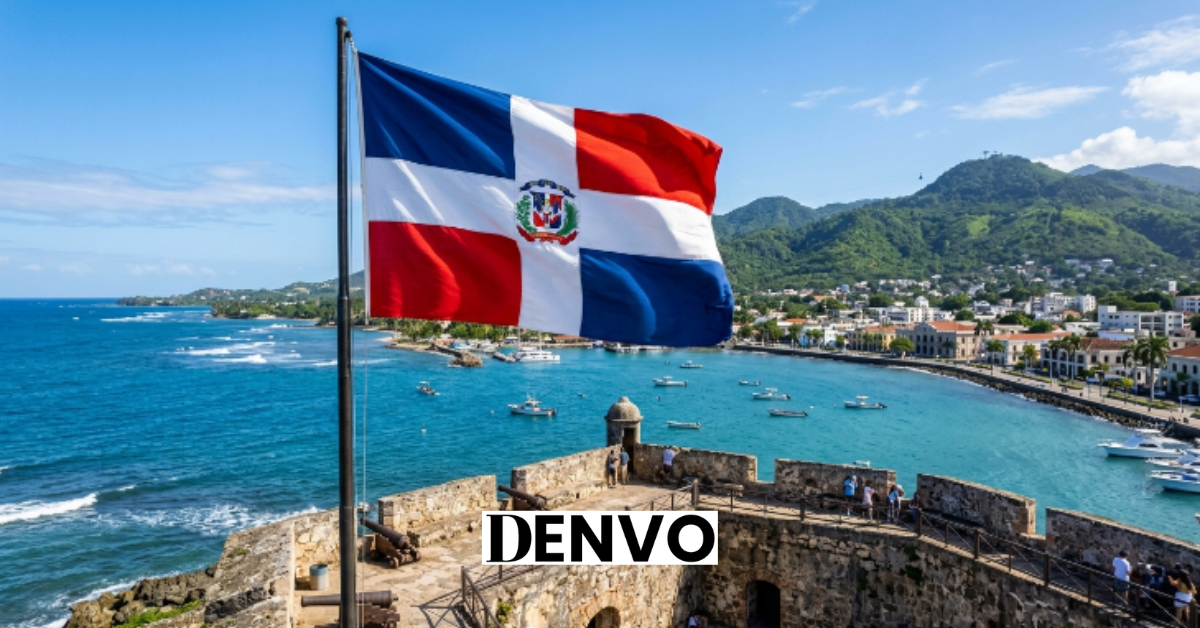
The Dominican Republic flag features a centered white cross dividing it into four rectangles — blue and red. At the center sits the national coat of arms, making it one of the few flags in the world with a detailed emblem. It’s also the only national flag in the world that includes a Bible. Adopted in 1844, its colors represent liberty, the blood of heroes, and purity.
The Dominican Republic Flag Is the Only One in the World With a Bible on It
Most people assume national flags are just colors and maybe a star or two. The Dominican Republic flag breaks every assumption. Hoisted for the first time on February 27, 1844, the day the Dominican Republic declared independence from Haiti, this flag carries a coat of arms at its center so detailed it contains a Bible, a cross, and six Dominican flags — inside the flag itself.
That’s not symbolism for the sake of decoration. Every element was chosen with intention, forged during one of the most turbulent moments in Caribbean history, and it has carried that weight ever since.
In this article, you’ll learn exactly what the Dominican Republic flag looks like, what every color and symbol means, how it was designed and by whom, common misconceptions people have, and why this flag continues to hold deep cultural significance for more than 11 million Dominicans worldwide. Whether you’re a student, a traveler, or simply curious, by the end of this you’ll see this flag the way Dominicans see it — not just cloth, but history you can look at.
What Is the Dominican Republic Flag and Why Does It Matter Today?
The Dominican Republic flag consists of a white cross that divides the rectangle into four equal sections. The upper-left and lower-right quadrants are blue; the upper-right and lower-left are red. Dead center, overlapping the cross, sits the national coat of arms.
This design makes the Dominican flag immediately recognizable — and structurally unique. Most national flags with crosses (think Scandinavian countries) don’t place an emblem at the intersection. The Dominican flag does, and that choice was deliberate.
Here’s what nobody tells you: the flag’s design was not the work of a single person but emerged from a secret society. The La Trinitaria movement, founded by Juan Pablo Duarte in 1838, used a version of this cross design as their symbol before independence was even declared. When freedom finally came in 1844, the flag was ready.
Why it matters today: The Dominican flag appears on national holidays, government buildings, Dominican diaspora communities from New York to Madrid, and every major sporting event where Dominican athletes compete. In baseball-loving communities across the northeastern United States, you’ll see it draped from apartment windows beside Puerto Rican and Cuban flags. It is an identity marker, not just a national symbol.
Pro Tip: The exact shade of blue on the Dominican flag is a rich royal blue — not navy, not sky blue. When sourcing official merchandise or educational materials, look for Pantone 286 C (blue) and Pantone 186 C (red) to get accurate colors.
The Meaning Behind Every Color and Symbol on the Flag
Colors on a national flag are never random. On the Dominican Republic flag, each color carries a meaning that dates back to the independence movement of the 19th century.
Blue represents liberty. It was the color chosen to symbolize the freedom Dominicans were fighting for after decades of Haitian rule. Think of it as the aspirational color — what the nation was reaching toward.
Red represents the blood of the heroes and patriots who died for independence. It’s not a menacing red; it’s a commemorative one. Every drop of red on that flag is meant as a tribute.
White represents the purity of the independence cause and the peace that Dominicans hoped to build. The white cross itself, cutting across the flag, is also a Christian symbol — and that religious dimension carries directly into the coat of arms.
Breaking Down the Coat of Arms
The coat of arms at the center of the flag is a world unto itself. Here’s what it contains:
- Six Dominican flags — three on each side, arranged like a bouquet, reinforcing national identity even within the symbol
- A Bible — open to the Gospel of John 8:32, “Y la verdad os hará libres” (“And the truth shall set you free”) — this is the element that makes the Dominican Republic the only country in the world with a Bible on its national flag
- A gold cross above the Bible — reinforcing the Christian faith of the founders
- A laurel branch on the left and a palm branch on the right — symbolizing victory and resilience
- A blue ribbon at the top reading “República Dominicana”
- A red ribbon at the bottom bearing the national motto: “Dios, Patria, Libertad” — “God, Homeland, Liberty”
The truth is, most people who study world flags consider the Dominican coat of arms among the most symbolically dense in existence. It tells an entire national story in a single emblem.
The History of the Dominican Republic Flag: From Secrecy to Independence
To understand the flag, you have to understand the moment it was born.
The Dominican Republic spent a significant portion of its early existence under Haitian control, from 1822 to 1844. During that period, a group of young Dominican intellectuals formed La Trinitaria in secret — named after the Holy Trinity — and began planning independence. Their symbol? A cross. Their colors? Blue, red, and white, deliberately distinct from the Haitian flag’s blue and red.
On February 27, 1844, Dominican patriots led by Matías Ramón Mella and Francisco del Rosario Sánchez fired a cannon shot at the Puerta del Conde gate in Santo Domingo, and the Dominican Republic was declared independent. The flag — already prepared — was raised that night.
Here’s what makes this history remarkable: the flag design predates the nation by several years. It was created as a symbol of resistance before there was anything to officially fly it over. That’s an unusual origin story in the world of national flags.
The flag has undergone only minor modifications since 1844, making it one of the more historically consistent flags in Latin America. The coat of arms was refined in 1913 and again officially codified in the 1990s, but the fundamental design — cross, four quadrants, central emblem — has never changed.
Pro Tip: If you visit the Dominican Republic, the flag is displayed differently during periods of national mourning. The coat of arms ribbon colors may be reversed, and flags are flown at half-mast. Knowing this distinction shows cultural respect.
Common Mistakes People Make When Identifying the Dominican Republic Flag
You’d be surprised how often people confuse the Dominican Republic flag with others — and not because they aren’t paying attention. The confusion has legitimate roots.
Mistake #1: Confusing it with the Cuban flag. Both use blue, red, and white. But Cuba’s flag has a triangle and a star, not a cross. They look nothing alike once you know what to look for, but at a glance, the color palette trips people up.
Mistake #2: Confusing it with the Puerto Rican flag. Same color scheme, again. Puerto Rico’s flag uses a triangle, a white star, and three red stripes on white. The Dominican flag’s defining feature — the white cross — is absent from Puerto Rico’s design entirely.
Mistake #3: Getting the quadrant colors wrong. This is a surprisingly common error even in textbooks. The blue quadrants are upper-left and lower-right. Red is upper-right and lower-left. Mix those up and you’ve drawn a different flag.
Mistake #4: Omitting or oversimplifying the coat of arms. Many informal representations of the Dominican Republic flag skip the coat of arms or draw it vaguely. Officially, the coat of arms is a mandatory component of the national flag — leaving it out is technically incorrect for formal representations.
Most people get this completely wrong because they rely on simplified versions found on emoji keyboards or stock icon sites. The full-detail flag is far richer than any digital shorthand captures.
Expert Tips: How to Accurately Represent and Respect the Dominican Republic Flag

If you’re a designer, educator, journalist, or event organizer working with the Dominican Republic flag, here are strategies the experts use.
Use official color specifications. The Dominican government has established Pantone color standards for the flag. Royal blue (Pantone 286 C) and red (Pantone 186 C) are the benchmarks. Any design that deviates significantly from these — going navy blue or using a pinkish red — misrepresents the flag.
Always include the coat of arms in formal contexts. The coat of arms is legally part of the national flag. In academic papers, news articles, and official presentations, an image of the Dominican flag without the coat of arms is incomplete.
Understand display etiquette. The Dominican flag should never be used as clothing fabric in formal contexts (though diaspora communities use flag-themed apparel widely and this is culturally celebrated). In official settings, it should not touch the ground, be written on, or be displayed in a damaged state.
For digital use, the SVG version from official Dominican government sources provides the most accurate proportions. The flag’s aspect ratio is 2:3, which differs from some neighboring Caribbean nations.
Pro Tip: If you’re teaching this flag to students, the memory trick is: “The Bible’s in the middle, blue and red around it, white cross through the center.” That one sentence covers all four key elements.
The Dominican Republic Flag vs. Other Caribbean Flags: A Comparison
The Caribbean basin has produced some of the world’s most colorful and symbolically rich national flags. Here’s how the Dominican flag stacks up against its neighbors.
| Country | Colors | Shape/Design | Unique Feature |
|---|---|---|---|
| Dominican Republic | Blue, Red, White | Cross + Coat of Arms | Only flag with a Bible |
| Cuba | Blue, Red, White | Triangle + Star | Red triangle symbolizes blood |
| Haiti | Blue, Red | Bicolor + Coat of Arms | Original inspiration for Dominican design |
| Puerto Rico | Red, White, Blue | Triangle + Star | Shares palette with Cuba |
| Jamaica | Black, Gold, Green | Diagonal cross (saltire) | No red, white, or blue |
| Trinidad & Tobago | Red, White, Black | Diagonal stripe | Diagonal design unique in region |
What jumps out immediately: the Dominican Republic, Cuba, Haiti, and Puerto Rico all share the same three colors. The flag you’re looking at depends entirely on the design structure, not the palette.
The Dominican Republic’s flag is distinguished by two things no other Caribbean flag has: the equal-armed cross dividing it into four quadrants, and the coat of arms with its biblical reference. That combination is genuinely unique in the hemisphere.
Step-by-Step: How to Draw the Dominican Republic Flag Accurately
Whether you’re a student for a school project or an artist, here’s exactly how to reproduce this flag correctly.
Step 1: Draw the rectangle. Use a 2:3 ratio — for example, 20 cm wide and 30 cm tall (or reversed for landscape).
Step 2: Draw the white cross. The cross should be centered, dividing the flag into four equal sections. The white arms of the cross run full-width and full-height through the center.
Step 3: Color the quadrants.
- Upper-left: Blue
- Upper-right: Red
- Lower-left: Red
- Lower-right: Blue
Step 4: Add the coat of arms at the center. The coat of arms overlaps the intersection of the cross. Draw the shield shape first, then add the open Bible, cross above it, flanking flags, laurel and palm branches, and the two ribbons.
Step 5: Add the text to the ribbons. Top ribbon (blue): República Dominicana Bottom ribbon (red): Dios, Patria, Libertad
Step 6: Check proportions. The coat of arms should be roughly centered and not extend beyond the white cross area. The cross arms should appear equal in width.
Don’t rush Step 4 — the coat of arms is where most people lose accuracy. Reference a high-resolution official image for the detail work.
Myths vs. Facts: What People Get Wrong About the Dominican Republic Flag
Let me clear up some persistent myths that circulate online and in classrooms.
Myth: The Dominican Republic flag is based on the Haitian flag. Fact: The Haitian flag (blue and red) actually predates Dominican independence. Dominican founders specifically added white and the cross design to distinguish their flag from Haiti’s — as a deliberate statement of separate national identity.
Myth: The blue and red colors mean the same thing as in the French tricolor. Fact: The color symbolism is entirely Dominican in origin. Blue for liberty, red for the blood of patriots, white for purity of cause. The French tricolor’s symbolism is historically separate.
Myth: The coat of arms changes depending on government. Fact: The coat of arms is constitutionally defined and has remained consistent in its core elements since the late 19th century. Presidential administrations do not alter it.
Myth: Any cross-based flag with blue and red is Dominican. Fact: Panama also uses red, white, and blue with a cross-like design — but uses stars instead of an emblem, and its quadrant arrangement is different. Always look for the coat of arms to confirm.
The truth is that the Dominican Republic flag is specific enough in its design that careful observation removes all ambiguity. The Bible in the coat of arms alone is a definitive identifier.
Conclusion
Three things to carry with you from this article:
First, the Dominican Republic flag is not just a design — it’s a document. The coat of arms encodes the founding values of an entire nation: God, homeland, and liberty, written in ribbon across the bottom and symbolized in every element above it.
Second, this flag holds a genuine world record most people don’t know about. The only national flag anywhere on Earth to include a Bible. That’s not a minor footnote — it’s a window into the soul of the Dominican independence movement and the culture that grew from it.
Third, accuracy matters when representing this flag. Skip the coat of arms, get the quadrant colors reversed, or use the wrong shade of blue — and you’ve missed the point entirely.
Now it’s your turn: Did you know about the Bible on the Dominican flag before reading this? Drop a comment below — most people don’t, and you might be surprised how many are learning it for the first time alongside you. If you found this useful, explore our related guides on Caribbean national symbols and the history of Latin American independence movements.
The Dominican Republic flag doesn’t just represent a country. It represents a promise made in 1844 that a people refused to let disappear.
FAQs
What do the colors on the Dominican Republic flag represent?
The blue sections of the Dominican Republic flag symbolize liberty — the freedom the nation was fighting for. Red represents the blood shed by patriots during the independence struggle. White stands for the purity of the independence cause and the aspiration for lasting peace. These three colors were chosen deliberately to reflect the values of the La Trinitaria independence movement, founded in 1838 by Juan Pablo Duarte.
Why is the Dominican Republic flag the only one with a Bible?
The Dominican Republic flag’s coat of arms includes an open Bible showing John 8:32 — “And the truth shall set you free” — in Spanish. This was included because the founders of the nation were deeply influenced by Catholic faith and saw their struggle for independence as morally and spiritually guided. No other national flag in the world incorporates a Bible as a formal heraldic element, making this a genuinely unique distinction.
What is written on the Dominican Republic flag?
Two ribbons appear on the coat of arms at the center of the Dominican Republic flag. The blue ribbon at the top reads “República Dominicana” (Dominican Republic). The red ribbon at the bottom carries the national motto: “Dios, Patria, Libertad” — translated as “God, Homeland, Liberty.” Both inscriptions have appeared on the flag since the coat of arms was formally standardized.
How is the Dominican Republic flag different from the Cuban or Puerto Rican flag?
All three flags use blue, red, and white. The difference is in structure:
- Dominican Republic: Centered white cross + coat of arms in four quadrants
- Cuba: Horizontal blue and white stripes + red triangle with a white star at left
- Puerto Rico: Horizontal red and white stripes + blue triangle with a white star at left
The Dominican flag is the only one of the three that features a cross and an emblem rather than a triangle.
When was the Dominican Republic flag first used?
The Dominican Republic flag was first officially raised on February 27, 1844, the night the country declared independence from Haiti. The design had been developed in advance by members of La Trinitaria secret society, who used a cross motif as their symbol. The 1844 date is now celebrated as Dominican Independence Day and is one of the most significant national holidays in the country.
What is the national motto on the Dominican Republic flag and what does it mean?
The national motto printed on the flag’s coat of arms is “Dios, Patria, Libertad” — which translates to “God, Homeland, Liberty.” It reflects the three pillars the independence movement was built on: religious faith, national identity, and political freedom. The motto was not borrowed from any other nation; it emerged organically from the founding discourse of Dominican leaders in the 1840s and has never been changed.