
Quick Answer
To clean your car interior, start by removing trash and vacuuming all surfaces. Then clean the dashboard and console with a microfiber cloth and interior cleaner, scrub carpets and fabric seats with an upholstery solution, wipe glass with streak-free cleaner, and finish with a UV-protective conditioner on plastic trim.
Your car’s interior is dirtier than your toilet seat — and that’s not an exaggeration. Studies have found up to 700 different strains of bacteria on the average steering wheel. Yet most people spend more time washing the outside of their car than cleaning the inside, where they actually sit, breathe, and eat for hours every week.
Knowing how to clean a car interior properly isn’t just about appearances. It’s about protecting a significant investment, maintaining your car’s resale value, and honestly — your own health. A poorly maintained interior can harbor allergens, mold spores, and bacteria that affect the air quality inside your vehicle with every drive.
In this guide, you’ll get the exact process professional detailers use, the tools worth buying (and the ones you can skip), the most common mistakes that damage interiors permanently, and a room-by-room breakdown so nothing gets missed. By the time you finish reading, you’ll be able to detail your car’s interior to a near-showroom standard — without paying $200 at a detailing shop.
Why Cleaning Your Car Interior Matters More Than You Think
Most people treat interior car cleaning like an occasional chore rather than routine maintenance. That mindset is expensive. Dirt, UV exposure, and moisture break down materials faster than almost any other factor — and once dashboard plastic cracks or seat fabric fades, there’s no reversing it.
The average American spends roughly 293 hours per year inside their vehicle. That’s more time than many people spend at the gym, at restaurants, or even socializing. In that context, the air quality, cleanliness, and comfort of your car interior directly impacts your daily wellbeing in ways most people never consider.
From a financial standpoint, a clean, well-maintained interior can add hundreds — sometimes thousands — of dollars to a car’s trade-in or resale value. Dealers and private buyers both factor it in heavily. The cost of a regular interior clean is almost always less than the depreciation you lose by ignoring it.
Pro TipDo a quick 5-minute tidy-up weekly: remove trash, wipe the steering wheel, and fold floor mats out to air them. This micro-habit prevents 80% of the deep-cleaning work from ever building up.
The Tools and Products You Actually Need
Walk into any auto store and you’ll face an overwhelming wall of sprays, foams, brushes, and gadgets. Here’s the truth: professional detailers rarely use more than eight core items. Most specialty products are just rebranded versions of things you can buy for a fraction of the price.
The Essential Kit
| Tool / Product | What It Does | Substitute Option |
|---|---|---|
| Microfiber cloths (×6+) | Wipe surfaces without scratching | Old cotton T-shirts work in a pinch |
| Vacuum with crevice tool | Remove loose debris from all surfaces | Compressed air + standard vacuum |
| Interior all-purpose cleaner | Breaks down grime on plastic, vinyl | Diluted dish soap (1:10 ratio) |
| Upholstery / fabric cleaner | Lifts stains from seats and carpets | Baking soda + white vinegar spray |
| Glass cleaner (ammonia-free) | Streak-free windshield and windows | Rubbing alcohol + distilled water |
| Detailing brush set | Reaches vents, seams, buttons | Old toothbrushes |
| UV-protectant conditioner | Prevents plastic and leather cracking | Coconut oil (temporary) |
One item worth every penny: a detailing brush set. Vents, speaker grilles, and button clusters collect dust in places microfiber simply can’t reach. A $12 set of soft-bristle brushes will transform how clean your dashboard actually looks.
Pro TipAlways use an ammonia-free glass cleaner for windows. Ammonia fogs tinted glass and degrades rubber seals over time — two problems that are much more expensive to fix than a bottle of glass cleaner.Internal Link Suggestion: “Best Car Interior Cleaning Products Under $50”
Step-by-Step: How to Clean Your Car Interior from Start to Finish
Order matters more than most guides admit. If you clean your glass first and then vacuum, you’ll get dust on the windows again. If you condition leather before cleaning it, you’ll seal in the dirt. Here’s the sequence professional detailers actually follow:
- Remove everything— all personal items, trash, floor mats, and seat organizers. You cannot properly clean around clutter.
- Dry vacuum the entire interior— seats, carpets, floor mats separately, and then use the crevice tool in all seat seams, door pockets, and under seats. Work top-down: headliner, seats, then floors.
- Clean the dashboard and console— spray your all-purpose cleaner onto a microfiber cloth (never directly onto electronics), then wipe all surfaces. Use a detailing brush on vents and button gaps.
- Clean door panels and handles— these are high-touch areas and collect more grime per square inch than almost anywhere else. Give them a dedicated pass with a damp cloth.
- Treat fabric seats and carpets— spray upholstery cleaner, agitate with a brush, and blot (never rub) with a dry microfiber. Work stains from the outside in to avoid spreading them.
- Clean leather seats(if applicable) — use a dedicated leather cleaner in small circular motions. Follow immediately with a leather conditioner to prevent drying and cracking.
- Clean the windows last— spray cleaner on the cloth, never the glass. Roll windows down slightly to clean the top edge. Use a separate dry cloth to buff off streaks.
- Replace floor mats and vacuum once more— a final light vacuum catches any debris dislodged during cleaning.
- Apply UV protectantto all plastic and vinyl trim — this is the step most people skip and most regret skipping years later.
The whole process takes 90 minutes to two hours for a thorough clean. Many people underestimate this and rush the middle steps — which is exactly where permanent damage happens.
The Most Common Mistakes That Damage Car Interiors
Most people who think they’re cleaning their car interior are actually slowly ruining it. That’s not an exaggeration — the wrong products and wrong techniques accelerate wear faster than neglect alone.
Mistake 1: Using Household Cleaners on Car Surfaces
Windex, bleach-based sprays, and all-purpose kitchen cleaners contain chemicals that strip protective coatings from dashboards, fade vinyl, and dry out leather permanently. Even “mild” dish soap used undiluted will leave a residue that attracts more dirt. Always use automotive-specific products or properly diluted alternatives.
Mistake 2: Scrubbing Stains on Fabric
Scrubbing a seat stain feels effective. It is, in fact, the worst thing you can do. Scrubbing pushes the stain deeper into the fabric fibers and spreads it wider. Always blot stains with a dry cloth first, then apply cleaner and blot again — never use a circular scrubbing motion.
Mistake 3: Leaving Surfaces Wet
Wet carpet and fabric that doesn’t dry completely within a few hours becomes a mold breeding ground — especially in humid climates. After any deep clean of seats or carpets, leave doors open in a ventilated area or use a fan to accelerate drying. A damp interior left overnight can develop mold that requires professional remediation to remove fully.
Pro TipKeep a pack of automotive interior wipes in your glovebox. A 30-second wipe-down of the steering wheel and console after each drive stops oils and grime from building up in the first place — dramatically cutting the time needed for your monthly deep clean.
Expert Tips for Specific Surfaces and Problem Areas
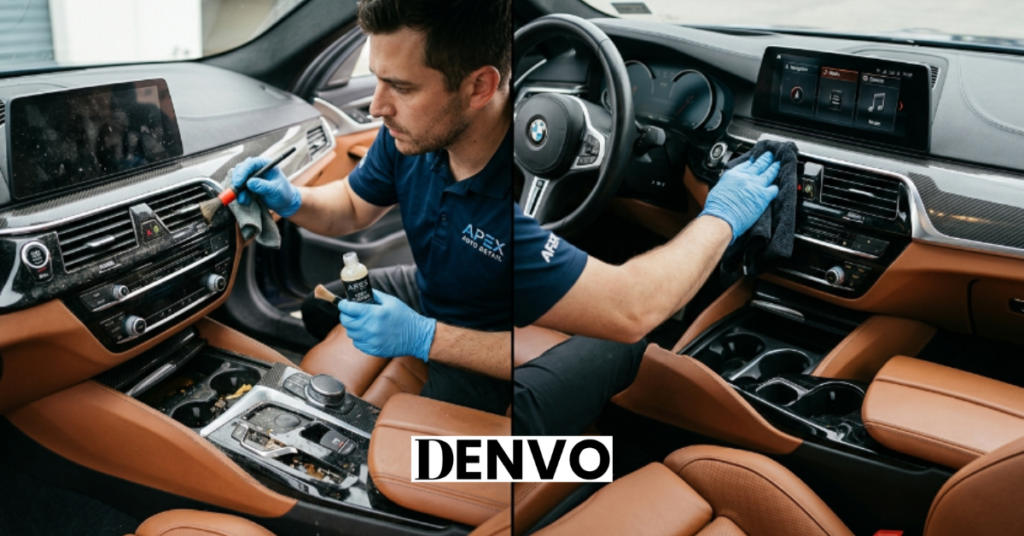
Different surfaces inside your car require completely different approaches. A technique that works beautifully on leather will ruin fabric, and what’s safe for plastic can cloud glass. Here’s what professionals know about each surface type.
Leather Seats
Leather care is a two-step process: clean, then condition. Skipping the conditioner is like washing your face and never moisturizing — the material dries out, loses flexibility, and eventually cracks. Use a pH-neutral leather cleaner and a conditioner with UV protection twice a year minimum, or quarterly if the car sits in direct sunlight.
Headliner
The headliner is the most fragile surface in your car. The fabric is glued to the roof, and aggressive rubbing or soaking it with liquid can dissolve the adhesive, causing it to sag — a repair that costs $200–$500 at a shop. Only ever lightly blot headliner stains with a barely damp cloth and minimal cleaner.
Dashboard Vents
Compressed air and a soft detailing brush are your best tools here. Foam brushes work well too. Avoid spraying liquid cleaner directly into vents — it can reach the HVAC system and create moisture and odor problems that are difficult to resolve. Brush loose dust out first, then follow with a dry microfiber wrapped around a pen or pencil to wipe each slat individually.
Eliminating Odors Permanently
Air fresheners mask odors; they don’t eliminate them. The source of 90% of persistent car odors is bacteria living in the carpet and seat fibers. An enzymatic odor eliminator (found at pet stores, often marketed for pet accidents) actually breaks down organic compounds — it’s far more effective than any scented product. For severe cases, an ozone generator run for 30 minutes with all vents open is the professional solution.
Myths vs. Facts: What You’ve Been Told About Car Interior Cleaning
The car cleaning industry profits partly from confusion. There’s a lot of received wisdom floating around that ranges from unhelpful to actively damaging. Here’s what the evidence actually says.
Myth: Armor All is Good for Your Dashboard
Armor All and similar silicone-based dressings create that showroom shine — but they also attract dust faster, make surfaces sticky in heat, and over time can actually accelerate plastic degradation. Professional detailers predominantly use water-based, matte-finish protectants that condition without leaving residue.
Myth: Steam Cleaning Damages Car Interiors
Steam cleaning, done correctly, is one of the safest and most effective methods for sanitizing fabric seats, killing mold, and deep-cleaning carpet. The key is using the right attachment and keeping the steamer moving — holding it stationary can damage delicate materials. Many professional detailers consider it the single best tool for fabric interiors.
Myth: You Need to Detail Monthly
How often you deep-clean your car interior depends on usage. A family car with kids and pets genuinely benefits from monthly attention. A single adult who commutes and eats out can likely get away with a thorough clean every 2–3 months, with simple maintenance (trash removal, quick wipes) weekly. Regularity matters more than frequency.
Pro TipBaking soda is underrated for car interiors. Sprinkle it on carpets and fabric seats, leave for 15–20 minutes, then vacuum it up. It absorbs odors chemically — not just masks them — and costs almost nothing.
How Often Should You Clean Your Car Interior? A Realistic Schedule
The biggest reason car interiors deteriorate isn’t a single neglected spill — it’s the slow accumulation of dust, oils from hands, UV exposure, and minor debris over months and years. A structured maintenance schedule prevents the steep climb to a major overhaul.
Weekly: Remove trash, wipe steering wheel and gear shift with an antibacterial wipe. These two areas collect the most bacteria and transfer it to your hands constantly. It takes two minutes. Monthly: Vacuum all surfaces, wipe down the dashboard and door panels, clean windows. Quarterly: Full deep-clean of seats and carpets, leather conditioning, odor treatment, and UV protectant application on all trim. Annually: Consider a professional detailing appointment to address anything you can’t fully address at home — stain setting, headliner issues, or interior odor from HVAC systems.
The Bottom Line
Three things will determine whether your car’s interior looks great five years from now: the order you clean in (top-down, windows last), the products you avoid (silicone-based dressings, household cleaners, ammonia glass sprays), and the consistency of your routine (a weekly two-minute wipe does more good than a frantic annual overhaul).
You don’t need an expensive kit or a free afternoon to keep your interior in excellent condition. You need the right knowledge and a realistic habit. Most of that knowledge is now in your hands.
What’s the worst part of your car interior right now — seats, carpets, dashboard, or odors? Drop it in the comments and we’ll give you the exact fix. And if you found this useful, share it with the one person in your life whose car you’ve been silently judging for months.
A clean car interior isn’t a luxury — it’s what separates people who own their car from people whose car owns them.
FAQs
How do I clean car interior fabric seats without leaving water stains?
Water stains on fabric seats happen when too much liquid is applied unevenly. To prevent them, always dampen a clean microfiber cloth with your upholstery solution rather than spraying directly onto the seat. Work in small circular sections and feather the edges outward. If water stains appear anyway, re-dampen the entire seat evenly and blot dry — this “resets” the moisture line and allows it to dry uniformly without a visible ring.
What is the best way to clean car interior windows and avoid streaks?
Streaks on car windows are almost always caused by three things: using too much product, using a dirty cloth, or cleaning in direct sunlight (which makes the cleaner dry too quickly). Use an ammonia-free cleaner, a fresh microfiber cloth, and clean the inside of windows in a shaded spot or on an overcast day. Two-cloth method: wipe on with the first, buff off immediately with the second.
How to clean car interior leather seats without damaging them?
The safest approach follows this sequence:
- Vacuum the seats first to remove abrasive particles that could scratch during wiping.
- Apply a pH-balanced leather cleaner to a soft cloth — never directly to the seat.
- Wipe in small sections using gentle, circular motions.
- Buff dry with a clean cloth immediately.
- Apply a leather conditioner within 10 minutes while the leather is still slightly warm from cleaning.
Never use baby wipes, household cleaners, or oils like WD-40 on leather — they strip the protective coating permanently.
How often should I deep clean my car interior?
A thorough deep clean — vacuuming, scrubbing seats, treating carpets, conditioning leather, and cleaning vents — should happen every 3 months for most drivers. If you transport children, pets, or frequently eat in your car, monthly deep cleans are more appropriate. Beyond the deep clean schedule, a short weekly maintenance routine (trash removal, steering wheel wipe, quick vacuum) will dramatically reduce how much effort your quarterly clean requires.
Can I use a steam cleaner on car interior surfaces?
Yes, and professional detailers frequently do. Steam is highly effective for sanitizing fabric, eliminating bacteria in carpets, loosening grime from vents, and even treating stubborn upholstery stains. The key cautions are: keep the steamer moving to avoid overheating one spot, use a lower-pressure setting on delicate materials like headliners, and never steam directly into electronic components or speaker grilles. A handheld garment steamer ($30–$50) works well for DIY use.
What removes bad smells from a car interior permanently?
Persistent bad smells almost always have a biological source — mold, bacteria, food residue, or pet dander — and air fresheners only mask them temporarily. Permanent odor removal requires an enzymatic cleaner applied directly to carpet and seat fabric (the biological compounds are physically broken down, not just covered). For extreme odors like smoke, an ozone generator is the most effective solution — auto detailing shops rent them, or they can be purchased for around $50–$80. Always ventilate the car thoroughly after ozone treatment before driving.