

Quick Answer
The BYD Sealion 7 is a feature-packed electric SUV with up to 312 miles of WLTP range, 523bhp in AWD trim, and a rotating 15.6-inch touchscreen. It rivals the Tesla Model Y in size and price but takes a very different approach — more interior luxury, less driving thrill. Best value sits with the base Comfort RWD model.
Introduction
A Chinese electric SUV that outsells nearly every rival in its first year on sale — that’s not a headline anyone would have predicted three years ago. The BYD Sealion 7 arrived in global markets in late 2024 and immediately forced serious buyers to sit up and take notice. In Australia alone, it became the second-best-selling EV in 2025, notching 1,998 units in its debut year — right behind the Tesla Model Y.
But raw sales numbers don’t tell you whether a car is good. They tell you it’s affordable and well-marketed. This BYD Sealion 7 review digs deeper: real-world range, what the interior actually feels like after six months, where the car surprises you, and where it quietly lets you down.
You’ll get the full picture here — specs, comparisons, honest flaws, and the one thing almost nobody talks about that could actually make or break your decision.
What Is the BYD Sealion 7, and Why Does It Matter Right Now?
The Sealion 7 is BYD’s mid-size electric SUV, positioned as a taller, more practical sibling to the Seal saloon. It sits on BYD’s e-Platform 3.0 and is part of the “Ocean Series” lineup — a family that includes the Dolphin, Seal, and Seal U. Think of it as BYD’s answer to the Tesla Model Y, but with more screen real estate, more standard kit, and a noticeably different philosophy about what a modern EV should be.
Here’s what makes it matter in 2025 and beyond: BYD manufactures its own batteries, motors, chips, and body components. That vertical integration lets the company pack features into a car at a price that Western rivals struggle to match. The Sealion 7 carries a Blade Battery — a lithium iron phosphate (LFP) cell stack arranged in a long, flat formation that strengthens the car’s floor structure while eliminating cobalt from the chemistry. It’s safer, more thermally stable, and reportedly degrades far more slowly than conventional lithium-ion packs.
Why this matters to you: LFP chemistry means you can charge to 100% every day without the battery degradation penalty that haunts nickel-manganese-cobalt (NMC) packs. For daily drivers, that’s a significant long-term advantage that rarely gets enough attention.
Pro Tip: If you’re choosing between charging to 80% (as most EV guides recommend) and 100%, LFP chemistry like BYD’s Blade Battery is genuinely designed for full charges. You can safely charge to 100% regularly without worrying about accelerating battery wear.
How the BYD Sealion 7 Actually Works: Specs, Battery, and Variants
Let’s get specific, because the variant lineup matters enormously for your money.
Variant Breakdown (UK Market):
| Variant | Motor | Power | Range (WLTP) | 0–62mph | Price (OTR) |
|---|---|---|---|---|---|
| Comfort RWD | Single | 308bhp / 230kW | 300 miles | 6.7 sec | £46,990 |
| Design AWD | Dual | 523bhp / 390kW | 283 miles | 4.5 sec | £51,990 |
| Excellence AWD | Dual | 523bhp / 390kW | 312 miles | 4.5 sec | £58,990 |
The Excellence uses a larger 91.3 kWh battery (versus 82.5 kWh in the other two), which explains its longer range despite also running dual motors. It also gets 230kW DC fast charging — the Comfort and Design top out at 150kW. All variants include 11kW AC charging, which is notably above average for this class.
Real-world range is a key caveat here. The WLTP figures look impressive, but in cold conditions highway driving can drop the Comfort’s effective range to around 185 miles. In mild weather and city use, you can push closer to 375 miles. The average owner should plan around 200–250 miles per charge in typical mixed conditions — still competitive, but not the number printed in the brochure.
The 15.6-inch rotating touchscreen sits at the heart of the cabin and can flip between portrait and landscape orientation. Paired with a 10.25-inch digital instrument cluster, it makes the interior feel genuinely modern. Physical buttons are sparse — a decision that frustrated long-term testers initially, though most adapted within a few weeks thanks to BYD’s intuitive software layer.
How the BYD Sealion 7 Performs on the Road — The Honest Truth
Here’s what nobody tells you upfront: the Sealion 7 is a quick car that doesn’t feel like a driver’s car. Those two things can coexist, and it’s important to understand which one you’re buying.
The AWD Excellence variant hits 62mph in 4.5 seconds. That was supercar territory not long ago. But push it into a corner at any meaningful speed and the body lean arrives with confidence-sapping enthusiasm. One reviewer described the Excellence AWD bluntly: “a performance car in search of a chassis.” The suspension keeps things comfortable and planted on motorways, handles large bumps well, but chatters over smaller road imperfections. Sport mode adjusts steering weight but doesn’t transform the handling character in any meaningful way.
The RWD Comfort, though, tells a more satisfying story. With 308bhp going only to the rear wheels, the throttle response feels more communicable. The 0–62mph time of 6.7 seconds is perfectly adequate for everyday use, and the single-motor setup is genuinely more efficient — which is why it achieves better range than the AWD variants despite having an identical battery.
Tyre noise at motorway speeds is higher than rivals like the Hyundai Ioniq 5 and Tesla Model Y. It’s not intrusive, but it’s noticeable. Refinement is otherwise strong — the Sealion 7 cruises quietly and absorbs motorway expansion joints with composure.
Pro Tip: If outright acceleration isn’t your priority, the Comfort RWD is genuinely the pick of the range. It has more range, a lower price, and a driving character that suits family use far better than the AWD variants.
The Interior: Where the Sealion 7 Quietly Wins
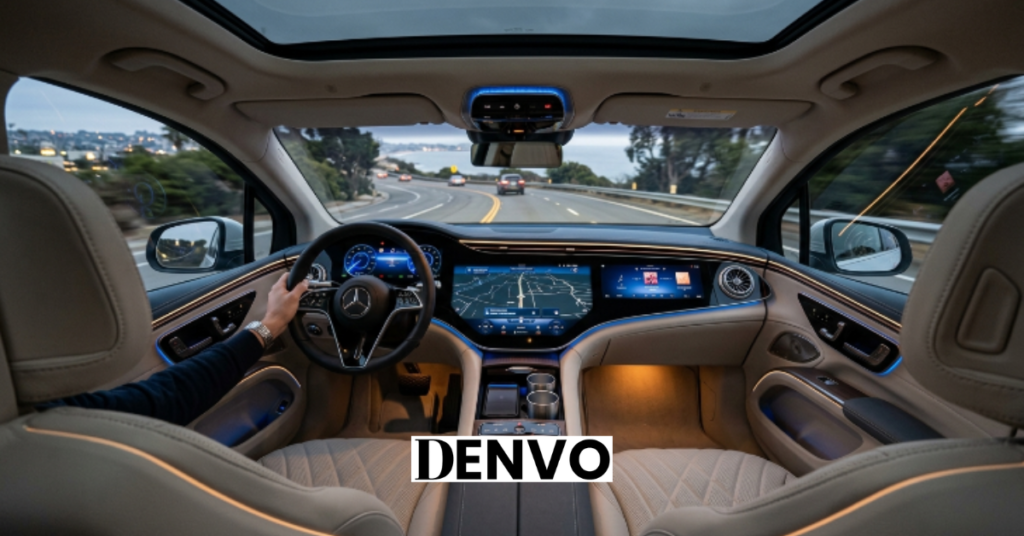
Most reviews bury this, but the Sealion 7’s interior is arguably its strongest card. Rear passenger space is genuinely generous — adults sit comfortably with proper headroom under the panoramic roof. The panoramic sunroof includes a powered sunshade operated by buttons near the rear-view mirror, which is a small but thoughtful touch, especially in hot climates.
Storage runs throughout the cabin intelligently: dual cupholders, a deep centre console bin, door bottle pockets front and rear, and map pockets at every seat. The boot holds 520 litres with seats up — slightly ahead of the Tesla Model Y’s 854-litre figure (which includes under-boot storage) but competitive for a coupe-SUV shape. A 58-litre frunk under the bonnet is a practical bonus, ideal for storing charging cables so they don’t contaminate your main boot.
The seat design uses BYD’s signature contoured shape, which divides opinion. Most testers find them comfortable on long runs; a minority find the bolstering positions awkward for taller drivers. Front seats on higher trims include both heating and ventilation, though the base Comfort model limits you to heating only.
One honest criticism: the near-total absence of physical controls takes time to accept. Climate settings, mirror adjustment, seat position — all controlled through the touchscreen. After six months of real-world use, most owners report adapting fully, but the learning curve is real in the first few weeks.
Common Mistakes Buyers Make When Considering the BYD Sealion 7
Most people get this completely wrong: they compare the Sealion 7 directly to the Tesla Model Y on price and assume it should be cheaper. It isn’t — and that surprises buyers who expect Chinese EVs to be budget options.
Mistake 1: Choosing AWD for the performance, then regretting the range loss. The Performance/Design AWD variants sacrifice 17–30 miles of range versus the RWD model. For most family buyers, those range miles matter more daily than the 2.2-second acceleration advantage.
Mistake 2: Ignoring charging infrastructure compatibility. The Sealion 7 uses CCS charging — compatible with most public networks in Europe and Australia. But the 150kW DC ceiling on two of the three variants means you won’t exploit the full speed of many newer 250kW+ chargers. Only the Excellence takes full advantage at 230kW.
Mistake 3: Dismissing the brand uncertainty factor. BYD is newer to Western markets. Resale values are harder to predict than established rivals, and the service network is still expanding. This is improving rapidly — BYD sold 1.76 million vehicles globally in 2024 — but it’s a genuine consideration for three-year ownership planning.
The truth is, most of these concerns dissolve when you actually live with the car. The real risks are smaller than sceptics claim and bigger than enthusiasts admit.
BYD Sealion 7 vs. Tesla Model Y: The Real Comparison
This is the comparison that matters most to the majority of buyers.
The Tesla Model Y starts from around £42,000 in the UK — roughly £5,000 less than the base Sealion 7. Tesla’s charging network advantage (Supercharger access) is genuine and significant for road-trippers. Model Y also holds its resale value more reliably based on current data.
Where the Sealion 7 fights back: the interior feels richer and more generously equipped at equivalent price points. The Sealion 7’s Comfort trim includes heated seats, wireless charging, V2L capability (powering household devices from the car), a 360-degree camera system, and that impressive 15.6-inch rotating screen — all standard. Getting equivalent features in a Model Y pushes the price considerably higher.
One long-term tester who spent six months with the Excellence model reported a real-world average of 205 miles between charges, charging on public networks without a home charger. That’s a practical daily reality most reviewers don’t test under.
The bottom line: Tesla wins on resale value and charging network. BYD wins on standard equipment, interior quality, and — at the right trim level — outright value. The decision often comes down to how much you use public fast chargers versus home charging.
Pro Tip: Use BYD’s V2L (Vehicle-to-Load) feature to power camping equipment, outdoor tools, or even a laptop during a power cut. It’s one of the most practical EV features available at this price point and most buyers never switch it on.
Step-by-Step Guide: How to Choose the Right Sealion 7 Variant
Not every buyer needs the same car. Here’s how to work out which variant actually suits your life:
- Calculate your real daily mileage. If you average under 60 miles a day and have home charging, all three variants cover your needs comfortably.
- Assess your charging setup. Home charger at 7kW or 11kW? The Sealion 7’s 11kW AC capability is genuinely useful. No home charger? Prioritise the Excellence for its 230kW DC speed.
- Be honest about road trips. Taking regular motorway trips over 150 miles? The Excellence’s larger 91.3kWh battery and faster charging reduce stop frequency noticeably.
- Decide on AWD or RWD. AWD adds security in snow and wet conditions. RWD gives you more range and costs less. Most UK drivers genuinely don’t need AWD.
- Compare standard equipment carefully. The Comfort trim includes more than you’d expect. Check BYD’s configurator for your specific market — regional specs vary more than the marketing suggests.
- Test drive both RWD and AWD. The difference in character is bigger than specs suggest. Many buyers expecting to choose AWD come back preferring the RWD’s feel.
Myths vs. Facts: What People Get Wrong About the BYD Sealion 7
Myth: Chinese EVs have poor build quality. Fact: Multiple independent road tests confirm the Sealion 7’s interior is well-assembled, with tight panel gaps and quality materials on higher trims. Nappa leather and Dynaudio audio on the Excellence match European premium standards.
Myth: The battery will degrade quickly. Fact: LFP Blade Battery chemistry is specifically chosen for longevity. BYD’s own data and independent testing suggests significantly lower degradation rates compared to NMC chemistry over 100,000+ miles.
Myth: 0–62mph in 4.5 seconds makes this a sports car. Fact: The performance is real, but the chassis isn’t calibrated to use it. This is a comfortable family SUV with explosive straight-line speed, not a hot hatch in SUV clothing.
Myth: The lack of physical buttons is a dealbreaker. Fact: Real owners consistently report adapting within two to three weeks. BYD’s software is more intuitive than many competitors, and frequently-used shortcuts are accessible without diving into menus.
Conclusion
Three things to take away from everything above.
First, the Comfort RWD is the rational choice for most buyers. More range than the AWD variants, lower price, and a driving character better suited to everyday family use. The AWD models are impressive on paper but harder to justify in daily life.
Second, the interior and technology package genuinely punches above its price point. Standard equipment levels, the Blade Battery’s long-term durability, and practical features like V2L give the Sealion 7 a real edge over equivalently-priced rivals.
Third, don’t expect a driver’s car. If you want engagement behind the wheel, the Sealion 7 will frustrate you. If you want comfortable, spacious, well-equipped everyday transport with strong real-world range, it delivers consistently.
The Sealion 7’s second-best-seller status in its debut year wasn’t an accident. Real buyers, making real decisions with real money, chose it over established rivals. That verdict is hard to argue with.
Have you driven or owned a BYD Sealion 7? Drop your experience in the comments — especially if your real-world range differs significantly from what’s quoted here. Your data helps everyone.
Looking for more? Read our full comparison: BYD Ocean Series — Dolphin vs. Seal vs. Sealion 7, which one is right for your life?
The best car isn’t the fastest — it’s the one you actually want to come back to.
FAQs
What is the real-world range of the BYD Sealion 7?
Real-world range varies considerably from the WLTP figures. In independent testing, the Comfort RWD achieves roughly 200–255 miles in mixed conditions. In cold weather at motorway speeds, this can fall to around 185 miles. In mild conditions with city driving, range can approach 375 miles. Plan around 200–220 miles as your reliable daily buffer for mixed-use driving.
How does the BYD Sealion 7 compare to the Tesla Model Y?
The Sealion 7 offers more standard equipment and a more luxurious interior feel at comparable price points. The Tesla Model Y has the advantage of the Supercharger network, stronger resale value data, and a lower starting price. The Model Y also handles better dynamically. For buyers who charge primarily at home, the Sealion 7 often represents better daily value. For road-trippers reliant on public charging, Tesla’s network advantage is hard to ignore.
Is the BYD Sealion 7 reliable?
BYD has been manufacturing vehicles at scale since 2003 and is now one of the world’s largest automakers by volume. The Sealion 7 uses mature platform technology — the e-Platform 3.0 — and the Blade Battery has an established track record in BYD’s other models. Early owner reports and long-term press fleet tests have not flagged significant reliability issues, though the model is still relatively new to Western markets and long-term data is still accumulating.
Which BYD Sealion 7 variant is the best value?
Most independent reviewers and ownership data point to the Comfort RWD as the best overall value. It has:
- The longest WLTP range of the three variants (300 miles)
- The lowest purchase price
- A strong standard equipment list including heated seats, wireless charging, and V2L
- Adequate 0–62mph performance of 6.7 seconds for family use The Excel AWD makes sense only if you regularly make long trips and want faster DC charging.
Does the BYD Sealion 7 support vehicle-to-load (V2L)?
Yes — V2L (Vehicle-to-Load) is standard across all Sealion 7 variants. This allows you to use the car’s battery to power external devices up to a certain wattage, including camping appliances, power tools, laptops, and household electronics during outages. It connects via the car’s charging port using an adapter. This is one of the more practical features at this price point and one that most owners underuse.
Is the BYD Sealion 7 a good BYD Sealion 7 review choice for families?
The Sealion 7 is genuinely well-suited to family life. The rear cabin offers good legroom and headroom for adults, the 520-litre boot is competitive for the SUV class, and the 58-litre frunk handles charging cable storage neatly. ISOFIX anchor points are easy to access, the powered tailgate is standard on all variants, and the 60:40 split-folding rear bench expands load space to 1,789 litres when needed. The panoramic sunroof’s powered shade is a practical detail that regular families will appreciate more than performance metrics.