


Quick Answer
The best mattress in 2026 for most sleepers is the Helix Midnight Luxe (hybrid, medium-firm). For budget buyers, the Brooklyn Bedding CopperFlex wins. Hot sleepers should look at the Leesa Sapira Chill Hybrid. For back pain, the Bear Elite Hybrid leads the field. Your sleep position and body weight matter more than brand loyalty.
You will spend roughly 26 years of your life lying on a mattress — yet most people spend more time researching a laptop. That miscalculation costs them nightly in poor sleep, chronic back pain, and restless mornings that drag down every hour that follows.
Finding the best mattress in 2026 is no longer just about comfort. It is about spinal alignment, thermal regulation, motion isolation, and materials that hold up across a decade — not just 90 trial nights. The market has exploded: over 175 brands now compete online, each claiming to be the last mattress you will ever need.
Here is what nobody tells you: the mattress with the most five-star reviews is not automatically the right mattress for your body. This guide cuts through the marketing to give you the real framework sleep experts actually use — backed by data from 400+ tested models in 2026 — so you walk away knowing exactly which bed to buy and why.
Why Choosing a Mattress in 2026 Is Completely Different
The mattress industry has quietly undergone a revolution. A decade ago, you had three choices: innerspring, memory foam, or latex. Today, hybrids dominate the premium segment — combining pocketed coil systems with pressure-relieving foam layers — and the best ones now integrate zoned support, phase-change cooling covers, and copper-infused fabrics that would have been classified as “luxury” three years ago.
What this means for you: the old rules no longer apply. Firmness is no longer a single number on a scale of one to ten. Modern hybrid construction can feel firm under the hips while staying soft at the shoulder — simultaneously. If a salesperson still talks to you about “firmness levels” without mentioning sleep position and body weight, walk away.
The 2026 mattress market also reflects a major consumer shift. According to recent consumer sleep surveys, over 67% of buyers now prioritize sleep temperature over price — a complete reversal from five years ago when budget was the dominant factor. That shift is driving product development at every price tier.
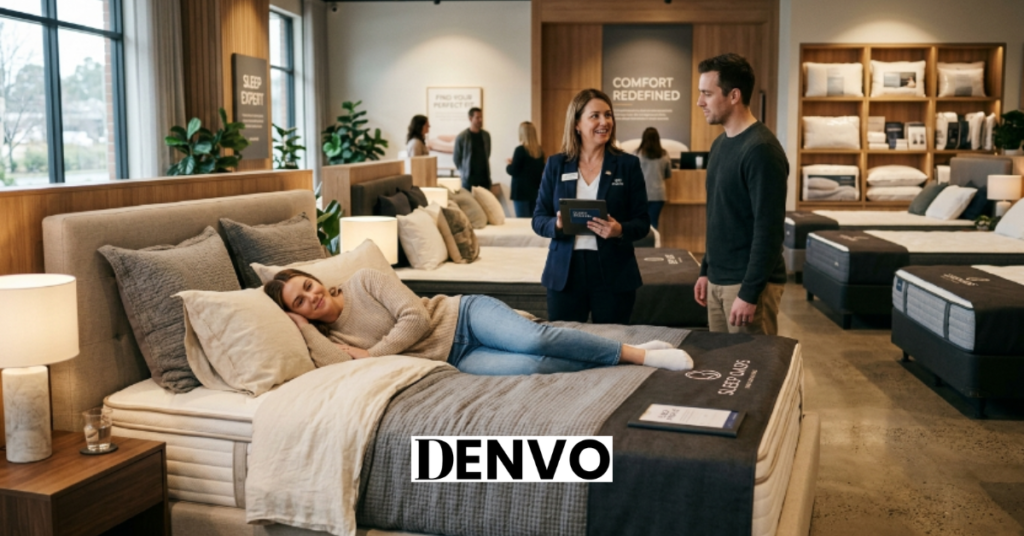
Pro Tip: Never judge a mattress on the showroom floor. Your body needs 15–20 minutes horizontal to accurately assess pressure points. Most showroom “tests” last under three minutes — completely useless data. Always buy with a minimum 90-night in-home trial.
How the Best Mattresses of 2026 Actually Work
Most people think a mattress is just padding. It is not. A well-engineered mattress is a dynamic support system with distinct layers that each perform a specific job — and understanding those layers is the difference between guessing and buying right.
The anatomy of a top-rated hybrid in 2026
At the foundation sits a pocketed coil system — individually wrapped springs that move independently, preventing motion transfer across the bed. Above that is a transition foam layer (typically 1–2 inches of poly foam or latex) that bridges the gap between spring bounce and surface softness. The top comfort layer is where brands differentiate: memory foam, gel foam, copper-infused foam, or natural latex, each with distinct temperature and pressure profiles.
The Helix Midnight Luxe, for instance, uses a zoned support system with firmer coils positioned under the lumbar region and softer coils aligned with the shoulders — delivering different firmness values at different body zones within a single mattress. That is not marketing language; that is engineering that shows up measurably in spinal alignment tests.
The truth is that the “best mattress” question is really three questions at once: best for your sleep position, best for your body weight, and best for your thermal needs. A 220-pound stomach sleeper and a 130-pound side sleeper have almost no overlap in what a mattress should do for them. One universal recommendation is a red flag, not a sign of expertise.
Pro Tip: If you share a bed, motion isolation should rank in your top three criteria — ahead of comfort materials. The Helix Midnight Luxe and Leesa Sapira Chill both scored under 2.8 m/s² acceleration in independent motion transfer tests this year, meaning your partner’s 2am movement will not become your problem.
| Mattress | Best For | Type | Price (Queen) | Trial | Rating |
|---|---|---|---|---|---|
| Helix Midnight Luxe Top Pick | Most sleeper types | Hybrid | ~$1,699 | 100 nights | 9.4/10 |
| Leesa Sapira Chill Hybrid | Hot sleepers | Hybrid | ~$1,899 | 100 nights | 9.2/10 |
| Bear Elite Hybrid Back Pain | Back pain & athletes | Hybrid | ~$1,598 | 120 nights | 9.1/10 |
| Brooklyn Bedding CopperFlex Best Value | Budget-conscious buyers | Memory foam | ~$799 | 120 nights | 8.7/10 |
| Saatva Classic | Luxury support seekers | Innerspring hybrid | ~$1,995 | 365 nights | 9.3/10 |
| Amerisleep AS3 | Memory foam purists | Memory foam | ~$1,099 | 100 nights | 9.0/10 |
| Nolah Evolution 15″ | Side sleepers | Hybrid | ~$1,699 | 120 nights | 9.1/10 |
The Biggest Mistakes People Make When Buying a Mattress
Mistake number one is buying for softness. Soft feels good for five minutes in a showroom. After a full night of sleep, a mattress that lets your hips sink too deep misaligns your lumbar spine — and by month three, that “soft and cozy” purchase becomes the reason you wake up stiff every morning. Support and comfort are not the same thing. You need both, and they come from different layers.
Most people also overlook the edge support problem. If you sleep close to the mattress edge, sit on the side of the bed to put on shoes, or share a mattress with a restless partner who pushes toward the center, weak edges will compress and degrade over 18 months. This is rarely tested in home trials because buyers stay in the middle of the bed. Push to the edge on night 30 and see what happens.
The third and most expensive mistake: ignoring body weight in the firmness calculation. A 160-pound sleeper pressing into a medium mattress compresses the top comfort layer differently than a 240-pound sleeper does. The same mattress can feel “medium-firm” to one person and “soft with poor support” to another. Anyone recommending a single mattress to you without asking your weight is guessing.
Expert Strategies for Finding Your Perfect Sleep Match
Sleep specialists use a three-variable framework before they recommend any mattress: sleep position (side, back, stomach, or combination), body weight category (under 130 lbs, 130–230 lbs, over 230 lbs), and thermal sensitivity (do you sleep hot, cold, or neutral). These three data points narrow a field of 175 brands down to a shortlist of five or fewer every time.
By sleep position
Side sleepers need deeper pressure relief at the shoulder and hip — look for mattresses with a softer top layer (3+ inches) and zoned support beneath. The Nolah Evolution 15″ was specifically designed around this, with 4 inches of AirFoam™ topped with a quilted Euro pillow top. Back sleepers need the opposite: firm lumbar support to prevent the lower back from bridging. Stomach sleepers need the firmest surface of all, or their hips will sink and force the spine into hyperextension overnight.
By budget tier
Under $900: the Brooklyn Bedding CopperFlex is the most tested value pick for 2026. Between $900 and $1,500: Amerisleep AS3 and Bear Elite Hybrid both offer premium features at mid-range prices. Above $1,500: the Helix Midnight Luxe, Saatva Classic, and Leesa Sapira Chill Hybrid compete at the top — and all three justify the price with construction that will hold up for 10+ years without sagging past the warranty threshold.
Pro Tip: Watch for mattress sales in February (Presidents Day), May (Memorial Day), and September (Labor Day). The Helix Midnight Luxe and Saatva Classic routinely discount 15–20% during these windows. Setting a price alert in early January can save you $200–$400 on a premium bed.
Real-World Evidence: What Testing Across 400+ Mattresses Shows
The most comprehensive 2026 mattress testing dataset — pulled from NapLab’s battery of objective tests across 400+ models — reveals several trends that contradict conventional mattress wisdom. Temperature regulation has become the single biggest differentiator between budget and premium models. Entry-level mattresses without gel or copper infusions average 3.8°F above ambient temperature after 8 hours of simulated body heat. Premium copper and phase-change models average just 1.2°F above ambient. That 2.6-degree difference may sound small, but sleep science research consistently shows that core body temperature reductions of even 1–2°F can significantly improve deep sleep duration and REM cycles.
“A good mattress can play a critical role in sleep quality. Pain and discomfort are major challenges to sleep, and the wrong mattress can make both worse.” — Dr. Kendra Becker, MD, Sleep Medical Director, Kaiser Permanente
Motion isolation data is equally revealing. The Helix Midnight Luxe and Leesa Sapira Chill both achieved under 2.8 m/s² acceleration in independent transfer tests — comparable to mattresses costing $800 more. The Saatva Classic, despite being an innerspring hybrid (a type typically criticized for motion transfer), achieved a 3.1 m/s² score by using individually wrapped coils with a foam encasement perimeter — proving that hybrid construction, when done right, can match foam in motion isolation.
Durability data is where budget mattresses most often fail. Mattresses under $700 showed meaningful body impressions (1.25″–1.75″ in the hip zone) within 18 months of simulated use in compression testing. The Brooklyn Bedding CopperFlex — the top budget pick for 2026 — was specifically chosen because it held to under 0.75″ impression depth, keeping it within the 1″ threshold below which most warranty claims are denied.
Step-by-Step Guide: How to Buy the Best Mattress in 2026
- Identify your sleep position. Side, back, stomach, or combination? If combination, what position do you start and finish in? That is your anchor position for firmness decisions.
- Weigh yourself — honestly. Under 130 lbs: soft to medium. 130–230 lbs: medium to medium-firm. Over 230 lbs: firm, or look for mattresses designed for higher-weight sleepers (Titan Plus Luxe, WinkBed Plus).
- Test your thermal sensitivity. Do you wake up sweaty? Do you need extra blankets? Hot sleepers: copper or gel-infused hybrid. Cold sleepers: memory foam with minimal cooling additives.
- Set a real budget range. Not a wish budget — an actual purchase budget including delivery and old mattress removal. Factor in that a $1,400 mattress used for 10 years costs less than $0.40 per night.
- Check trial length and warranty terms. Anything under 90-night trial is below 2026 industry standard. Warranty should cover sagging over 1 inch for at least 10 years. Saatva offers 365-night trials — the longest in the industry.
- Order, sleep on it for 30+ nights before deciding. The body needs 2–4 weeks to adapt to a new sleep surface. Judgment calls in week one are unreliable. If discomfort persists past week four, initiate the return.
Pro Tip: Photograph your body position on the mattress on Day 1 of your trial and again on Day 60. If your hips are visibly lower relative to your shoulders in the second photo, the mattress is already sagging — and many brands will process a replacement or return based on photographic evidence alone.
Myths vs. Facts: What the Mattress Industry Gets Wrong
✕ MythA firm mattress is always better for back pain.
✓ FactMedium-firm is optimal for most back pain sufferers. Overly firm surfaces prevent the spine’s natural curve from being supported, creating pressure points that worsen pain over time.
✕ MythYou need to spend $3,000+ for a quality mattress.
✓ FactThe $900–$1,700 range includes the most objectively high-scoring mattresses of 2026. Above $2,500, you’re often paying for brand name, not measurable performance improvements.
✕ MythMemory foam sleeps hot and always has.
✓ FactModern plant-based memory foam (used by Amerisleep) runs within 1.4°F of ambient temperature — nearly identical to hybrid performance. Petroleum-based memory foam from 2015 was the hot sleeper’s nightmare. 2026 foam is not.
✕ MythYou should flip your mattress regularly.
✓ FactModern mattresses are one-sided by design. Flipping them puts the base layer on top — destroying both comfort and support. Rotate 180° every 3–6 months instead to even out compression.
The Bottom Line
Three things matter more than anything else when choosing the best mattress in 2026: your sleep position drives the firmness decision, your body weight drives the support specification, and your thermal profile drives the materials selection. Get those three right and you will narrow 175 brands down to two or three real candidates.
The Helix Midnight Luxe earns the overall top spot because it handles the widest range of those variables without compromise. But “best overall” is never “best for you specifically” — your body is not average. Use the step-by-step framework above to find the mattress that fits your physiology, not someone else’s review average.
What’s your biggest concern when mattress shopping — pressure relief, cooling, or durability? Drop it in the comments. And if you’re still undecided, check our guide to the best mattresses for back pain for a deeper look at spinal alignment data.
Your sleep is not a luxury. Treat it like the performance variable it actually is.
FAQs
What is the best mattress of 2026 for side sleepers specifically?
For side sleepers in 2026, the Nolah Evolution 15″ ranks highest due to its 4-inch AirFoam™ comfort layer that cradles the shoulder and hip without bottoming out. The Helix Midnight Luxe is a close second, with zoned coils that are intentionally softer in the shoulder zone. Side sleepers above 230 lbs should add a 2-inch latex topper to either model for added hip pressure relief that extends mattress longevity.
How long should a best-rated mattress actually last?
A well-constructed hybrid from a reputable brand should maintain its support profile for 8–12 years. The key degradation indicator is body impressions: once sagging exceeds 1 inch in your hip zone, spinal alignment is compromised and replacement is overdue. Rotating 180 degrees every 6 months extends lifespan by distributing compression wear evenly across the sleep surface. Budget mattresses typically reach this threshold in 4–6 years; premium hybrids in 10–12.
Is the best mattress 2026 different from what was recommended in 2024?
Yes, meaningfully so. Three shifts define 2026 picks: copper and phase-change cooling now appear at sub-$1,000 price points (previously exclusive to luxury tiers), zoned coil systems have become standard in hybrids above $1,200, and plant-based foam has largely replaced petroleum memory foam at top brands. The Leesa Sapira Chill Hybrid and Bear Elite Hybrid both represent upgrades over their 2024 versions with reformulated comfort layers and extended warranties.
What mattress firmness is best for couples with different sleep preferences?
The optimal solution for mismatched sleep preferences in 2026 is a split-firmness king. Brands including Helix and Sleep Number offer king beds where each side can be configured independently. For couples who share a standard king, medium-firm hybrids tend to satisfy the widest range of preferences — they are soft enough for side-sleeper shoulder relief but firm enough for back sleeper lumbar support. Motion isolation should always be the top criteria for shared beds.
Are mattress-in-a-box brands as good as traditional mattress stores in 2026?
For most buyers, yes — and in several measurable ways, better. Direct-to-consumer brands like Helix, Leesa, and Bear eliminate retail markup, allowing more money to go into materials rather than showroom overhead. They also offer longer trial periods than most physical retailers (90–365 nights vs. typical 30-night store policies). The trade-off is that you cannot test in person — which is why minimum 100-night trial periods are non-negotiable when buying online.
What should I look for in a mattress warranty to avoid getting burned?
A strong 2026 mattress warranty covers these four specifics:
- Sagging threshold at 1 inch or less (not 1.5 inches, which is standard but weaker)
- Coverage period of at least 10 years for manufacturing defects
- Non-prorated coverage for the first 5 years minimum
- No “proper support” exclusion that lets brands void your claim if you lack a compatible foundation
Saatva and Amerisleep lead the industry on warranty transparency. Always read the exclusions clause before purchasing, not after.