
I once found cat hair in a sandwich I made three rooms away from where my cat sleeps. That’s the moment I started researching cat breeds that don’t shed, and I haven’t looked back since.
Quick answer
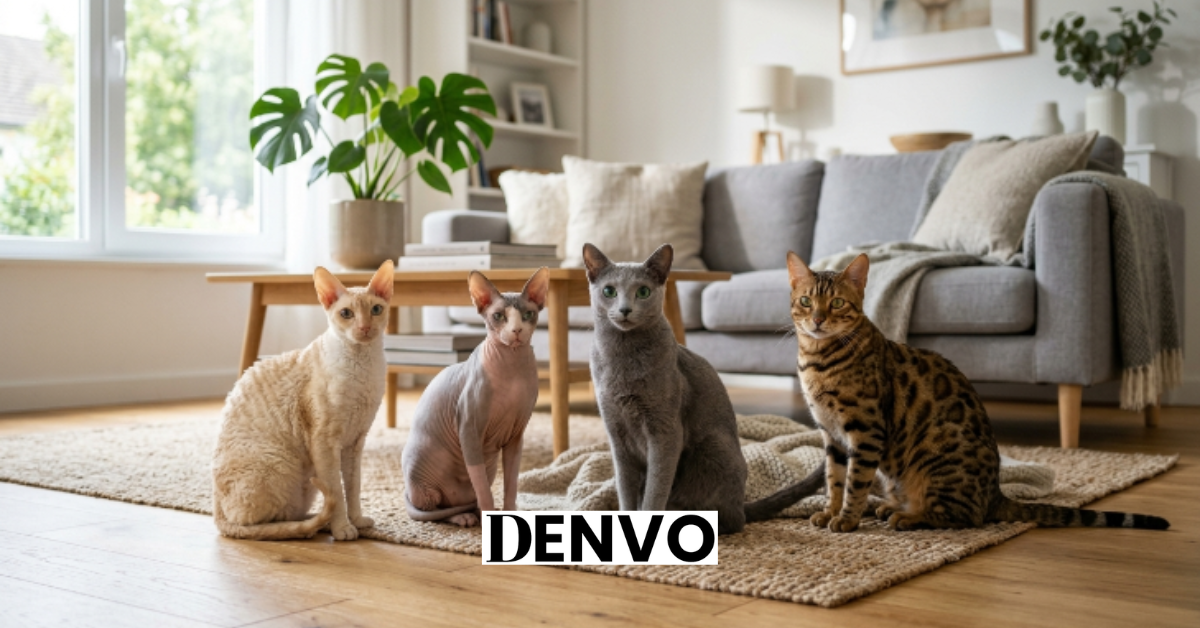
No cat is 100% shed-free, but breeds like the Sphynx, Cornish Rex, Devon Rex, Russian Blue, and Siberian shed far less than average. Their short, sparse, or single-layer coats mean less fur on your couch, clothes, and lungs — though none are truly hypoallergenic.
If you’ve ever debated getting a cat but worried about the fur tumbleweeds rolling across your kitchen floor, you’re not alone. I hear this from friends constantly: they love cats, but the shedding (and sometimes the allergies) makes them hesitate. The good news is you don’t have to give up on the idea entirely. Some breeds genuinely shed less, and a few even come close to allergy-friendly, if you know what you’re looking at and what you’re not. Let’s get into which cats actually deliver on that promise.
Cat Breeds That Don’t Shed Much (And Why That Matters)
The phrase “cat breeds that don’t shed” gets thrown around loosely, but here’s the honest truth: every cat sheds something, because shedding is how hair follicles cycle naturally. What changes between breeds is how much and how noticeably.
A Persian, for example, has a thick double coat and sheds constantly — you’ll find fur in places you didn’t know fur could travel. Compare that to a Cornish Rex, whose coat is so fine and short that shed hairs barely register. The difference isn’t imaginary. It’s about coat structure, not magic.
So when people search for low-shedding cats, what they usually want is less daily cleanup and fewer allergy flare-ups. That’s a fair goal, and it’s achievable with the right breed choice.
The Sphynx Is the Closest Thing to a No-Shed Cat
The Sphynx has essentially no coat, which means there’s nothing to shed in the traditional sense. This breed produces a fine layer of peach-fuzz down instead of standard fur, so you won’t be pulling clumps of hair off your blanket.
That said, Sphynx cats aren’t maintenance-free. Without fur to absorb their skin’s natural oils, they need weekly baths to avoid a greasy buildup. My cousin has one named Waffle, and she jokes that bathing him is easier than bathing her toddler — he just sort of goes limp and accepts his fate.
- No traditional shedding at all
- Requires weekly bathing for oil control
- Sensitive to sun and cold, so indoor life is a must
- Surprisingly affectionate and people-oriented
If you want zero fur on your furniture, the Sphynx is about as close as you’ll get.
The Cornish Rex and Devon Rex Shed Less Because of Their Curly, Thin Coats
Both Rex breeds have a single coat layer instead of the usual three, which is the real reason behind their low shedding. Most cats have a topcoat, an awn coat, and a soft undercoat — the undercoat is where most of the shedding volume comes from. Rex breeds mostly skip that layer.
The Cornish Rex has soft, wavy fur that lies close to the body, almost like crushed velvet. The Devon Rex looks similar but has slightly larger ears and an even finer coat. Neither breed leaves much behind on dark clothing, which honestly feels like a small miracle if you’ve ever worn black pants around a Maine Coon.
I’ll admit a bit of a contrarian take here: people assume curly-coated cats must shed more because the fur looks unusual, almost overgrown. In reality, it’s the opposite. Less structure means fewer hairs cycling out at once, so these breeds tend to surprise new owners with how little cleanup they require.
The Russian Blue Sheds Surprisingly Little for a Double-Coated Breed
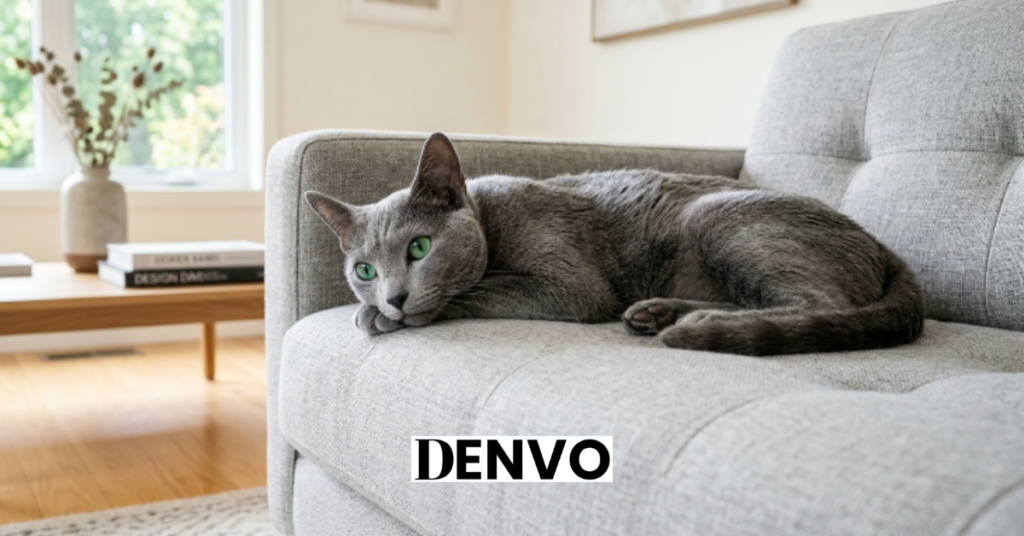
This one breaks the pattern you’d expect. Russian Blues actually have a dense double coat, which usually predicts heavier shedding — yet owners consistently report minimal loose fur around the house.
The trick is texture. Russian Blue fur is short, plush, and tightly packed, almost like felt. Loose hairs tend to get trapped in the coat rather than falling out and scattering everywhere. A friend of mine adopted one after her allergist recommended it specifically, and two years later, she still swears her black couch stays remarkably fur-free.
Russian Blues also tend to produce lower levels of the Fel d 1 protein, which is the main allergy trigger in cats, not the fur itself. That’s worth remembering: allergies are usually about protein levels in saliva and skin, not the amount of visible hair.
The Siberian Is Proof That Long Hair Doesn’t Always Mean More Shedding
You’d think a fluffy, long-haired cat would top the shedding charts, but Siberians often shed less than short-haired breeds like the American Shorthair. Their coat sheds in a more seasonal, predictable pattern rather than constantly year-round.
Siberians are also known for producing comparatively lower Fel d 1 protein levels, which is why they’re frequently recommended to people with mild cat allergies. That’s a genuinely surprising insight for most first-time cat owners: coat length and shedding volume aren’t as connected as they assume.
Brushing once or twice a week during shedding season (usually spring) keeps things manageable. Outside of that window, Siberians are lower-maintenance than their looks suggest.
Practical Steps If You Want a Low-Shedding Cat Without the Guesswork
Choosing the right breed is only half the equation. How you manage grooming, diet, and your home environment matters just as much for keeping fur under control.
- Spend time with the breed before adopting. Visit a breeder or foster home and sit with the cat for at least 20-30 minutes to see how you react physically, especially if allergies are a concern.
- Brush weekly, even for low-shedding breeds. A rubber grooming glove or a fine-tooth comb removes loose hair before it hits your floor.
- Feed a diet rich in omega-3s and omega-6s. Healthy skin sheds less excessively, and a dull, dry coat often sheds more than a well-nourished one.
- Invest in a HEPA air purifier if allergies are a factor. It won’t stop shedding, but it traps dander, which matters more than the visible fur.
- Wash bedding and soft furniture covers weekly. Fur and dander settle into fabric fast, and a weekly wash cycle keeps allergen buildup from accumulating.
Other Breeds Worth Mentioning: Bengal, Burmese, and Tonkinese
These three don’t always make the popular lists, but they deserve a mention. Bengals have a short, dense coat that sheds minimally and requires almost no brushing. Burmese cats have a similarly short, close-lying coat with very little seasonal shedding. Tonkinese cats combine traits from Siamese and Burmese lines, giving them a fine, low-shedding coat as well.
None of these are as extreme as the Sphynx or Rex breeds, but if you want a cat with a more “normal” appearance and personality that isn’t hairless or curly, they’re worth researching.
FAQs
Are there truly hypoallergenic cat breeds that don’t shed at all?
No breed is completely hypoallergenic, and no cat sheds zero hair. Even the Sphynx, which lacks a traditional coat, still produces skin cells and dander that carry allergens. The goal with low-shedding breeds is reduced exposure, not complete elimination.
Do cat breeds that don’t shed still trigger allergies?
Yes, because most cat allergies come from a protein called Fel d 1 found in saliva and skin oils, not from the hair itself. Breeds like the Russian Blue and Siberian tend to produce less of this protein, which can help sensitive people, but individual reactions still vary.
How often should I groom a low-shedding cat?
Weekly brushing is a solid baseline for almost any breed, even the ones marketed as low-shedding. Sphynx cats need weekly baths instead of brushing, since they lack fur to manage oil buildup naturally.
Which cat breed sheds the absolute least?
The Sphynx sheds the least by a wide margin, simply because it has no traditional fur coat to shed. Among coated breeds, the Cornish Rex and Devon Rex come closest, thanks to their single-layer, low-volume coats.
Is it worth getting a low-shedding cat if I don’t have allergies?
Absolutely, if less cleaning and fewer fur-covered clothes sound appealing to you. Plenty of people without allergies still prefer these breeds simply for the reduced maintenance around the house.
Conclusion
Finding cat breeds that don’t shed isn’t about chasing a fantasy of a fur-free home — it’s about picking a coat type that fits how much cleaning you’re willing to do. Whether that’s the bald warmth of a Sphynx, the velvet curls of a Cornish Rex, or the surprisingly tidy coat of a Russian Blue, there’s a good match out there for almost every lifestyle. Pair the right breed with a little grooming routine, and you’ll spend a lot less time reaching for the lint roller.
Which one of these breeds sounds like the right fit for your home? Drop a comment and let me know, or share this with a friend who’s been putting off getting a cat because of the fur factor.