
Not every proposal needs a flash mob, a drone light show, or a stadium jumbotron. Some of the most memorable proposals happen in a living room, on a quiet trail, or over a home-cooked dinner. If you’re searching for simple romantic proposal ideas, you’re probably looking for something that feels genuine rather than staged — a moment that reflects your relationship instead of copying someone else’s Pinterest board.
This guide walks through proposal ideas that are easy to plan, low on stress, and high on meaning. You’ll also find guidance on timing, budget, personalization, and the small details that tend to matter more than people expect.
Why “Simple” Doesn’t Mean “Less Meaningful”
There’s a common misconception that a proposal has to be elaborate to be special. In reality, many couples say the opposite is true: an intimate, low-pressure moment often feels more authentic than a highly produced event with an audience.
A simple proposal removes a lot of the stress that comes with coordinating photographers, guest lists, and precise timing. It also puts the focus where it belongs — on the two of you, and on the sincerity of the moment. Simplicity gives you room to actually be present, rather than managing logistics while trying to ask one of the most important questions of your life.
That doesn’t mean simple has to mean plain. A quiet proposal can still be thoughtful, well-timed, and full of small personal touches that make it unmistakably about your relationship.
What Makes a Proposal Feel Romantic (Even Without a Big Production)
Before jumping into specific ideas, it helps to understand what actually makes a proposal feel meaningful, since this is what you’ll want to build into whichever idea you choose.
It reflects your relationship, not a template. A proposal that references an inside joke, a shared memory, or a place that matters to both of you will almost always land better than a generic setup, no matter how photogenic that setup is.
It matches your partner’s personality. Some people love public attention and surprises with an audience. Others would feel embarrassed by that same scenario. Think honestly about what your partner enjoys, not what looks good on social media.
It has a clear, unhurried moment. Even a simple idea benefits from a natural pause — a moment where you can actually get the words out without rushing, interruptions, or distractions.
It doesn’t rely entirely on the setting. A beautiful location helps, but it’s the words, the timing, and the sincerity that people remember years later, not just the scenery.
Keep these four principles in mind as you go through the ideas below, since they’ll help you adapt any of them to fit your specific relationship.
At-Home Proposal Ideas
Home proposals are popular for a reason: they’re private, comfortable, and give you full control over the environment without needing permits, reservations, or coordination with strangers.
1. Cook the meal you had on your first date. Recreating an early memory, even imperfectly, signals that you remember the details that mattered. Propose after dinner, once the moment feels unhurried.
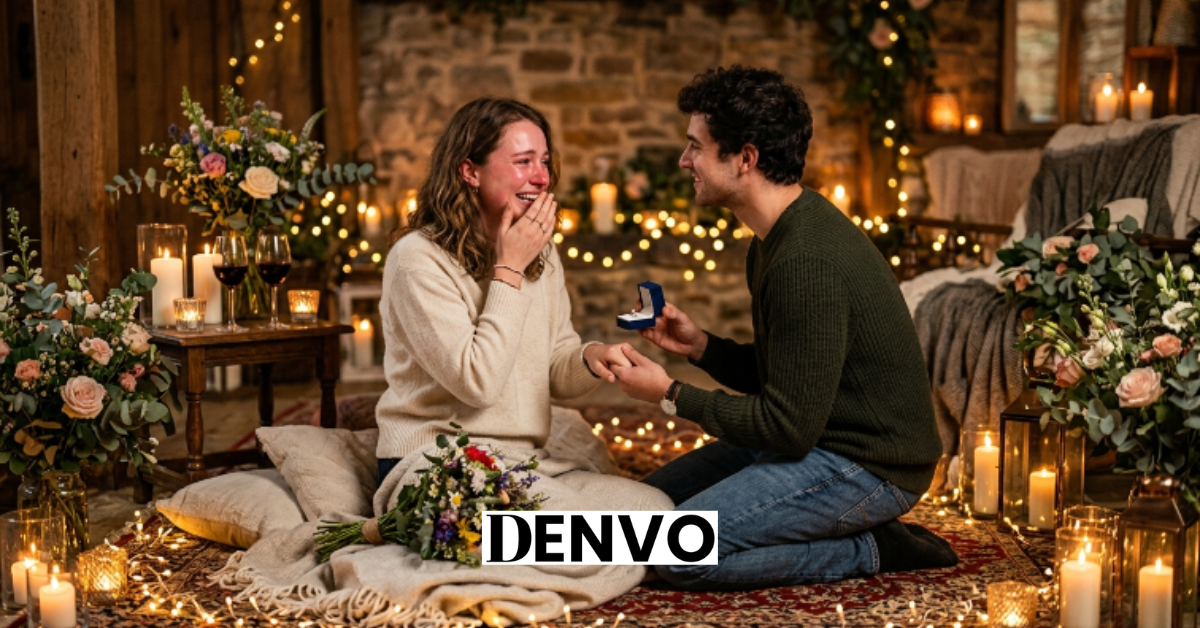
2. Set up a small indoor picnic. A blanket on the living room floor, string lights, and your partner’s favorite takeout can feel surprisingly intimate. It’s low-effort but still marks the moment as different from a regular night in.
3. Fill the room with photos from your relationship. Print a handful of meaningful photos and place them around the room or in a small album your partner can flip through before you propose.
4. Propose during a quiet morning routine. Not every proposal needs an evening setting. A calm Sunday morning with coffee and no plans can feel just as sincere, especially for couples who value low-key moments together.
5. Use a book or letter as a lead-in. Write a short letter about your relationship and place the ring inside the final page, or read it aloud before asking the question.
Outdoor and Nature-Based Proposal Ideas

If your relationship has a strong connection to the outdoors, a nature-based proposal can feel both simple and striking, without requiring elaborate planning.
6. Propose at the start or end of a favorite hike. Choose a trail you both know well rather than an unfamiliar one, so the moment feels connected to shared history rather than a random scenic stop.
7. Pick a spot with personal meaning, not just a scenic one. A quiet local park bench where you had an early date can matter more than an impressive overlook you’ve never actually visited together.
8. Time it around sunrise or sunset. Natural light does a lot of the visual work for you, without needing decorations, and it naturally slows the moment down.
9. Bring a small blanket and simple snacks. A modest outdoor setup — blanket, thermos, maybe a small speaker for music — keeps things easy to plan while still feeling deliberate.
10. Propose near water. Lakes, rivers, and beaches tend to create a natural sense of calm, which can help both of you feel more present in the moment.
Everyday-Moment Proposal Ideas
Some couples prefer proposals that don’t feel like “events” at all — where the significance comes from the timing and sincerity rather than the setting.
11. Propose during a normal weekend errand. Pausing mid-walk, mid-drive, or during a quiet moment at home can feel more natural for couples who dislike surprises or performance.
12. Ask right after a meaningful conversation. If you’re already talking about your future together, that honest moment can be the ideal lead-in, without needing a separate staged setup.
13. Propose while doing something you both enjoy regularly. Whether that’s a weekly game night, a favorite coffee shop visit, or a Sunday drive, using an existing ritual keeps the moment familiar rather than staged.
14. Use a quiet moment during a regular trip to a meaningful place. Revisiting the restaurant of your first date or the spot of your first kiss, without turning it into a big production, can be deeply personal.
15. Propose first thing in the morning. For partners who dislike waiting or suspense, a straightforward morning proposal removes any anxiety about “when it will happen.”
Travel and Weekend-Getaway Proposal Ideas
You don’t need an extravagant trip abroad. A modest weekend getaway can still create the right space for a meaningful proposal.
16. Propose on a short weekend trip to a nearby city. New surroundings can make the moment feel special without the cost or complexity of international travel.
17. Choose a destination connected to your relationship. A city where you first met, studied, or took your first trip together adds a layer of meaning that a random new destination can’t replicate.
18. Propose at your hotel or rental, not just a public landmark. Private, quiet spaces often work better for couples who prefer no audience, even while traveling somewhere memorable.
19. Build in one unplanned free afternoon. Overscheduled trips leave little room for a natural, quiet moment, so keep at least a few hours open with no fixed plans.
20. Use a scenic but familiar viewpoint. If you’ve traveled somewhere together before, returning to a spot you both remember fondly can outweigh finding a brand-new “perfect” location.
Proposal Ideas That Involve Family or Pets
For couples who are close with family or who share a pet, involving them can add warmth without turning the proposal into a large event.
21. Have a pet “deliver” the ring. A ring attached to a pet’s collar or a small sign around their neck is a popular, low-effort idea that works well for pet-centered couples.
22. Propose during a quiet family gathering. Rather than a formal announcement in front of a crowd, some couples prefer asking quietly, then sharing the news with family shortly after.
23. Ask for a blessing beforehand, then propose privately. If this tradition matters to you or your partner’s family, having that conversation separately allows the actual proposal to remain intimate.
24. Use a family recipe or tradition as the backdrop. Proposing during a holiday tradition or a recipe passed down in the family can add sentimental weight without extra effort.
Budget-Friendly Proposal Ideas
A meaningful proposal doesn’t require a large budget. Many of the ideas above cost very little, but here are a few specifically built around minimizing expense while maximizing sincerity.
25. Write the proposal instead of staging it. A heartfelt, handwritten note read aloud costs nothing but time and thought, and it often means more than an expensive setup.
26. Use what’s already meaningful, not what’s expensive. A childhood photo, a ticket stub from an early date, or a small keepsake can anchor the moment without added cost.
27. Choose a free public space with personal significance. A local park, an overlook, or a walking trail you both know well works just as well as a paid venue.
28. Skip professional photography and ask a close friend instead. If capturing the moment matters to you, a trusted friend with a phone camera can document it without the cost of a hired photographer.
29. Keep the ring modest if needed, and be upfront about upgrading later. Many couples choose a simpler ring at proposal time and plan for a different setting or upgrade down the line, which is a practical and increasingly common approach.
30. Focus spending on one detail that matters most to your partner. Instead of spreading a budget thin across decorations, food, and setting, put your resources into the one element your partner will care about most, whether that’s a specific location, a meal, or the ring itself.
How to Personalize Any Simple Proposal Idea
Once you’ve picked an idea, personalization is what turns it into something specific to your relationship. A few practical ways to do that:
Reference a specific memory rather than speaking in general terms. Saying something concrete — a date, a place, a moment you both remember — carries more weight than a general statement about love.
Involve something with sentimental value, even a small object like a ticket stub, a note, or a photo. These details signal thoughtfulness without requiring extra planning.
Match the tone to your partner’s personality. If they’re private, keep the moment private. If they enjoy being celebrated, consider letting a few close people know afterward, even if the proposal itself stays intimate.
Say something specific, not just “will you marry me.” A brief sentence about what you appreciate or why this moment matters tends to be remembered more clearly than the question itself.
Choosing the Right Timing
Timing affects a proposal as much as the setting does. A few practical considerations:
Avoid major distractions. Holidays, birthdays, and other milestone events already carry emotional weight of their own, and some partners prefer their proposal to have its own separate moment.
Consider your partner’s stress levels. Proposing during an especially busy or stressful period, such as a demanding work deadline, can make the moment feel rushed even if your intentions are good.
Think about who else is present. If your partner dislikes public attention, avoid settings where strangers might unintentionally turn the moment into a spectacle.
Build in a buffer for the unexpected. Outdoor plans can be affected by weather, and public spaces can be unpredictable. Having a simple backup plan reduces stress if your first choice doesn’t work out.
Practical Planning Checklist
Even a simple proposal benefits from a short planning checklist:
- Confirm the ring size, or have a plan for resizing afterward
- Choose a specific time and general setting, with a backup option
- Decide whether you want anyone else present or informed in advance
- Prepare what you want to say, even loosely, so you’re not relying entirely on the moment
- Consider whether you want the moment documented, and by whom
- Think about what happens immediately afterward, such as telling family or going somewhere to celebrate
Common Mistakes to Avoid
Overcomplicating a simple idea. Adding too many elements — decorations, timed reveals, coordinated helpers — can undermine the very simplicity that made the idea appealing in the first place.
Ignoring your partner’s actual preferences. Choosing a public or elaborate idea because it looks appealing online, rather than because it fits your partner, is one of the most common proposal regrets people describe.
Rushing the moment. Even simple proposals need a beat of stillness. Trying to fit the proposal into a tight window can make it feel hurried rather than sincere.
Forgetting a backup plan. Weather, noise, or unexpected interruptions can derail an outdoor or public proposal. A simple backup location or time keeps things from feeling chaotic.
Focusing only on the visual result. A proposal that looks good in photos but doesn’t feel personal to the couple tends to be remembered less fondly than a quieter, more sincere moment.
What to Do Right After She (or He) Says Yes
The moments right after a proposal matter too, and they’re often overlooked in the planning process.
Take a few minutes to simply be present before reaching for a phone to share the news. Many couples say they wish they’d paused longer before documenting or announcing the moment.
Decide together, even briefly, how and when you want to tell family and friends. Some couples prefer to enjoy the news privately for a few hours before sharing it.
If you have a small celebration planned, such as a favorite meal or a bottle of something special, this is a natural time to use it, even if the proposal itself was simple.
FAQs
What is the simplest way to propose?
A private moment at home or in a place with personal meaning, paired with a few sincere words, is generally considered one of the simplest and most low-stress ways to propose. It requires minimal coordination while still allowing the moment to feel intentional.
Do I need a big gesture for a proposal to feel special?
No. Many couples report that quieter, more personal proposals feel more meaningful than large, publicly staged ones, particularly when the moment reflects specific shared memories rather than general romantic gestures.
How do I know if my partner wants a private or public proposal?
Pay attention to how your partner reacts to public attention in general, such as birthdays or achievements. Someone who avoids being the center of attention in other situations will likely prefer a private proposal.
Is it okay to propose without a ring?
Yes. Some couples choose the ring together afterward, or the proposer uses a placeholder ring until they can shop together. What matters most to most partners is the sincerity of the moment, not the ring itself.
How much should a simple proposal cost?
There’s no fixed amount. Many of the ideas in this guide, such as a home-cooked meal, a written letter, or a walk to a meaningful location, cost very little beyond time and thoughtfulness.
Should I tell anyone I’m planning to propose?
That depends on your relationship and family dynamics. Some people choose to inform close family beforehand, particularly if there’s a tradition of asking for a blessing, while others prefer to keep the plan entirely private until after the proposal.
What if my proposal doesn’t go as planned?
Minor disruptions, like weather changes or interruptions, rarely affect how a proposal is remembered. What tends to matter most is the sincerity of the moment and how you both respond to it together.
Final Thoughts
A proposal doesn’t need elaborate staging to be memorable. What tends to matter most is whether the moment feels specific to your relationship, whether it respects your partner’s personality, and whether there’s genuine space for sincerity rather than performance. Whether you choose a quiet evening at home, a familiar outdoor spot, or a modest weekend trip, the ideas that work best are usually the ones built around real shared history rather than a generic template.
If you’re still deciding, start with the four questions from earlier in this guide: Does it reflect your relationship? Does it match your partner’s personality? Does it allow for an unhurried moment? Does it rely on more than just the setting? An idea that answers yes to all four is very likely to feel right.