

Quick Answer
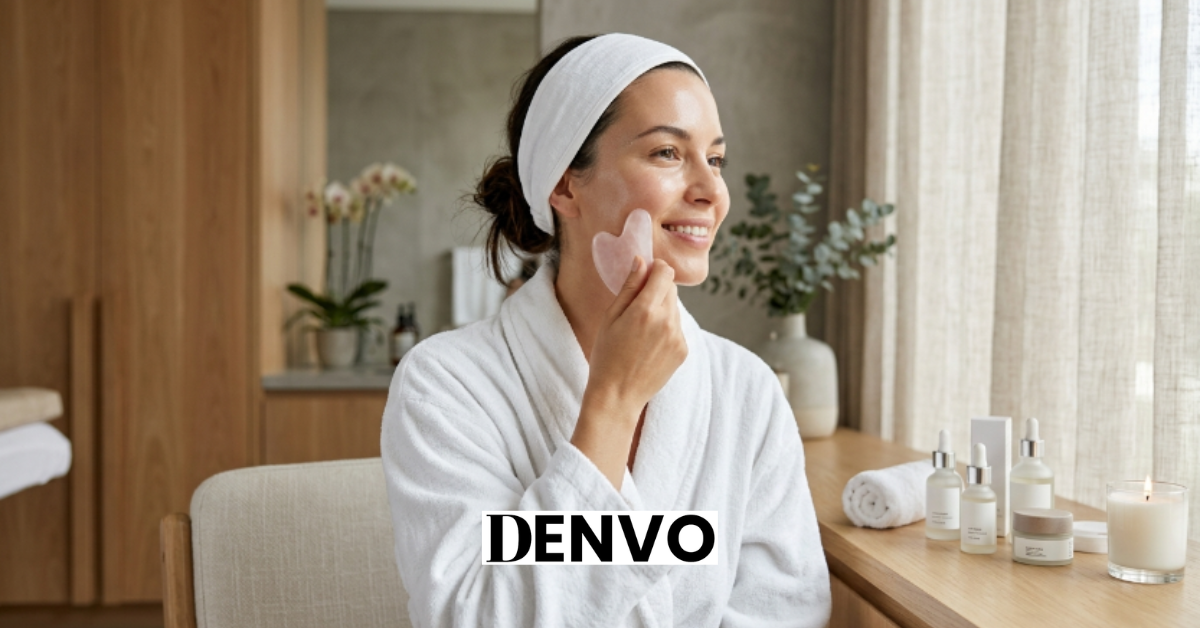
Gua sha benefits for the face include reduced puffiness, improved lymphatic drainage, better circulation, softer jaw tension, and a natural lifting effect. Used correctly 3–5 times per week, it can visibly change your skin’s tone and texture within 4–6 weeks — no needles, no products, just technique.
Introduction
Most people think a smooth stone dragged across the face is just a wellness trend. They’re wrong — and their skin is paying for it.
Gua sha benefits for face have been documented in Traditional Chinese Medicine for over 700 years. What Western dermatologists are now discovering is that this ancient ritual works on a physiological level — improving microcirculation, stimulating lymphatic drainage, and releasing chronic facial tension that causes premature aging.
In this article, you’ll learn exactly how gua sha works beneath the skin surface, the mistakes that stop most beginners from seeing results, and a step-by-step method that skincare professionals actually use. Whether you just ordered your first rose quartz tool or you’ve been using one for months without noticing a difference — this guide is for you.
No fluff. No vague promises. Just real science and honest technique.
What Is Gua Sha for the Face (and Why It’s Not a Fad)
Ancient Chinese healers used gua sha — literally “scraping sand” — to move stagnant energy and blood through the body. The facial version is gentler, but the underlying principle is identical: pressure applied with a flat tool along muscle and lymph pathways creates measurable biological responses.
The modern version of facial gua sha uses smooth-edged tools made from jade, rose quartz, bian stone, or stainless steel. Each material has slightly different thermal properties, but the technique matters far more than the material. When you apply the tool with light-to-medium pressure at a 15–45 degree angle, you’re mechanically stimulating tissue layers that most skincare products never reach.
Here’s what nobody tells you: gua sha isn’t a surface treatment. It works in the fascia — the connective tissue layer between skin and muscle — where tension accumulates and restricts blood flow. That restriction is one of the underappreciated drivers of a dull, puffy, or aging appearance.
Dermatologists are increasingly acknowledging what practitioners have always known. A 2019 review published in the Journal of Traditional Chinese Medicine found that gua sha significantly increased microcirculation in treated tissue. The face responds quickly to this stimulation precisely because facial skin is thinner and more vascular than body skin.
Pro Tip: If you’re new to facial gua sha, start with a bian stone tool — it stays cooler longer than rose quartz and provides better glide on dry skin.
How Gua Sha Actually Works on Skin (The Science Nobody Explains)
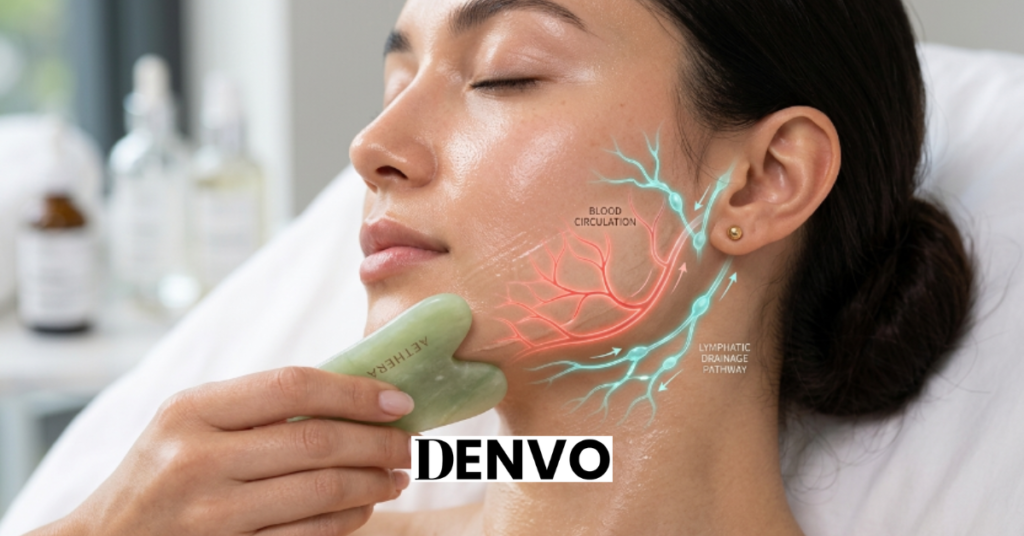
Let’s go deeper than “it drains puffiness.” Because that explanation, while true, doesn’t capture why gua sha produces effects that sometimes look like subtle plastic surgery after consistent use.
Lymphatic drainage is the headline benefit. Your face has a dense network of lymphatic vessels — more concentrated than almost anywhere else in the body. Unlike blood vessels, the lymphatic system has no pump. It relies entirely on muscle movement and external pressure to move fluid. When you sit at a desk for eight hours with a tense jaw and furrowed brow, lymph fluid pools. Gua sha provides the mechanical pressure that moves it.
Think of it this way: your morning puffiness isn’t just from sleeping face-down. It’s accumulated lymphatic fluid that hasn’t had any stimulus to drain. One focused gua sha session of eight minutes can move that fluid toward the lymph nodes at your clavicle — the primary drainage point for facial lymph — more effectively than a full day of normal movement.
The second mechanism is myofascial release. The masseter (jaw), temporalis (temple), and frontalis (forehead) muscles all hold chronic tension in most adults. That tension physically pulls on overlying skin. Over years, it creates expression lines, jowl precursors, and a general visual heaviness to the face. The sweeping strokes of gua sha stretch and release these muscles the same way a sports massage releases a knotted calf.
The third mechanism — and the most underappreciated — is collagen stimulation via controlled microtrauma. The mild mechanical friction of gua sha creates a micro-inflammatory response in the dermis. The body responds by increasing local circulation and upregulating fibroblast activity — the same cells responsible for producing collagen and elastin. This is the same principle behind microneedling, just far gentler and achieved without breaking the skin barrier.
The Most Common Gua Sha Mistakes (And Why You’re Not Seeing Results)
If you’ve been using gua sha for weeks and noticed nothing, one of these is almost certainly the problem.
Mistake #1: Too much pressure. This is the most common error and it works against you. Excessive pressure compresses lymphatic vessels rather than stimulating them. You should feel light resistance — never pain, redness that lasts more than 10 minutes, or skin dragging. The pressure needed is roughly equivalent to the weight of the tool itself.
Mistake #2: Wrong direction. Most people stroke wherever feels intuitive. But lymphatic drainage follows specific anatomical pathways. Strokes must always move outward and downward — from the center of the face toward the ears, and from the jaw down the neck to the collarbone. Stroking upward on the neck, or inward on the cheeks, can actually increase fluid retention.
Mistake #3: No slip. Using gua sha on dry skin creates friction, not glide. And friction damages the skin barrier. You need a generous layer of facial oil — jojoba, squalane, or a dedicated gua sha oil. Serum and moisturizer are not enough. If your tool is dragging or your skin feels warm after five seconds, apply more oil.
Mistake #4: Inconsistency. One session won’t show you anything. The cumulative effect of gua sha — the de-puffing, the lifting, the improved texture — requires a minimum of 3–4 weeks of regular practice (4–5 sessions per week). Most people quit after three sessions and conclude it doesn’t work.
Mistake #5: Starting on inflamed skin. Active breakouts, sunburned skin, rosacea flares, and eczema patches are absolute contraindications. Gua sha will spread bacteria and worsen inflammation. Identify these areas before each session and navigate around them entirely.
Pro Tip: Do your gua sha session immediately after cleansing and before applying serums. Your skin is warm and product-free — ideal conditions for lymphatic work. Apply oil specifically for the session, then layer your actives afterward.
Real Gua Sha Benefits for the Face: What to Actually Expect
Let’s break down what consistent practice actually delivers — with realistic timelines.
Weeks 1–2: De-Puffing and Circulation Boost
The most immediate and dramatic result is reduced facial puffiness, particularly around the eyes, jawline, and cheeks. Most people notice this within the first three sessions. Your face will look more defined in photos even before any structural changes occur. Skin tone typically improves — the mild circulation boost brings oxygenated blood to the surface and creates a subtle radiance that’s genuinely different from flushing.
Weeks 3–6: Tension Release and Early Lifting
By week three or four, regular users start noticing something more significant: a physical release of jaw tension. Many people carry so much chronic masseter tightness that releasing it actually changes the lower face shape — a softer jaw that appears slimmer without any weight loss. The brow area often feels less heavy, and the nasolabial folds may appear less pronounced. This is fascia releasing, not magic.
Weeks 6–12: Texture and Tone Changes
The collagen-stimulating effect takes the longest to become visible. Between six and twelve weeks of consistent use, many practitioners and their clients report improvements in skin texture — a smoothness that wasn’t there before, reduced appearance of fine lines around the forehead and eyes, and a general evenness of skin tone. These changes are subtle but cumulative, and they’re what keep serious skincare practitioners using gua sha long-term.
The honest caveat: Results vary based on age, skin condition, technique, and consistency. Gua sha is not a replacement for sunscreen, hydration, or medical treatment. But as a complimentary daily practice, its benefits for the face are well-documented and achievable without spending anything beyond the initial tool cost.
Step-by-Step Gua Sha Facial Routine That Actually Works
This is the method used by licensed estheticians and TCM practitioners — simplified for home use.
What you’ll need:
- Your gua sha tool (jade, rose quartz, or bian stone)
- A generous facial oil (jojoba or squalane recommended)
- Clean, washed hands
- 8–10 minutes
The Routine:
- Prep your lymph nodes. Before touching the face, place two fingers below each ear and make 5 gentle downward presses. Do the same at your collarbone. This “opens” the lymphatic drainage pathways before you push fluid toward them.
- Apply oil liberally. Your tool should glide effortlessly. If there’s any drag, add more oil. Apply to neck first.
- Start at the neck. Using the long flat edge of the tool, make 5 upward strokes from collar to jaw on each side of the neck. This clears the channel before you work the face.
- Work the jawline. Position the tool at the center of your chin. Stroke outward toward the earlobe with medium pressure — 5 strokes per side. This is the most tension-holding area of the face for most people.
- Cheeks and cheekbones. Start at the nose, stroke outward and slightly upward toward the temple — 5 strokes. Then angle the curved side under the cheekbone and sweep outward. 5 strokes per side.
- Under-eye area. Switch to the smallest curved edge. Use almost zero pressure — barely the weight of the tool — from the inner corner outward along the orbital bone. 3 strokes per side.
- Forehead. Use the flat edge to stroke from the center of the forehead outward to the temples, then upward from brow to hairline. 5 strokes per direction.
- Finish by re-pressing lymph nodes. Repeat the opening step in reverse — finish at the collarbone to encourage full drainage.
After the routine, wait 60 seconds, then apply your serums and moisturizer as normal.
Pro Tip: Keep your tool in the refrigerator overnight. The cool surface amplifies the de-puffing effect and feels extraordinary on a warm face first thing in the morning.
Gua Sha vs. Jade Roller vs. Face Massage: Honest Comparison
| Feature | Gua Sha | Jade Roller | Manual Face Massage |
|---|---|---|---|
| Lymphatic drainage | ★★★★★ | ★★★☆☆ | ★★★☆☆ |
| Myofascial release | ★★★★★ | ★★☆☆☆ | ★★★★☆ |
| Collagen stimulation | ★★★★☆ | ★★☆☆☆ | ★★☆☆☆ |
| Ease of use (beginner) | ★★★☆☆ | ★★★★★ | ★★★★☆ |
| Visible immediate effect | ★★★★★ | ★★★☆☆ | ★★★☆☆ |
| Long-term skin changes | ★★★★★ | ★★★☆☆ | ★★★☆☆ |
| Cost | $15–$80 | $10–$60 | Free |
The jade roller wins on convenience and gentleness — it’s excellent for beginners or sensitive skin. Manual massage excels at deep muscle work. But for the full spectrum of gua sha benefits for the face — lymphatic, fascial, and circulatory — the shaped tool with intentional stroke technique is in a different category.
Myths vs. Facts: What Gua Sha Can and Cannot Do
Myth: Gua sha will slim your face permanently. Fact: It reduces puffiness and releases muscle tension, which can create a slimmer-looking face — but only while practiced consistently. If you stop, accumulated tension and fluid return. Think of it like exercise for the face.
Myth: You need an expensive tool to see results. Fact: A $15 bian stone from a reputable source performs identically to a $150 “luxury” tool in studies examining circulation response. What matters is the shape (appropriate curves for facial contours) and smoothness of the edge. Price is mostly marketing.
Myth: Gua sha causes bruising on the face. Fact: Facial gua sha uses dramatically less pressure than body gua sha (which can intentionally create petechiae — small blood spots — as part of the treatment). Done correctly on the face, you should never see bruising. Bruising indicates excessive pressure. Stop immediately.
Myth: Gua sha is only for women. Fact: The physiology of lymphatic drainage, myofascial tension, and microcirculation is identical regardless of gender. Men who practice facial gua sha report the same de-puffing, jaw tension relief, and skin quality improvements.
Myth: Results are immediate and dramatic. Fact: The de-puffing effect IS immediate and visible. But the deeper structural benefits — tension release, collagen improvement, lasting tonal changes — require 4–12 weeks of consistent practice. Anyone promising overnight transformation is selling you something.
Pro Tip: If your skin is particularly congested or tends toward milia, combine gua sha with a weekly enzyme exfoliant (not physical scrub). The combination of improved circulation from gua sha and gentle cell turnover from the enzyme dramatically accelerates skin clarity.
Conclusion
Here’s what actually matters about gua sha benefits for the face — stripped down to three truths.
First, this practice works because it addresses what most skincare ignores: the mechanical health of your face tissue. No serum penetrates fascia. No moisturizer drains lymph. Gua sha does both, consistently and measurably.
Second, technique beats everything. The right strokes in the right direction with appropriate pressure will deliver results. Wrong pressure, wrong direction, or dry skin means wasted time.
Third, patience is the practice. If you do this five times a week for six weeks, you will not recognize your morning face from what it is today. That’s not a promise — it’s what consistent practitioners universally report.
Your next step: Pick up a quality gua sha tool, learn your lymph pathway anatomy once, and commit to four weeks. Track with weekly photos in the same lighting. The results will speak for themselves.
What’s been your experience with facial gua sha — or your biggest obstacle to starting? Drop it in the comments. Someone else needs to hear your answer.
Ready to take your skincare practice further? Explore our guide on the best facial oils to pair with gua sha for maximum results.
FAQ
Is gua sha good for the face every day?
Daily gua sha is safe for most skin types as long as you’re using light pressure and sufficient oil. For sensitive or acne-prone skin, every other day is more appropriate to allow the skin barrier recovery time. The lymphatic system responds well to regular stimulation — more than 3 sessions per week is where most practitioners see cumulative benefit.
Can gua sha benefits for the face include reducing wrinkles?
Yes, with an important distinction: gua sha can reduce the appearance of fine lines by improving hydration, circulation, and collagen production over time, and by releasing the muscle tension that deepens expression lines. It won’t reverse deep structural wrinkles, but consistent use over 3+ months shows measurable improvements in skin texture and the softening of early fine lines, particularly around the forehead and eyes.
How long does it take to see gua sha face benefits?
Puffiness reduction is visible within the first 1–3 sessions. Jaw tension relief typically takes 2–3 weeks of regular use. Improvements in skin texture, firmness, and tone require 6–12 weeks of consistent practice — minimum 4 sessions per week. Think of the timeline in three phases: immediate (drainage), short-term (tension release), and long-term (structural changes).
What type of gua sha tool is best for facial use?
The best tools for facial gua sha have multiple curved edges to navigate the contours around the eyes, jaw, and nose. Bian stone heats up slowly and glides smoothly, making it a top choice for dry and mature skin. Rose quartz stays cooler and is better for oily or acne-prone skin. Stainless steel tools are the most hygienic option and provide a consistent temperature. Avoid tools with sharp or unpolished edges regardless of material.
Can gua sha help with jaw tension and TMJ discomfort?
Gua sha is not a medical treatment for TMJ disorder, but many users report significant reduction in jaw tension with consistent masseter work. The strokes along the jaw and the sweeping release along the neck muscles address the same chronic holding patterns that contribute to jaw pain. If you have diagnosed TMJ, consult your dentist or physiotherapist before adding gua sha — for many people it complements professional treatment well.
Are gua sha benefits for the face different for mature skin?
Mature skin benefits significantly from gua sha, and in some ways more so than younger skin. As skin ages, lymphatic flow slows, fascia becomes less elastic, and microcirculation decreases — all three things gua sha directly addresses. The key adjustment for mature skin is using slightly less pressure and ensuring rich oil coverage, as thinner skin is more prone to barrier disruption. Many users over 50 report this as their most impactful skincare addition.