
What is a traditional English breakfast recipe?
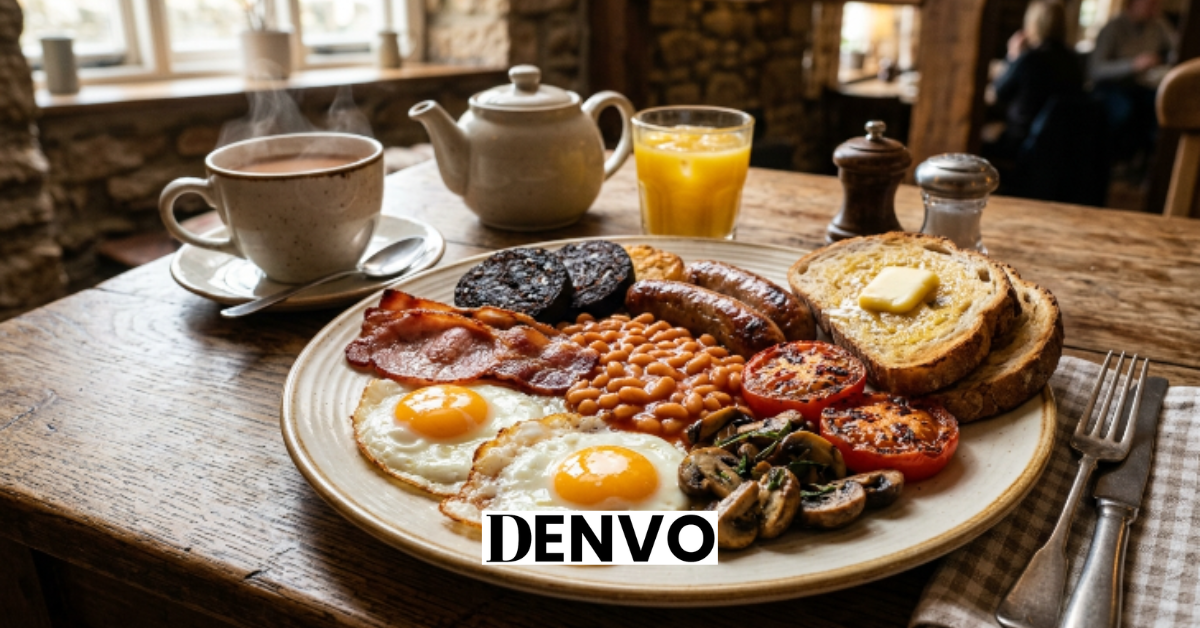
A traditional English breakfast recipe — also known as a “full English” or “fry-up” — is a cooked morning meal consisting of back bacon, fried or scrambled eggs, pork sausages, baked beans, grilled tomatoes, mushrooms, black pudding, and toast. It originated in Britain during the Victorian era and remains one of the nation’s most beloved morning traditions.
Key points at a glance:
- A proper full English takes roughly 20–25 minutes from start to finish
- The classic plate features at least 7 core components, though regional variations exist
- Timing and heat management are the two biggest factors in getting it right
Introduction
There’s a reason the English breakfast recipe has survived centuries of food trends, diet fads, and gourmet revolutions. It is, quite simply, one of the most satisfying meals a person can sit down to — and millions of households across the UK prepare one every single weekend.
Whether you’re attempting your very first fry-up or you’ve been cooking them for years but suspect something’s always slightly off, this guide will walk you through everything you need to know. From choosing the right sausages to mastering the perfect fried egg, you’ll learn what separates a memorable full English from a mediocre one.
The problem most people face is not a lack of ingredients — it’s a lack of order and timing. Everything needs to hit the plate hot and at roughly the same moment, which sounds simple but routinely trips people up. By the end of this article, you’ll have a clear, repeatable method that works every time.
What Is an English Breakfast Recipe?
Defining the Full English
The English breakfast recipe is a hot, cooked morning meal that has been a staple of British food culture since at least the early 19th century. Originally associated with the landed gentry, who would lay out enormous spreads for guests staying in country houses, the full English gradually became a working-class institution by the 20th century — served in greasy spoon cafés, transport cafés, and seaside B&Bs the length and breadth of the country.
Today, the fry-up is as much a cultural symbol as it is a meal. It appears in hotel breakfast menus, Sunday morning kitchen routines, and post-night-out recovery traditions. Search trends in 2025–2026 show that queries around full English breakfast, traditional fry-up, and cooked breakfast ideas spike reliably every weekend — particularly on Sunday mornings.
The Core Components
A canonical English breakfast recipe includes:
- Back bacon — the cut of choice, distinct from American streaky bacon
- Pork sausages — good quality, ideally high-meat-content
- Eggs — fried, scrambled, or poached depending on preference
- Baked beans — Heinz remains the national favourite
- Grilled tomatoes — either fresh halved tomatoes or tinned
- Mushrooms — flat or button, fried in butter
- Black pudding — a blood sausage that divides opinion but belongs on a proper plate
- Toast or fried bread — white or wholemeal, buttered
Regional Variations and Related Terms
A full Scottish breakfast swaps black pudding for haggis and adds tattie scones. A Welsh breakfast often features laverbread and cockles. In Northern Ireland, the Ulster fry includes soda bread and potato bread. These regional variants are all kissing cousins of the English original — different enough to be interesting, similar enough to qualify as the same tradition.
Why the English Breakfast Recipe Still Matters in 2026
A Meal for Every Occasion
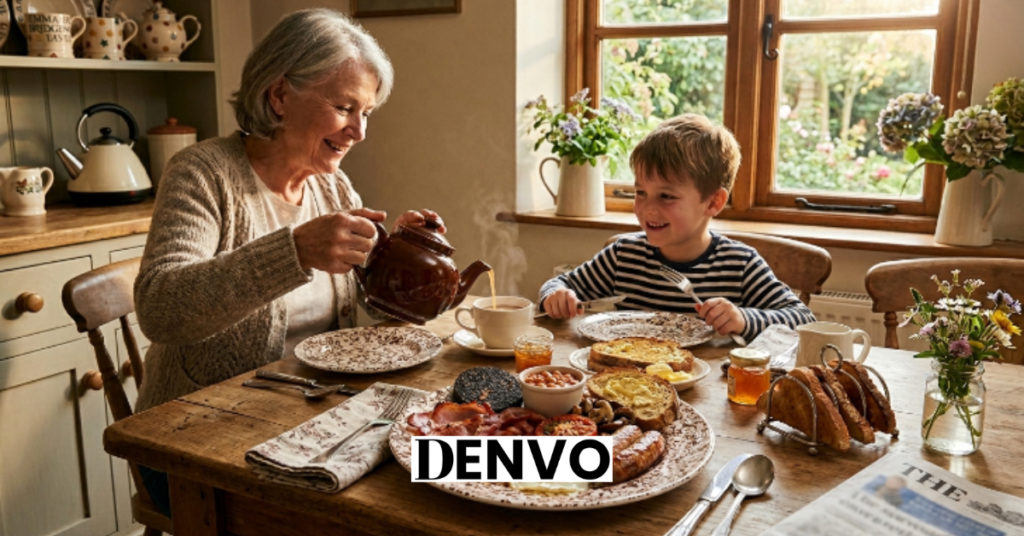
The full English breakfast is no longer just a Sunday treat. With hybrid working patterns firmly embedded in UK life since 2022–2023, more people are eating breakfast at home on weekdays too. The result has been a notable uptick in interest in homemade cooked breakfasts — people want the comfort of a café-quality fry-up without having to leave the house.
The Benefits of Cooking a Proper Fry-Up
1. Nutritional balance when done right. A well-constructed English breakfast provides protein from eggs, sausages, and bacon; carbohydrates from toast or beans; and a small vegetable contribution from tomatoes and mushrooms. It is more nutritionally rounded than many people assume.
2. Cost-effectiveness. Cooking a full English at home costs a fraction of café prices. In 2025, the average café full English in the UK was priced between £8 and £14. At home, you can prepare the same meal for roughly £2.50–£4.00 per person.
3. It’s a skill worth owning. Hosting friends or family for a weekend breakfast is one of life’s reliable pleasures. Being the person who can produce a flawless fry-up is genuinely useful social currency.
4. It keeps tradition alive. Food culture matters. The full English is a living piece of British heritage — not just a meal, but a ritual that connects generations.
Key Factors That Make or Break an English Breakfast
Choosing the Right Ingredients
Ingredient quality is everything with a simple dish like this. There are only eight or nine components, and each one is exposed — there are no complex sauces to hide behind.
For the back bacon, look for thick-cut rashers with a good ratio of meat to fat. Avoid watery, thin rashers that shrink dramatically in the pan. For sausages, choose a brand with at least 70% pork content — cheaper sausages are packed with rusk and water and will split and shrink. Butcher’s sausages are worth the small extra cost.
For eggs, free-range large eggs deliver noticeably better colour and flavour. The yolk should be a deep golden orange — a pale yolk signals a poor-quality egg.
Equipment and Pan Choice
The right equipment makes timing dramatically easier. A large, heavy-bottomed frying pan — cast iron if you have one — is ideal for bacon and sausages. A separate non-stick pan is best for eggs, where sticking is your enemy.
If you have an oven, use it. Sausages and bacon can be finished in the oven at 180°C (fan) while you focus on eggs and tomatoes on the hob. This frees up both hands and both rings, and dramatically reduces the number of things that can go wrong simultaneously.
A griddle pan works well for tomatoes if you prefer attractive char marks rather than a soft, stewed finish.
Timing and Order of Cooking
This is where most home cooks go wrong. The order in which you cook each element determines whether everything arrives on the plate hot at the same time.
Recommended order:
- Sausages first — they need 15–18 minutes total
- Bacon after 5 minutes — 10–12 minutes total
- Mushrooms — 5–6 minutes in butter, started mid-way through
- Tomatoes — 4–5 minutes, halved and placed cut-side down
- Black pudding — 3–4 minutes per side
- Beans — warmed in a small saucepan during the final 5 minutes
- Eggs — last, so they hit the plate perfectly fresh
- Toast — timed to pop up as everything else is plated
Heat Control
High heat for bacon and sausages; medium for eggs. This sounds obvious but is consistently misapplied. Eggs cooked on too-high heat develop rubbery whites and overcooked yolks before you’ve even looked away. Bacon cooked on too-low heat goes limp and fails to develop that satisfying caramelised edge.
Use medium-high for the main proteins, reduce to medium-low when the eggs go in.
Step-by-Step English Breakfast Recipe
Here is a reliable method for cooking a full English breakfast for two people, from scratch to plate in 25 minutes.
Ingredients (Serves 2)
| Ingredient | Quantity |
|---|---|
| Back bacon rashers | 4 |
| Pork sausages | 4 |
| Large free-range eggs | 4 |
| Baked beans (tin) | 1 x 200g |
| Flat mushrooms | 4 medium |
| Vine tomatoes | 2, halved |
| Black pudding slices | 4 (optional) |
| Thick white or wholemeal bread | 4 slices |
| Unsalted butter | 30g |
| Sunflower or vegetable oil | 2 tbsp |
| Salt and freshly ground black pepper | To taste |
Step-by-Step Method
Step 1 — Preheat and prepare (minutes 0–2) Heat your oven to 180°C fan (200°C conventional). Line a baking tray with foil. Place the sausages on the tray with a drizzle of oil. Place them in the oven.
Step 2 — Start the bacon and mushrooms (minutes 5–8) Heat a large frying pan over medium-high heat with 1 tbsp oil. Add the bacon rashers. In a separate pan, melt the butter over medium heat and add the mushrooms, flat-side down. Season with salt and pepper.
Step 3 — Add tomatoes and black pudding (minutes 10–12) Push the bacon to one side of the pan. Add the halved tomatoes cut-side down. In a separate smaller pan or gap in your main pan, add the black pudding slices.
Step 4 — Warm the beans (minute 15) Pour the baked beans into a small saucepan over low heat. Stir occasionally. Do not boil — keep them gently warmed.
Step 5 — Check the sausages (minute 15) Remove the sausages from the oven. They should be golden and cooked through. If using a meat thermometer, the internal temperature should reach 75°C. Place them back in the switched-off oven to keep warm.
Step 6 — Fry the eggs (minutes 18–20) In a clean non-stick pan, heat a small knob of butter over medium-low heat. Crack the eggs in carefully. Cover with a lid or plate for 2–3 minutes for a basted egg with a set white and runny yolk. For a fully set yolk, leave for 4 minutes.
Step 7 — Toast and plate (minutes 20–25) Put the bread in the toaster. Begin plating: arrange sausages, bacon, mushrooms, tomatoes, and black pudding on warm plates. Spoon beans to one side. Add the eggs. Butter the toast and serve immediately.
How to Get the Best Results Every Time
Warm Your Plates
Cold plates are the enemy of a fry-up. Food cools in seconds on a cold ceramic plate. Warm your plates in the oven at 80°C for 10 minutes before serving, or run them under the hot tap and dry them quickly.
Don’t Crowd the Pan
Overcrowding drops the pan temperature and causes everything to steam rather than fry. Cook in batches if necessary, especially with bacon. A soggy, pale rasher is the result of too much in the pan at once.
Use Good-Quality Beans
Heinz baked beans remain the overwhelmingly preferred choice for a traditional full English. Own-brand beans tend to have a thinner sauce and less flavour depth. Reduce them in the pan for a minute or two if you prefer a thicker consistency.
Cater to Preferences
If cooking for a group with differing preferences, remember: eggs are the most personal element. Scrambled, fried, or poached — ask before you cook. Scrambled eggs are the most forgiving to time correctly; poached eggs the least.
Common Mistakes to Avoid
Mistake 1: Cooking Everything in the Same Pan at the Same Time
The single most common error. Throwing everything in together means uneven cooking, overcrowded surfaces, and the virtual certainty that something will be overdone while something else is underdone. Use two pans and your oven.
Mistake 2: Using Low-Quality Sausages
Budget sausages contain as little as 32% pork — the rest is water, rusk, and flavouring. They shrink to almost nothing, split, and lose their shape entirely. Spend an extra £1–£2 on quality sausages. It is the single biggest improvement most home cooks can make.
Mistake 3: Cooking Eggs on High Heat
Eggs cooked on high heat turn rubbery and unpleasant. The proteins seize up too quickly. Always use medium-low heat, add a small lid to baste the top of the white, and take the eggs off the heat before they look fully done — they continue cooking on the hot plate.
Mistake 4: Forgetting to Season
A full English breakfast benefits significantly from seasoning at each stage. Mushrooms especially absorb salt and pepper beautifully. Season your eggs with a pinch of flaky salt just before serving. A lack of seasoning is the quiet reason many home fry-ups taste flat compared to those from a good café.
Pro Tips for a Restaurant-Quality Fry-Up
Use dripping or lard instead of vegetable oil. Traditional greasy spoon cafés used animal fat for generations — it produces superior flavour and better browning on bacon and sausages. Beef dripping is increasingly available in UK supermarkets.
Rest your sausages. After cooking, let sausages rest for 2–3 minutes before serving. This allows the juices to redistribute and prevents them running out the moment you cut in.
Score your sausages if they show signs of splitting — make two shallow diagonal cuts along the length. This relieves pressure and allows them to cook more evenly without bursting.
Make your own toast at the table. Buttered toast softens quickly. For a final-level move, serve unbuttered toast with a pat of good-quality butter on the side, letting your guests butter their own for maximum crunch.
Add a grilled mushroom cap stuffed with a small amount of garlic butter. This single addition elevates the entire plate and takes only 30 seconds of preparation.
FAQs
What exactly is an English breakfast recipe?
An English breakfast recipe refers to the preparation method for a traditional British cooked morning meal, commonly called a “full English” or “fry-up.” It consists of multiple cooked components served together on one plate: back bacon, pork sausages, eggs (fried, scrambled, or poached), baked beans, grilled tomatoes, fried mushrooms, black pudding, and toast. The dish has roots in Victorian Britain and has been a national institution for well over a century. It differs from a Continental breakfast — which typically consists of pastries, cold meats, and fruit — in that every element is hot and freshly cooked. A proper full English is best enjoyed slowly, ideally on a weekend morning with a large mug of builder’s tea.
What are the benefits of cooking a full English breakfast at home?
Cooking a full English breakfast at home delivers several genuine advantages over buying one from a café. First, the cost savings are significant — home preparation costs roughly £2.50–£4.00 per person versus £8–£14 at a café in 2025–2026. Second, you have complete control over ingredient quality: you can choose higher-welfare bacon, free-range eggs, and premium sausages. Third, the cooking process itself is a satisfying skill — mastering timing and heat management is something that improves with each attempt. Fourth, a home fry-up is easily adaptable for dietary preferences, with plant-based sausages, smoked salmon substitutes, or halal options all readily available in UK supermarkets. It is also a genuinely social meal — cooking and eating a full English with family or friends is one of the better ways to spend a weekend morning.
How do I choose the best ingredients for an English breakfast?
Choosing the right ingredients for a traditional English breakfast makes an enormous difference to the final result. For bacon, opt for thick-cut back bacon from a butcher or deli counter — avoid supermarket economy rashers, which are injected with water and shrink drastically. For sausages, look for a pork content of at least 70% on the label. For eggs, large free-range eggs have richer yolks and better flavour. For beans, Heinz is the accepted standard — their sauce has a depth and sweetness that rivals cannot replicate easily. For mushrooms, flat mushrooms provide more surface area and absorb cooking butter more effectively than button mushrooms. For black pudding, Bury black pudding from Lancashire is widely regarded as the finest variety available in the UK and can be ordered online or found in most Northern supermarkets.
What mistakes should I avoid when making a full English breakfast?
The most common mistakes when preparing an English breakfast recipe include: cooking everything in a single crowded pan (which causes steaming rather than frying); using low-quality sausages that shrink and split; cooking eggs on too-high a heat (which causes rubbery whites); forgetting to warm the plates before serving (food cools within seconds on cold ceramic); and failing to season each component individually. A subtler mistake is cooking all components simultaneously rather than staggering them — sausages need 15–18 minutes, while eggs need only 2–3 minutes. Poor timing is the primary reason a homemade fry-up fails to rival a café version. Getting the order and timing right is the single most impactful improvement any home cook can make.
Where can I find the best ingredients for an English breakfast in the UK?
For the best full English breakfast ingredients, your local butcher remains the gold standard for bacon and sausages — artisan sausages with high pork content and thick-cut dry-cured back bacon make a noticeable difference. For supermarket shopping, Waitrose, M&S, and Sainsbury’s Taste the Difference ranges consistently outperform budget alternatives. Black pudding is best sourced from a traditional butcher or via direct online order from producers like Charles Macleod (Stornoway) or Bury Market traders. For eggs, farm shops and local markets often sell free-range eggs at competitive prices with far fresher dates than supermarket equivalents. Heinz baked beans are universally available. For those following vegetarian or vegan diets, Quorn, Richmond, and Linda McCartney all produce plant-based sausages that work well in a vegetarian fry-up — [Link to related article: Best Vegetarian Full English Breakfast Options].
Conclusion
A well-executed English breakfast recipe is one of the most satisfying things you can put on a plate. It is not complicated — but it rewards attention to detail, good ingredients, and a clear sense of timing. Start the sausages first, warm your plates, keep the eggs off high heat, and never underestimate the importance of good bacon.
The full English has weathered every food trend of the past 200 years for a reason. It is hearty, flavourful, deeply customisable, and — when done properly — genuinely impossible to resist. Whether you’re cooking for yourself on a quiet Sunday or feeding a house full of guests, this guide gives you everything you need to get it right, every time.
If you’ve enjoyed this guide, you might also like our articles on [Link to related article: How to Make Perfect Scrambled Eggs] and [Link to related article: The Best British Breakfasts by Region]. Go on — the weekend starts at the frying pan.