

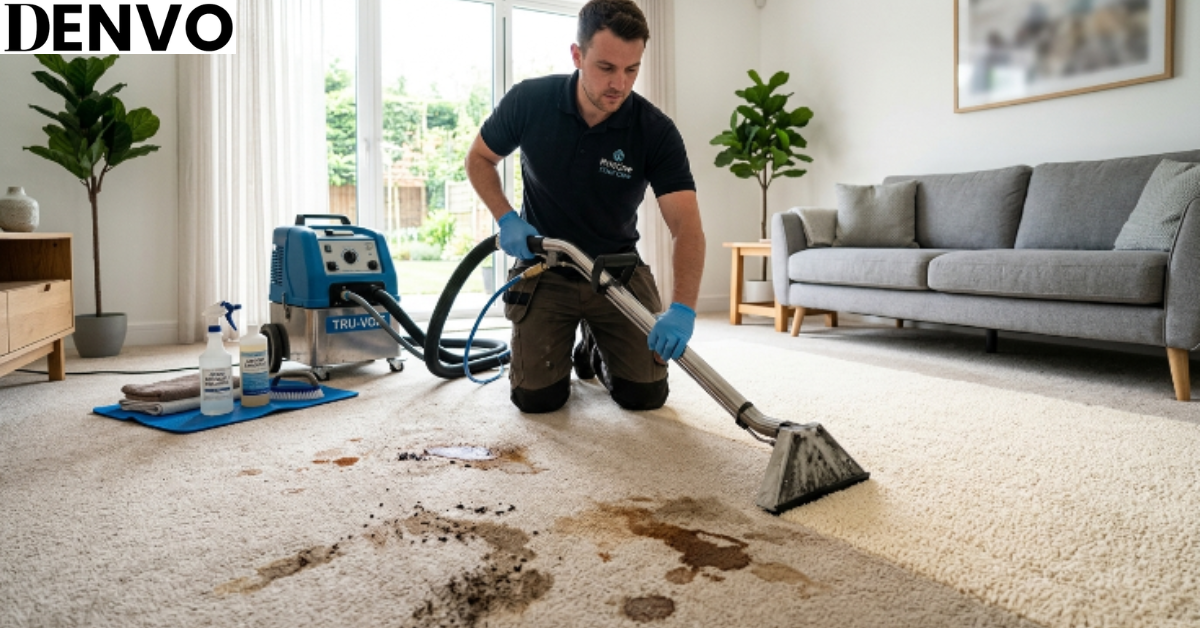
Quick Answer
To remove carpet stains, blot (never rub) immediately with a clean cloth. Apply cold water or a mix of dish soap and water, work from the outer edge inward, then blot dry. For dried stains, rehydrate first. Acting within the first 30 minutes dramatically improves results.
The moment a spill hits your carpet, most people make exactly the wrong move — and seal the stain in permanently.
That immediate scrub reflex? It’s the single biggest reason carpet stains become permanent. Knowing how to remove carpet stains correctly is not just about the cleaning product you use — it’s about timing, technique, and understanding what’s actually happening beneath the fibers. Miss any of these, and even a fresh coffee spill can become a feature you’ll explain to guests for the next decade.
In this guide, you’ll learn the science behind stain removal, the methods that actually work, the mistakes most people make (and how to avoid them), and a step-by-step process for everything from red wine to pet accidents. Whether you’re dealing with a fresh spill right now or a stubborn old mark, this is the only guide you need.
Why Carpet Stains Are Trickier Than They Look
Here’s what most people don’t realize: a stain is not just sitting on top of your carpet. Within seconds of contact, liquid begins migrating down through the pile, past the backing, and into the padding underneath. By the time you can see the stain, it already has roots.
Carpet fibers are also dye-absorbing by design — that’s why color stays locked in during manufacturing. The same chemistry that keeps your carpet looking vibrant works against you when a foreign substance gets in. Tannins in wine, proteins in blood, and chromogens in coffee all bond with fibers in ways that get stronger over time, especially with heat.
Understanding this changes everything. It’s why cold water beats hot, why blotting beats scrubbing, and why speed beats everything else. You have roughly a 30-minute window before most organic stains begin bonding at a molecular level. That window is your best friend.
Pro Tip: Before using any cleaning solution on your carpet, test it on a hidden area — inside a closet or under a piece of furniture. Some cleaners bleach or discolor specific carpet dyes, and you won’t know until it’s too late.
The Science of Stain Removal (How It Actually Works)
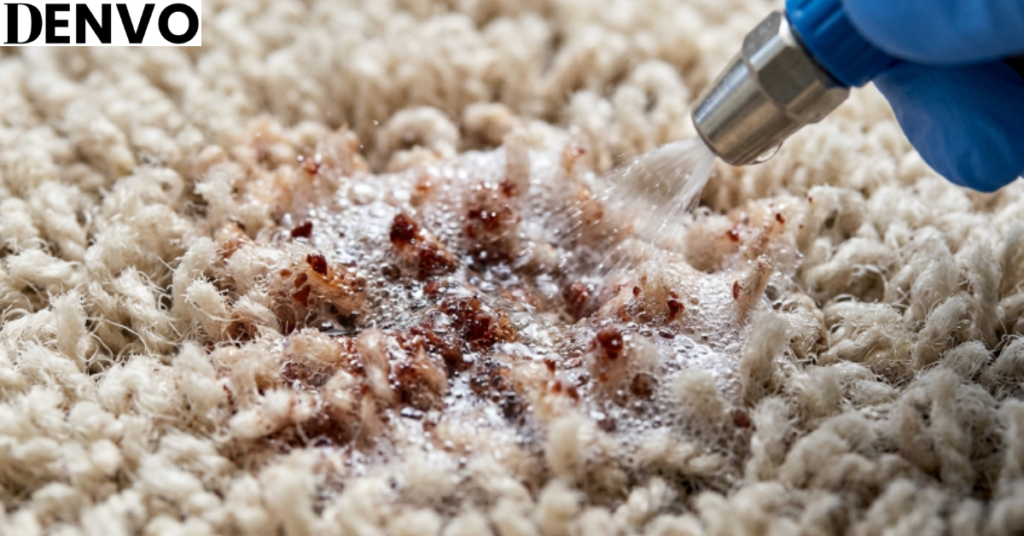
Stain categories matter more than you think
Not all stains respond to the same treatment, and using the wrong product can permanently set a stain instead of lifting it. There are four main categories to know:
Water-soluble stains (juice, coffee, food dye, mud) respond well to cold water and mild dish soap. Oil-based stains (butter, grease, makeup, cooking oil) require a degreasing agent or dry solvent because water just spreads them. Protein-based stains (blood, egg, pet mess) need an enzyme cleaner — heat will cook the protein into the fiber, making it permanent. And tannin stains (wine, tea, beer) need an oxidizing agent like hydrogen peroxide.
Why rubbing makes it worse
When you scrub a stain, you’re doing three damaging things at once: spreading the stain laterally, pushing it deeper into the pile, and fraying carpet fibers that will never fully recover. The scrubbing motion also generates heat from friction, which accelerates bonding between the staining agent and the dye sites in the fiber.
Blotting, by contrast, applies vertical pressure that lifts the liquid upward without lateral spread. Think of it like pressing a sponge, not painting a wall. This is the one technique change that makes the biggest difference.
For a detailed breakdown of carpet fiber chemistry, see the Carpet and Rug Institute — the industry’s leading authority on care and maintenance standards.
Common Mistakes That Turn a Stain Into a Permanent Problem
Most carpet stains are not permanent — until the wrong response makes them that way. Here are the four most common errors and exactly why they cause damage:
Using hot water
Hot water feels more powerful, and for dishes it is. On carpet, it’s destructive. Heat activates protein bonds (bad for biological stains), causes shrinkage in some carpet types, and drives dye into the stain. Always use cold or lukewarm water for carpet cleaning.
Applying too much cleaning product
Over-wetting is one of the top causes of mold and mildew in carpets. Too much solution soaks past the backing into the pad, where it sits for days and grows bacteria. A light application, fully rinsed and blotted dry, outperforms a heavy soak every time.
Skipping the rinse step
Soap residue left in carpet fibers acts like a magnet for future dirt. Ever notice that a spot you “cleaned” seems to get dirty faster than surrounding areas? That’s soap residue at work. Always finish with a cold water rinse to remove all surfactants from the fibers.
Using the wrong cleaner for the stain type
Applying bleach to a pet urine stain, for example, creates chloramine gas and does nothing for the odor-causing ammonia. Matching the cleaner to the stain category isn’t optional — it’s the whole game.
Pro Tip: Keep a “stain kit” in a small caddy under your sink: a clean white cloth, a spray bottle of cold water, dish soap, white vinegar, hydrogen peroxide (3%), and an enzyme cleaner. Being ready to act fast is worth more than the most expensive cleaning product.
Stain Type Quick-Reference: What Actually Works
| Stain Type | Best First Response | Recommended Cleaner | What to Avoid |
|---|---|---|---|
| Red wine | Blot immediately, cold water | Club soda + salt, or hydrogen peroxide (3%) | Hot water, rubbing |
| Coffee / tea | Blot, cold water rinse | Dish soap solution, white vinegar | Bleach, heat drying |
| Pet urine | Absorb liquid, cold water flush | Enzyme cleaner (only option for odor) | Ammonia-based cleaners |
| Grease / oil | Absorb with baking soda or cornstarch | Dry solvent or degreasing dish soap | Water first (spreads oil) |
| Blood | Cold water only — immediately | Enzyme cleaner or hydrogen peroxide | Hot water (cooks protein) |
| Mud | Let it dry completely first | Vacuum dry mud, then dish soap solution | Treating while wet |
Step-by-Step: How to Remove Carpet Stains (The Right Way)
This process works for the majority of common stains — food, drink, dirt, and biological messes. For oil-based stains, swap step 3 to start with dry absorption rather than water.
- Act immediately.The faster you move, the better your result. Grab a clean white cloth (colored cloths can transfer dye) and blot up as much of the spill as possible. Work from the outside edges toward the center to prevent spreading.
- Apply cold water lightly.Dampen the stained area without soaking it. This begins diluting the staining agent and makes it easier to lift from the fibers.
- Apply your cleaning solution.Use a small amount — about a teaspoon of dish soap in a cup of cold water works for most stains. For protein or biological stains, use an enzyme cleaner. Spray or dab lightly; don’t pour.
- Blot from the outside in.Press firmly but don’t scrub. Replace or fold your cloth as it absorbs the stain to avoid redepositing it. Repeat until no more color transfers to the cloth.
- Rinse with cold water.This is the step most people skip. Apply clean cold water to the treated area and blot again thoroughly to remove all cleaning solution residue.
- Dry the area completely.Lay a thick stack of white paper towels over the area and weigh them down with something heavy (a pot, a book) for 10–15 minutes. Then allow the area to air dry completely, or use a fan to speed drying. Do not walk on it wet.
- Vacuum when fully dry.Once dry, vacuum in multiple directions to restore the pile’s natural texture and lift any remaining debris.
Pro Tip: For dried or set stains, rehydrate the area first with a small amount of cold water and let it sit for 5 minutes before beginning the process. Trying to lift a bone-dry set stain without softening it first is a losing battle.
Expert Tips for Specific Stains That Nobody Talks About
Red wine
The old salt trick works — but only in the first few minutes. Salt draws liquid out of the fiber by osmosis. Cover the stain generously, let it sit for two minutes, then vacuum before proceeding with cold water and a dish soap solution. Club soda also works via a mild carbonation action that lifts the stain before it sets. For older red wine stains, a 3% hydrogen peroxide solution left for 10 minutes can oxidize the chromogen molecules that give wine its color. Always rinse after hydrogen peroxide — it continues reacting even after you think it’s done.
Pet accidents
Pet urine is a two-part problem: the stain and the odor. Most cleaners address one but not the other. Only enzyme-based cleaners actually break down the uric acid crystals responsible for that lingering smell. Uric acid is not water-soluble — no amount of scrubbing removes it. The enzymes digest the crystals at a molecular level. Apply generously, let it sit for 10–15 minutes (cover with a damp cloth to prevent drying), then blot and dry. One treatment is often not enough for older accidents.
Ink stains
Rubbing alcohol (isopropyl, 70%) is the most effective solution for ballpoint or gel pen ink. Apply to a cotton ball and dab gently — the alcohol dissolves the resin binders in the ink. Permanent marker is harder; acetone (nail polish remover) works but must be tested for colorfastness first and rinsed immediately after use.
Carpet Stain Myths vs. Facts
Myth
Scrubbing hard removes the stain faster.
Fact
Scrubbing frays fibers and spreads the stain. Blotting with firm vertical pressure is always more effective.
Myth
Club soda is a miracle stain remover.
Fact
The carbonation provides mild lift for fresh liquid stains, but plain cold water works almost as well. The key is speed, not the fizz.
Myth
Bleach is the most powerful stain remover.
Fact
Bleach removes color permanently and can damage most carpet fibers. It is not a stain remover — it is a discoloring agent. Never use it on carpet.
Myth
If a stain looks gone when wet, it’s gone.
Fact
Stains “wick” back up as carpet dries. The residue left in the padding migrates upward. Always dry slowly and recheck after 24 hours.
Pro Tip: If a treated stain reappears after drying — known as “wicking” — re-treat from the top, this time weighing down paper towels for a full hour to draw the residue from deeper in the pile and padding.
The Bottom Line: Act Fast, Blot Smart, Rinse Always
Three things determine whether you win or lose against a carpet stain: speed, technique, and the right cleaner for the right stain type. Miss any one of these, and you’ve turned a solvable problem into a permanent one. The single most actionable thing to take away from this guide is to stop scrubbing and start blotting — that shift alone will save most stains.
Keep a simple stain kit ready, know your stain categories, and always follow up with a rinse. Professional carpet cleaners don’t have magic potions — they have knowledge of fiber chemistry and the discipline to follow the right process. Now you have both.
“Have you dealt with a stain that came back after cleaning? Drop it in the comments — it’s almost always a wicking issue, and there’s a fix.”
Next, explore our guide on [Internal Link: routine carpet maintenance to prevent stains from setting in the first place]. Because the best stain is the one that never gets a chance to stick.
FAQs
How do you remove carpet stains that have already dried and set?
Rehydrate the stain first by dampening it with cold water and letting it sit for 5–10 minutes to soften the bond between the staining agent and the carpet fibers. Then apply the appropriate cleaner based on stain type — enzyme cleaner for biological stains, dish soap for food-based ones. Multiple treatments may be needed. A steam cleaner can also help loosen deeply set residue before blotting.
Does baking soda really help remove carpet stains?
Baking soda is genuinely useful but not as a stain remover on its own. Its real strengths are absorbing moisture (apply to a fresh wet stain, let it dry, then vacuum) and neutralizing odors, particularly with pet accidents. Combined with white vinegar as a fizzing pre-treatment, it can help loosen oil residue. It’s a supporting player, not the main act.
What is the best way to remove carpet stains caused by pets?
The best way involves a two-stage process:
- Blot up as much liquid as possible immediately with paper towels.
- Flush with cold water and blot again.
- Apply a commercial enzyme cleaner generously and let sit 10–15 minutes.
- Blot dry and allow to fully air dry.
Enzyme cleaners are non-negotiable for pet stains because they break down uric acid crystals — the actual source of the odor — which no other cleaner type addresses.
Can hydrogen peroxide damage carpet when removing stains?
Yes, it can. Hydrogen peroxide at concentrations above 3% can bleach carpet dyes and cause permanent discoloration. Always use pharmacy-grade 3% hydrogen peroxide only, test on an inconspicuous area first, and rinse thoroughly after use. It is most effective on light-colored carpets and for oxidizable stains like red wine and coffee. Avoid it on dark or rich-colored carpets without testing.
How do professionals remove deep carpet stains that home methods can’t fix?
Professional cleaners use hot water extraction (steam cleaning) combined with pre-treatment solutions that penetrate deep into the backing and pad. They also use rotary agitation tools that work the cleaner into fibers more effectively than hand blotting. For the most stubborn stains, they apply reducing agents or oxidizing agents at controlled concentrations well above what’s safely available to consumers. Expect to pay $100–$300 for a professional spot treatment on severe staining.
How can you remove carpet stains without a commercial stain remover?
Most common stains respond to household items: a teaspoon of dish soap in a cup of cold water handles food and drink stains; white vinegar diluted with equal parts water works on coffee and tannin-based marks; rubbing alcohol lifts ink. For greasy stains, cornstarch or baking soda absorbs the oil before you apply any liquid. The technique — cold water, blotting from outside in, rinsing — matters as much as the product itself.