

What Are Mandala Coloring Sheets?
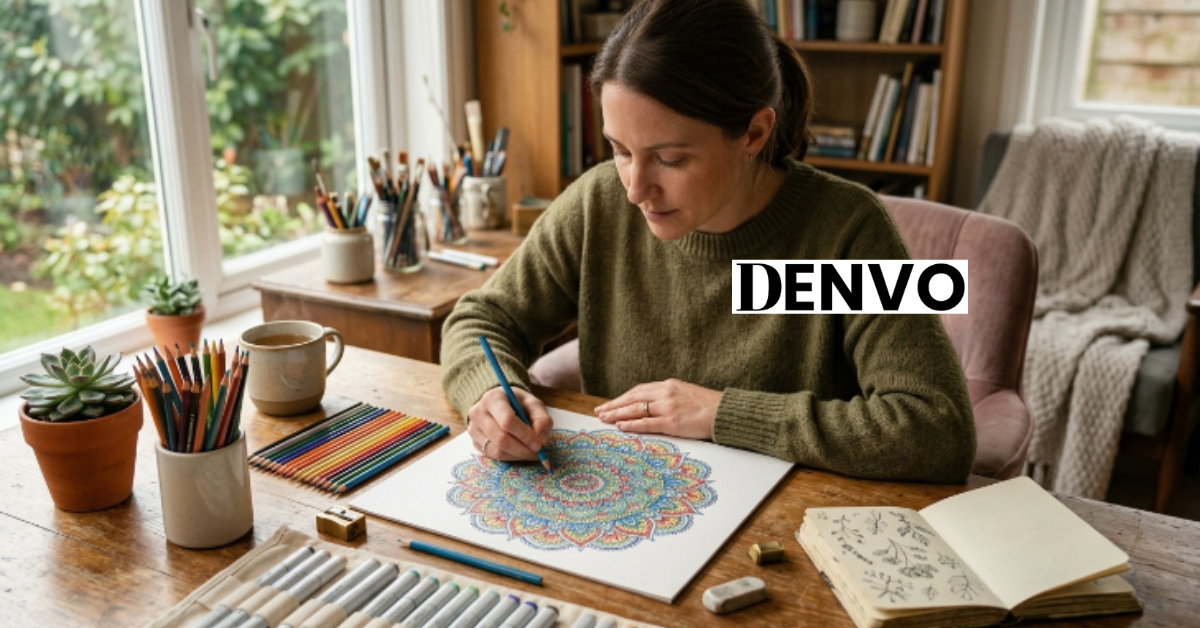
A mandala coloring sheet is a printed or digital page featuring a circular, symmetrical design made up of repeating geometric shapes, patterns, and sometimes floral or natural motifs, all arranged around a central point. The word “mandala” comes from Sanskrit and translates roughly to “circle.” Unlike a typical coloring page of a single object or scene, a mandala is built from layers of pattern that radiate outward, which is part of what makes coloring one feel different from coloring, say, a cartoon character.
These sheets are used by children learning to hold a crayon steadily, by adults looking for a quiet activity after a long day, and by teachers, counselors, and therapists who use structured coloring as a low-pressure way to help someone focus. The appeal is simple: there’s no wrong way to color a mandala. You choose the colors, the pattern chooses the structure, and the result is almost always visually satisfying.
Where the Mandala Pattern Comes From
Mandalas have roots in Hindu and Buddhist spiritual traditions, where they were originally used as tools for meditation and as symbolic representations of the universe. In Tibetan Buddhism, monks have historically created intricate mandalas out of colored sand, a practice that can take days and is often followed by the deliberate destruction of the finished piece, a reminder of impermanence.
The mandala also became well known in Western psychology through the work of Swiss psychiatrist Carl Jung, who used mandala drawing with patients and wrote about the circular form as a symbol of psychological wholeness. It’s worth noting that Jung’s use of mandalas was rooted in his own theoretical framework rather than clinical trials as we’d define them today, so it’s more accurate to describe this as a historical influence on how mandalas entered therapeutic and wellness conversations in the West, rather than as scientific proof of a specific effect.
Today, the mandala coloring sheet you print at home has more in common with a simplified, secular version of these traditions. It borrows the circular, patterned structure without carrying the same spiritual weight for most people who use it.
Who Mandala Coloring Sheets Are For
Mandala coloring sheets aren’t limited to one age group or skill level, which is part of why they’ve stayed popular.
Children benefit from simpler mandala designs with larger sections, which help develop fine motor control, hand-eye coordination, and the patience needed to stay within lines. Teachers sometimes use them as a calming transition activity between subjects or after recess.
Teenagers and adults tend to gravitate toward more intricate designs. For this group, mandala coloring is often less about skill-building and more about having a screen-free activity that occupies the hands without requiring much decision-making.
Older adults, including some in memory care or rehabilitation settings, are sometimes given mandala sheets as part of occupational therapy programs, since the repetitive, structured nature of the pattern can support fine motor practice.
People managing stress or anxiety often use mandala coloring as a low-stakes creative outlet. It doesn’t require artistic training, there’s no blank page to stare at, and the circular symmetry gives a built-in sense of structure that some people find calming.
Why People Color Mandalas: The Real Benefits
It’s tempting for articles on this topic to throw out big statistics about stress reduction, but reliable, specific figures on how many minutes of mandala coloring reduce cortisol, for example, aren’t something that can be honestly cited without a specific peer-reviewed source. What can be said accurately, based on general findings in the art therapy field, is more measured:
- A focused, low-pressure task. Coloring within a repeating pattern gives your attention somewhere specific to go, which is why many people describe it as similar to a light meditation practice.
- No “right” outcome. Because mandalas don’t represent a specific object, there’s no way to color one “incorrectly.” This removes the performance pressure that can come with other art activities.
- A break from screens. Especially for adults, a printed mandala sheet and a set of pencils offer a genuine break from phones and laptops, which some people find restful in itself.
- Fine motor practice for kids. Staying inside small, curved sections is genuinely useful practice for the pencil control kids need for handwriting.
- A shared, low-cost activity. Mandala sheets are inexpensive or free, don’t require special skills, and can be done alone or as a group activity in classrooms, waiting rooms, or family settings.
Some occupational therapists and counselors do incorporate mandala coloring into their sessions, and it’s reasonable to describe it as a supportive, not clinically proven, wellness tool rather than a treatment with guaranteed psychological effects.
Types of Mandala Designs by Difficulty Level
Not all mandala sheets are created equal, and picking the right complexity level matters more than people expect.
Simple mandalas use large, clearly separated sections with basic geometric shapes like circles, petals, and triangles. These are best for young children, beginners, or anyone who wants a quick, low-effort activity.
Intermediate mandalas introduce finer detail, smaller sections, and more layered patterns, often combining florals with geometric elements. These suit older kids, teens, and adults who want more of a challenge without needing hours to finish.
Intricate or advanced mandalas can include hundreds of tiny sections, fine line work, and dense symmetrical detail. These are popular in adult coloring books and can take several sittings to complete. They reward patience and are often the designs people frame once finished.
Themed mandalas blend the circular structure with a subject, such as animals, mandala flowers, seasonal themes, or nature scenes. These are a good middle ground for people who like mandalas but want a bit more visual variety than pure geometry.
Choosing the Right Coloring Tools
The tool you use changes the coloring experience more than most people expect before trying a few options.
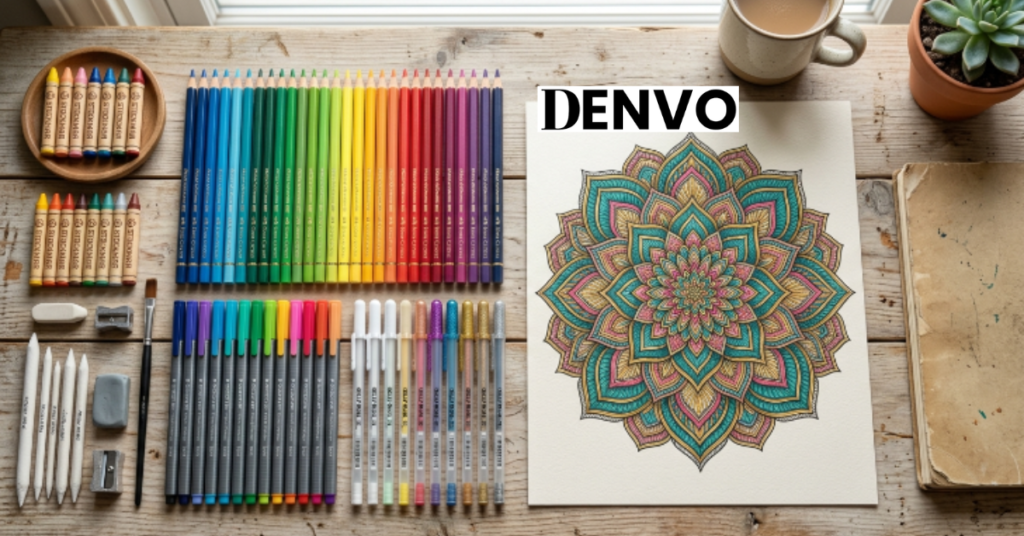
Colored pencils are the most forgiving choice, especially for detailed mandalas. They allow shading, blending, and precise control in small spaces, which makes them a strong default for intricate designs.
Fine-tip markers give bold, saturated color and work well on simpler designs with larger sections. They’re less forgiving of small mistakes since the color is flat and permanent once applied.
Gel pens add texture and sometimes shimmer, which some adults enjoy for finishing touches, though they’re not ideal for coloring in large areas.
Crayons remain a solid, low-cost option for younger children, though their thicker tips make it harder to stay within very fine mandala lines.
A quick practical tip: test your tools on the back of the page or a scrap sheet first, especially with markers, since ink can sometimes bleed through thinner paper.
How to Color a Mandala: A Simple Approach
There’s no required method, but a few approaches tend to make the process smoother, particularly for beginners who feel unsure where to start.
Starting from the center and working outward is common, since it mirrors how the pattern itself is built and helps maintain a sense of symmetry. Alternatively, some people prefer working section by section around the outer ring first, which can feel less intimidating than tackling the busiest, most detailed part of the design right away.
Choosing a color scheme before starting, rather than picking colors at random as you go, tends to produce a more cohesive final result. Even a simple approach, like alternating two or three colors in a repeating pattern, can make a design look intentional rather than scattered.
Common Mistakes Beginners Make
A few patterns show up repeatedly among people new to mandala coloring, and knowing them in advance can save some frustration.
Pressing too hard with colored pencils early on is a common issue, since it limits your ability to layer or blend colors later. Starting with light pressure and building up color gradually gives more control over the final look.
Using too many colors without a plan can make an intricate mandala look busy rather than balanced. Limiting your palette, even to five or six colors used repeatedly, usually produces a cleaner result.
Rushing through detailed sections is another common mistake, particularly with advanced designs. Mandala coloring is often more enjoyable, and the result more polished, when treated as a slow, unhurried activity rather than something to finish quickly.
Printable vs. Digital Mandala Coloring
Both formats have genuine advantages depending on what you’re looking for.
Printable mandala sheets are widely available as free downloads or in printed coloring books. They require no device, work well for kids, and give a tactile, screen-free experience that many adults specifically seek out as a break from digital life.
Digital mandala coloring apps let you color on a tablet or phone using a “fill” tool or stylus, offer unlimited color options and an undo button, and are convenient when you don’t have physical supplies on hand. The tradeoff is that digital coloring doesn’t offer the same screen-free, tactile break that draws many people to the activity in the first place.
Neither format is objectively better. Printable sheets tend to suit people looking for a mindful, offline activity, while digital tools suit people who want convenience, color variety, or a way to color on the go.
Where to Find Good Mandala Coloring Sheets
Quality varies a lot between sources, so it’s worth being selective.
Free printable mandala sheets are widely available through general web searches, and many are genuinely well designed, though quality and line clarity can vary between sites. Paid options, including dedicated adult coloring books focused on mandalas, tend to offer more consistent paper quality and design variety, which matters if you’re using markers or gel pens that bleed through thinner paper.
Public libraries in the U.S. often carry mandala and adult coloring books that can be borrowed at no cost, which is a practical option if you want to try the activity before buying supplies. Some art supply stores also sell individual mandala sheets printed on heavier cardstock, which holds up better to markers and blending.
Tips to Make Coloring More Relaxing
If the goal is stress relief rather than a finished product to display, a few small adjustments help.
Set aside a specific block of time rather than trying to finish a design in one sitting, especially for intricate mandalas. Coloring in a quiet space without background notifications tends to make the activity feel more restorative. Some people pair it with quiet music or a podcast, though for a more meditative effect, coloring in silence and simply focusing on the pattern tends to be more effective.
It also helps to let go of the idea that the result needs to look a certain way. The value for most people isn’t the finished page, it’s the time spent focused on something simple and repetitive.
Frequently Asked Questions
Are mandala coloring sheets only for adults?
No. Mandala coloring sheets are used across all age groups. Simpler designs with larger sections work well for young children, while more intricate patterns are popular with teens and adults.
Do mandala coloring sheets actually reduce stress?
Many people report feeling more relaxed after coloring, and the structured, repetitive nature of the activity is generally considered supportive for focus and calm. However, this is based on general observations in art therapy and wellness contexts rather than a guaranteed, clinically proven effect for every individual.
What’s the best coloring tool for intricate mandalas?
Colored pencils are usually the most practical choice for detailed mandalas, since they allow for shading, blending, and precise control in small spaces.
Can I use mandala coloring sheets in a classroom?
Yes. Teachers commonly use simple to intermediate mandala sheets as a quiet transition activity, a fine motor skills exercise, or a calming break between lessons.
Where can I get mandala coloring sheets for free?
Free printable mandala designs are widely available online, and many public libraries also carry mandala and adult coloring books that can be borrowed at no cost.
Do mandalas have to be circular?
Traditionally, yes. The circular form is central to the definition of a mandala and reflects its origins in Hindu and Buddhist art. Some modern coloring books use the term loosely for square or symmetrical designs, but the classic mandala is built around a circle.
Conclusion
Mandala coloring sheets work because they combine structure with freedom. The circular, repeating pattern gives you a clear starting point, while the color choices remain entirely yours. Whether you’re picking a simple design for a child’s rainy afternoon, an intricate pattern for your own wind-down time, or a set of printable sheets for a classroom, the activity scales easily to whoever is using it. Start with a design that matches your patience level, pick two or three tools you actually enjoy using, and treat the process, not just the finished page, as the point.