
Tony Romo’s OWI case has moved from a July arrest to a court ruling and a career change in about ten weeks. Anyone who searches the topic today will find a mix of stale breaking-news posts and newer updates that contradict them. This article puts the verified facts in one place, in order, and explains the legal terms that make the story confusing.
OWI stands for “operating while intoxicated,” Wisconsin’s term for drunk driving. Romo was arrested in Milwaukee on Thursday, July 23, 2026, on suspicion of a first-offense OWI. He later pleaded no contest, was found guilty, and lost his driving privileges for six months. On October 2, CBS announced that it and Romo were parting ways.
The short answer
Romo was arrested on suspicion of OWI in Milwaukee on July 23, 2026. He pleaded no contest on Tuesday, September 1, and the Milwaukee County court found him guilty. He lost his driving privileges for six months, must have an ignition interlock device on any vehicle he owns, registers or operates, must complete an alcohol assessment program, and was fined $784. On October 2, CBS announced that Romo and the network had mutually agreed to part ways.
Timeline: July to October 2026
| Date | Event |
|---|---|
| July 23, 2026 | Arrested in Milwaukee after a traffic stop on Interstate 43; booked and released |
| Late July | CBS places Romo on leave; J.J. Watt moves into the lead analyst role |
| Sept. 1, 2026 | Romo pleads no contest; court finds him guilty and imposes penalties |
| Oct. 2, 2026 | CBS and Romo announce they are parting ways after nine years |
The arrest report gave an initial court date of September 21. The case was resolved earlier than that, on September 1.
What “OWI” means (and how it differs from DUI)
Many readers outside the Midwest have never seen the abbreviation. In Wisconsin, OWI and DUI are used interchangeably. An OWI can apply to someone driving, or even to someone sitting in the driver’s seat of a parked vehicle, while “DUI” is used specifically for driving. In everyday terms, it is Wisconsin’s name for drunk or impaired driving.
Wisconsin also treats a first offense differently from most states. A first-offense OWI is generally handled as a civil traffic violation rather than a criminal offense, and penalties do not include jail time unless aggravating factors are present. That surprises many readers, and it explains why some early coverage said Romo had not been formally “charged” even though he had been arrested and cited.
Local reporting said a first-offense OWI generally carries a fine of $150 to $300. Romo’s total was higher, for reasons covered below.
Wisconsin’s rules differ from other states’ rules, and court outcomes depend on the specific facts of a case. This article explains what was reported about Romo’s case. It is not legal advice.
The arrest: what reports say happened
According to the Milwaukee County Sheriff’s Office arrest report, Romo performed poorly on field sobriety tests after being stopped while driving south on Interstate 43. He was taken into custody, booked and released. Local reports added that the stop took place on the high-rise bridge.
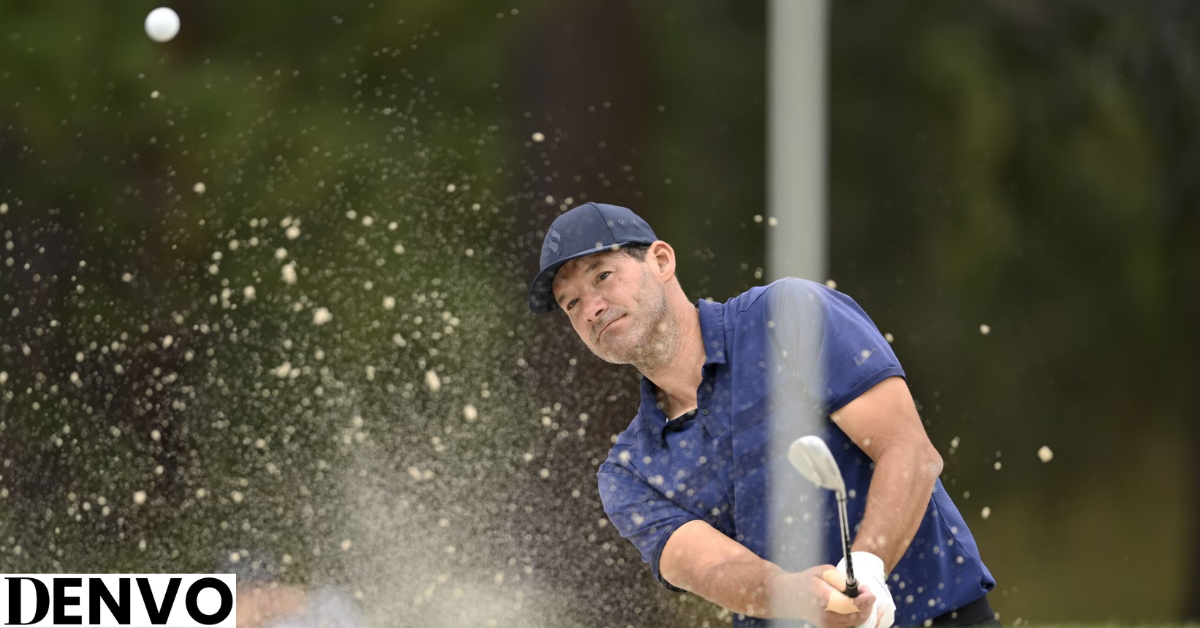
Romo was in his home state for golf. He grew up in Burlington, Wisconsin, and was there for the Wisconsin Amateur Championship in West Bend. He reportedly tied for 73rd in the tournament, and the arrest came on the day the event ended.
Reports disagree on the time of the stop. Records cited by one station showed an arrest time of 6:18 p.m., while another summary said the stop happened around 8 p.m. The discrepancy is minor and does not change the substance, but it shows why early reports varied.
Two details need careful handling:
- Field sobriety tests: The arrest report said he performed poorly on them. That is a deputy’s assessment, not a laboratory result.
- A test refusal: Court records showed Romo was initially cited for refusing to take a test for intoxication. No reported blood-alcohol figure appears in the coverage I reviewed, so this article does not give one.
The citations Romo faced
In the first days, coverage described a single OWI arrest. Court records later showed more. Romo was cited for refusing a test for intoxication, and later received three additional citations: unsafe passing on the right, first-offense OWI and possessing open intoxicants.
Each item means something different:
- Refusal to take a test: In Wisconsin, drivers are generally expected to submit to a chemical test when lawfully requested, and refusing carries its own consequences. The details depend on the case and the court’s findings.
- Unsafe passing on the right: A traffic violation. It may explain the original reason for the stop, though the reports I found do not say so directly.
- First-offense OWI: The central citation.
- Open intoxicants: Generally refers to having an open container of an alcoholic beverage in the vehicle.
The no-contest plea and the penalties
A “no contest” plea means the defendant does not dispute the charge for purposes of the case. The court then enters a finding. It is different from a “not guilty” plea, and unlike a guilty plea it generally cannot be used as an admission in a separate civil case. Here the outcome was a finding of guilt.
After the plea, the Milwaukee County court found Romo guilty and ordered the following:
| Penalty | What it means in practice |
|---|---|
| Six-month loss of driving privileges | He cannot legally drive in Wisconsin for the period. The reports describe it as a revocation. |
| Ignition interlock device | A breath-testing device wired into the vehicle’s ignition. It prevents the engine from starting if alcohol is detected. It applies to any vehicle he owns, registers or operates. |
| Alcohol assessment program | He must attend and complete an assessment. A court-ordered program evaluates alcohol use and may recommend follow-up. |
| $784 fine | Higher than the $150–$300 first-offense range mentioned earlier. The reports do not itemize the figure. It may reflect multiple citations and added costs, but that is an inference, not a reported fact. |
No jail sentence was reported, which matches how Wisconsin generally treats first offenses without aggravating factors.
Romo’s public statement
On the day of the plea, Romo released a statement explaining his side. He said he had developed a reliance on pain medication after multiple back surgeries stemming from injuries from his playing career, and that efforts to get off those medications led to an over-reliance on alcohol.
He said the surgeries that ended his playing career left him with constant, debilitating pain. He added that none of it was an excuse, that the failures were his, and that he was working closely with a team of doctors on his health.
Three points are worth keeping apart. First, this is Romo’s own account, not a medical finding or a court conclusion. Second, the court did not treat the explanation as a defense; the penalties were imposed regardless. Third, the statement describes a problem many people with chronic pain and long-term medication use recognize, which is why it drew sympathy from some readers alongside criticism from others.
Leave from CBS and the October 2 split
Romo had been CBS’s lead game analyst since 2017. The network placed him on leave after the arrest and moved J.J. Watt into his role. Romo had also said earlier that he planned to return to CBS.
That did not happen. CBS’s statement on October 2 said the network and Romo had mutually agreed to part ways, thanked him for his contributions over nine years, and said Watt would stay alongside Jim Nantz and Tracy Wolfson on the lead team for the rest of the season. Romo said he would take a break to focus on his health and family before pursuing another opportunity.
The word “mutually” matters. It is standard language for negotiated exits, and it does not tell readers who initiated the decision. Neither CBS nor Romo publicly attributed the split to the arrest or plea. The timing makes a connection easy to infer, but a stated cause has not been confirmed by either party.
The financial backdrop is on the record. In 2020, CBS and Romo agreed to a 10-year contract reported at $180 million. The terms of this separation, including any payout, have not been made public, so any figure circulating online should be treated as speculation.
What is still unknown
- Separation terms: Neither side has disclosed financial or contractual details.
- Next job: Romo said he would take time before pursuing another opportunity. No announcement has been reported.
- Blood-alcohol level: Not reported in the coverage reviewed.
- The exact reason for the split: Not stated by CBS or Romo.
- Future legal exposure: The reports describe a resolved case with a fine, license revocation, interlock and assessment. Nothing in the coverage suggests pending criminal charges.
Check this list again before sharing the story. It is the part most likely to change.
Common misunderstandings
“He was convicted of a felony.” Nothing reported suggests that. The coverage describes a first-offense OWI handled under Wisconsin’s civil framework, along with related traffic citations.
“He went to jail.” No jail time was reported.
“CBS fired him.” CBS’s wording is “mutually agreed to part ways.” Calling it a firing goes beyond what the network said.
“OWI is a different offense from DUI.” In Wisconsin the terms are used interchangeably.
“He was arrested during a game weekend.” The arrest was in July, during the offseason and during a golf tournament, not during the NFL season.
“No contest means he said he was innocent.” It means he did not contest the charge. The court still found him guilty.
If this topic hits close to home
Romo’s statement touches on something many people live with: chronic pain, long-term prescription use and the difficulty of coming off medication. If you or someone you know is dealing with substance use or dependence, the SAMHSA National Helpline (1-800-662-4357) is a free, confidential treatment referral service in the US that operates around the clock. A doctor can also help with safely adjusting pain medication, since stopping suddenly can be risky.
FAQs
What does OWI stand for in the Tony Romo story?
Operating while intoxicated. Wisconsin uses it interchangeably with DUI.
When was Tony Romo arrested?
On Thursday, July 23, 2026, in Milwaukee, after a traffic stop on southbound I-43.
What was the outcome of the case?
He pleaded no contest on September 1, was found guilty, lost driving privileges for six months, must use an ignition interlock device, must complete an alcohol assessment, and was fined $784.
Is Tony Romo still with CBS?
No. CBS announced the split on October 2, 2026.
Who replaced Tony Romo at CBS?
J.J. Watt partners with Jim Nantz and Tracy Wolfson on CBS’s lead NFL team for the rest of the season.
Did Tony Romo go to jail?
No jail sentence appears in the reporting.
Why was he in Wisconsin?
He is a Burlington, Wisconsin native and was there for the Wisconsin Amateur Championship golf tournament.
What did Romo say about the incident?
He took responsibility and tied his alcohol use to dependence on pain medication following back surgeries.
Will Romo work in broadcasting again?
Unknown. He has said he plans a break before pursuing another opportunity.
Conclusion
As of October 3, 2026, the story stands like this. Romo was arrested on July 23, pleaded no contest on September 1, and received a six-month loss of driving privileges, an ignition interlock requirement, an alcohol assessment and a $784 fine. Nine years into his CBS tenure, the network announced on October 2 that the two sides were parting ways.
Romo has said he is taking time to address his health and spend time with family. What he does next in broadcasting, and the terms of his exit, have not been reported. If you are following the story, the most reliable updates will come from the Milwaukee County court record, official CBS Sports statements and major news outlets.