
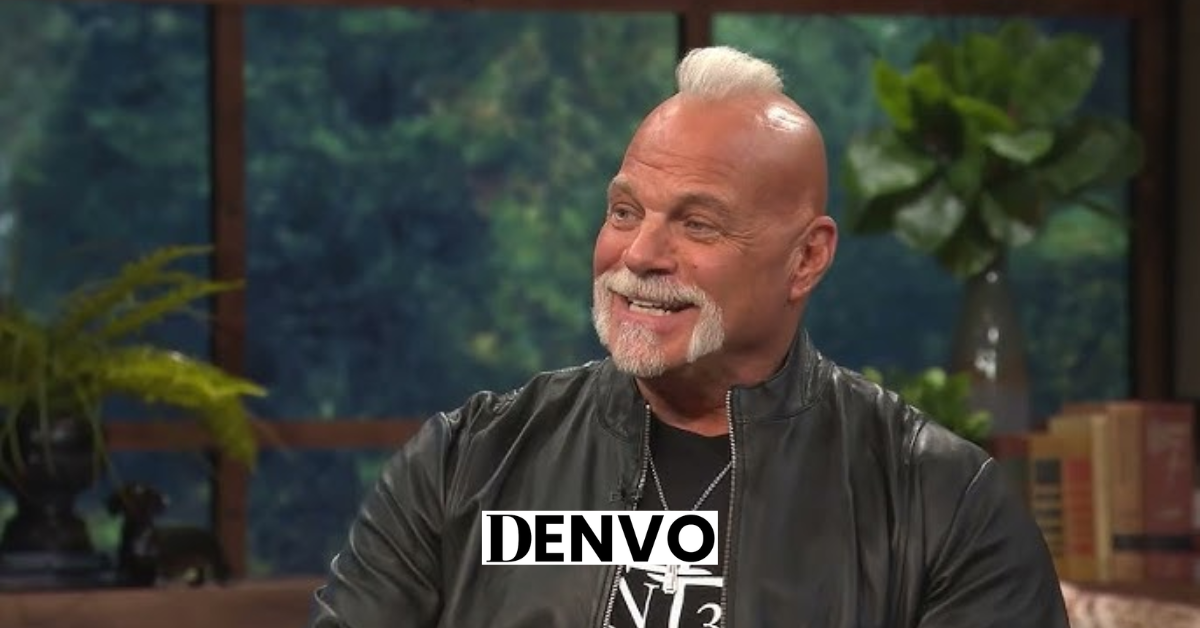
Mel Chancey spent more than a decade inside one of the most notorious outlaw motorcycle clubs in the country, eventually leading its Chicago chapter after it merged with the Hells Angels. He survived a bombing, went to war with a rival club, and was later convicted on federal racketeering charges. Today, he talks about that chapter of his life from a very different platform — as a fitness entrepreneur, faith-based motivational speaker, and business partner at a health and wellness company.
His story has circulated widely after appearances on The Shawn Ryan Show and Jon Bernthal’s Real Ones podcast, and it’s understandably generated a lot of curiosity. This article pulls together what Chancey and others close to his story — including a retired ATF agent — have said publicly, and separates confirmed background from claims that come only from his own retelling.
Who Is Mel Chancey?
Mel Chancey is a former outlaw motorcycle club member from the Chicago area who joined the Hell’s Henchmen Motorcycle Club as a teenager, rose to the rank of sergeant-at-arms, and later became a leader of the club’s Chicago chapter after it patched over to the Hells Angels in December 1994. He was eventually indicted on federal RICO (Racketeer Influenced and Corrupt Organizations Act) charges connected to the club’s turf war with the Outlaws Motorcycle Club and served time in federal prison. Since his release, he has rebuilt his life around Christian faith, competitive bodybuilding, and a career in health and wellness.
Much of what’s publicly known about Chancey comes from his own interviews rather than court transcripts or law enforcement records, so some specific details — like exact ages or the size of certain events — reflect his personal recollection rather than independently confirmed fact. Where that distinction matters, it’s noted below.
Early Life: From Chicago Suburbs to the Streets
Chancey was born in 1969 and raised in Alsip, Illinois, a suburb about 20 minutes outside Chicago. He has described his upbringing as strict and devoutly Catholic — he served as an altar boy, attended catechism classes, and lived close enough to his parish that he could walk there from his backyard. His father worked as a warehouse foreman and coached his son’s youth baseball teams; his mother ran the church’s homebound communion program and worked the concession stand at his games.
That structured home life didn’t prevent trouble. At 16, Chancey was expelled from high school after a physical altercation tied to a fight between students from two different schools. He has said the incident escalated when a school administrator spoke disrespectfully to his mother during the disciplinary meeting, which led to a second physical confrontation. His mother, rather than enrolling him elsewhere, put him to work pouring concrete for a family friend’s company.
That same year, Chancey became a father. His girlfriend at the time gave birth to their daughter, Danielle, just before his 17th birthday. The two married a few years later but divorced after about a year, as his growing involvement with the motorcycle club made a conventional family life difficult to sustain.
How He Got Into the Motorcycle Club World
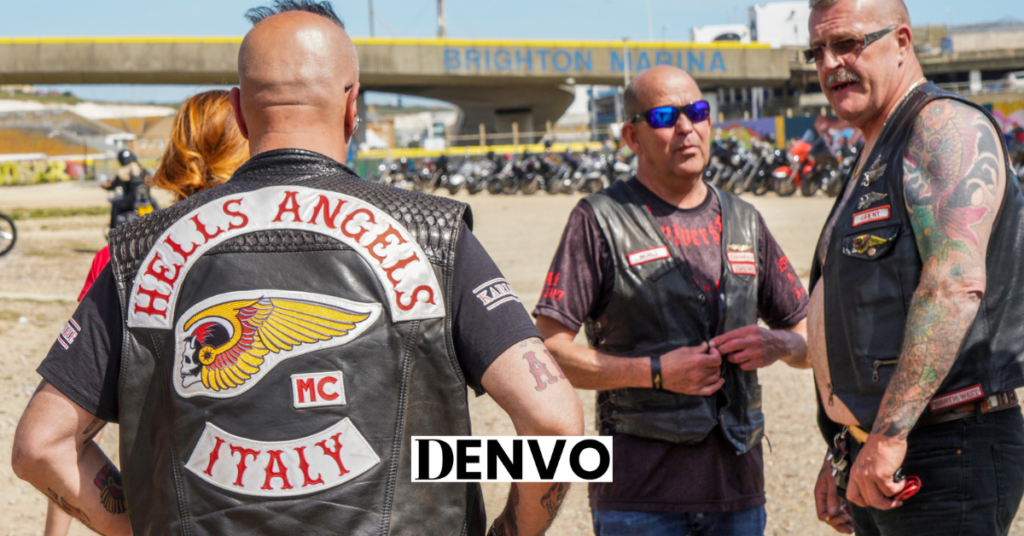
Chancey’s path into the outlaw biker world started at a gym. Around age 16, he began training at a small, informal gym near his house and met two members of the Hell’s Henchmen Motorcycle Club, a Chicago-based club that would later merge with the Hells Angels. He didn’t initially know they belonged to a motorcycle club — he simply looked up to them as more experienced lifters.
Membership in the club required being 21, so Chancey spent a few years as an unofficial “hang around,” attending parties and getting to know members before he was old enough to formally join. He became a prospect around age 19 and was voted in as a full patched member of the Hell’s Henchmen just before turning 21, following a unanimous vote from the chapter’s roughly 30 members — the process outlaw motorcycle clubs typically require for full membership. About a year later, he was named the chapter’s sergeant-at-arms, a role generally responsible for internal discipline and club security.
During this period, the Hell’s Henchmen had chapters in Chicago, Rockford, Illinois, and South Bend, Indiana, totaling somewhere around 75 to 80 members. Their early rivalry was with a club called the DC Eagles, and by Chancey’s account, the conflict at that stage involved fistfights rather than shootings or bombings.
The Merger That Changed Everything
In 1992, members of the Hell’s Henchmen developed a relationship with the Hells Angels’ Minnesota chapter through mutual contacts who had served time together in federal prison. Over the following two years, the Chicago club prospected to join the Hells Angels — a process that required members to travel repeatedly to meet chapters across the country and prove themselves worthy of the patch.
The decision carried enormous risk. The Outlaws Motorcycle Club, which had controlled Chicago and much of the Midwest since the 1930s, considered a Hells Angels expansion into their territory a direct threat. According to Chancey, once word got out that the Hell’s Henchmen intended to become Hells Angels, a tense meeting with Outlaws representatives ended with a blunt warning rather than an outright threat.
That warning turned into violence quickly. Manny Mathias, the Hell’s Henchmen chapter president in Rockford, was killed at his motorcycle shop by an Outlaws member before the Chicago club had even completed its transition. He was buried in Hells Angels colors, becoming — in Chancey’s telling — the first member of the newly formed chapter to receive the patch, posthumously. The Hell’s Henchmen officially became a Hells Angels charter on December 2, 1994.
Becoming a Hells Angels Chapter Leader
Chancey has been widely described in interviews, including his introduction on The Shawn Ryan Show, as the youngest person to lead a Hells Angels chapter, taking over as president of the Chicago charter while still in his twenties. It’s worth noting that outlaw motorcycle clubs don’t maintain public records, so claims like “youngest president in club history” come from Chancey and people who knew him rather than from any verifiable external database. That doesn’t mean the claim is false — it simply can’t be independently fact-checked the way a corporate or government title could be.
What is corroborated by multiple interviews, including conversations with a retired ATF agent who investigated the case, is that Chancey held a senior leadership role in the Chicago chapter during the years of its most intense conflict with the Outlaws.
The War With the Outlaws Motorcycle Club
The six-year conflict between the Hells Angels’ new Chicago chapter and the Outlaws escalated well beyond the club violence Chancey had grown up around. He has described a car bomb detonated outside the Chicago clubhouse — built from roughly 100 pounds of C4 — that he has called the third-largest bomb in U.S. history at the time, behind the Oklahoma City bombing and the 1993 World Trade Center attack. That comparison is Chancey’s own characterization from interviews rather than a claim independently verified here, though the general severity of the bombing is discussed consistently across his interviews.
The retaliation included the Hells Angels chapter recruiting a former Navy SEAL experienced in explosives, additional shootings, and a period of sustained federal surveillance. Then–U.S. Attorney General Janet Reno’s Justice Department took an interest in the case as the violence escalated, and Chancey has said federal agents openly staked out his home during this period. By around 1997, both clubs reportedly agreed to de-escalate, recognizing that continued violence was drawing intense law enforcement attention and costing members their freedom or their lives.
Federal RICO Charges and Prison
Chancey was indicted in 2004 under the RICO Act, a federal statute used to prosecute organized criminal enterprises as a whole rather than individual crimes in isolation. According to his account, prosecutors built much of the case using testimony from former club associates who cooperated with investigators in exchange for reduced sentences — testimony that tied Chancey to predicate acts even though he said he wasn’t physically present for some of them.
Per his introduction on The Shawn Ryan Show, Chancey was sentenced to nine years and served roughly two and a half years before his release, returning home around 2008. He has described facing a potential sentence far longer than what he ultimately received, which he credits partly to the more limited role prosecutors were able to attach to him directly.
It was during this period of incarceration — his second stint in a federal facility — that Chancey has said he experienced what he describes as a genuine turning point in his relationship with his Catholic faith, though he didn’t formalize that shift with baptism until years later, in 2019.
Life After the Hells Angels
Since his release, Chancey has said he has not ridden a motorcycle, largely because he views the biker lifestyle, the violence, and the behavior that came with it as something he can’t safely revisit even in small doses. He has compared it to the way a person in recovery from addiction avoids situations that could trigger a relapse.
His post-prison life has centered on a few consistent pillars:
Bodybuilding and fitness. Chancey has remained active in competitive bodybuilding circles, with ties to organizations including the IFBB (International Federation of BodyBuilding & Fitness) and the NPC (National Physique Committee).
Christian faith and ministry. He founded the “John 3:16 Devotional Team,” a daily faith-based video series he began at the encouragement of his longtime friend Terry Bollea (known publicly as Hulk Hogan). He has also performed baptisms for friends and associates, though he’s said publicly that he encourages people with an existing pastor or church home to be baptized within that community instead.
Health and wellness business. Chancey has worked as a Managing Partner at Core Medical Group, a company focused on hormone optimization and wellness services, including efforts aimed at veterans’ health.
Family life. He has described himself as a longtime husband, father to his daughter Danielle, and grandfather, and has spoken about rebuilding those relationships as central to his life after prison.
Is There a Mel Chancey Movie?
According to his introduction on The Shawn Ryan Show, actors Jon Bernthal and Dwayne “The Rock” Johnson are reportedly involved in developing a film based on Chancey’s life. As of this writing, that project has not been formally confirmed through a studio announcement, trade press report, or official casting news, so it should be treated as an in-development claim rather than a confirmed release. Readers interested in tracking the project’s status should watch for updates from entertainment trade publications like Variety or The Hollywood Reporter, which typically confirm film projects once contracts are finalized.
Frequently Asked Questions
Was Mel Chancey really the youngest president in Hells Angels history?
That’s how he’s been described in his own interviews and by podcast hosts introducing him, including on The Shawn Ryan Show. Because outlaw motorcycle clubs don’t publish membership records, this claim can’t be verified against an official source — it reflects his account and the accounts of people who knew him.
What club did Mel Chancey belong to before the Hells Angels?
He was a member of the Hell’s Henchmen Motorcycle Club, based in Chicago, which he joined as a teenager. The Hell’s Henchmen merged with the Hells Angels in December 1994.
Why did Mel Chancey go to prison?
He was indicted on federal RICO charges in 2004 connected to the Chicago Hells Angels chapter’s turf war with the Outlaws Motorcycle Club. He has said he was sentenced to nine years and served approximately 30 months before his release around 2008.
What does Mel Chancey do now?
He works in health and wellness as a Managing Partner at Core Medical Group, competes and works within the bodybuilding community through organizations like the IFBB and NPC, and speaks publicly about faith, discipline, and redemption. He also runs a daily faith-based video series called the John 3:16 Devotional Team.
Is Mel Chancey still connected to the Hells Angels?
Based on his public interviews, he describes himself as having left that life behind entirely after his release from prison and has said he avoids activities, like riding motorcycles, that could reconnect him to that period of his life.
Where can I hear Mel Chancey tell his own story?
His most detailed public account is in his appearance on The Shawn Ryan Show (episode #303) and on Jon Bernthal’s Real Ones podcast. A 2018 print profile in South Magazine, titled “Heaven’s Angel,” also covers his background in detail.
Key Takeaways
- Mel Chancey joined the Hell’s Henchmen Motorcycle Club as a teenager in Chicago and became a full patched member just before turning 21.
- The Hell’s Henchmen merged with the Hells Angels in December 1994, triggering a violent, years-long turf war with the Outlaws Motorcycle Club.
- Chancey has described leading the Chicago chapter and being called the youngest Hells Angels chapter president, though this specific claim comes from personal and podcast accounts rather than a verifiable public record.
- He was indicted on federal RICO charges in 2004 and served roughly two and a half years in federal prison.
- Since his release, he has built a new life around Christian faith, bodybuilding, and a role at Core Medical Group, a wellness-focused company.
- A film about his life, reportedly involving Jon Bernthal and Dwayne Johnson, has been mentioned in interviews but is not yet formally confirmed by a studio.
Conclusion
Mel Chancey’s story resists a simple label. He spent his teenage and young adult years fully immersed in one of the most violent chapters of outlaw motorcycle club history in the Midwest, rose to a leadership position during a war that claimed lives on both sides, and served federal prison time as a result. The years since have been defined by a very different set of priorities — faith, family, physical discipline, and work in the wellness industry.
What’s confirmed through multiple interviews, court-adjacent details, and a retired ATF agent’s involvement in his story is solid: the Hell’s Henchmen–Hells Angels merger, the RICO case, and the prison sentence. What’s less independently verifiable — like the exact scale of certain claims about his age or the bombing’s historical ranking — comes primarily from his own retelling, and readers should treat those details as his account of events rather than confirmed record. For the fullest picture in his own words, his full-length interviews are the best primary source available.