

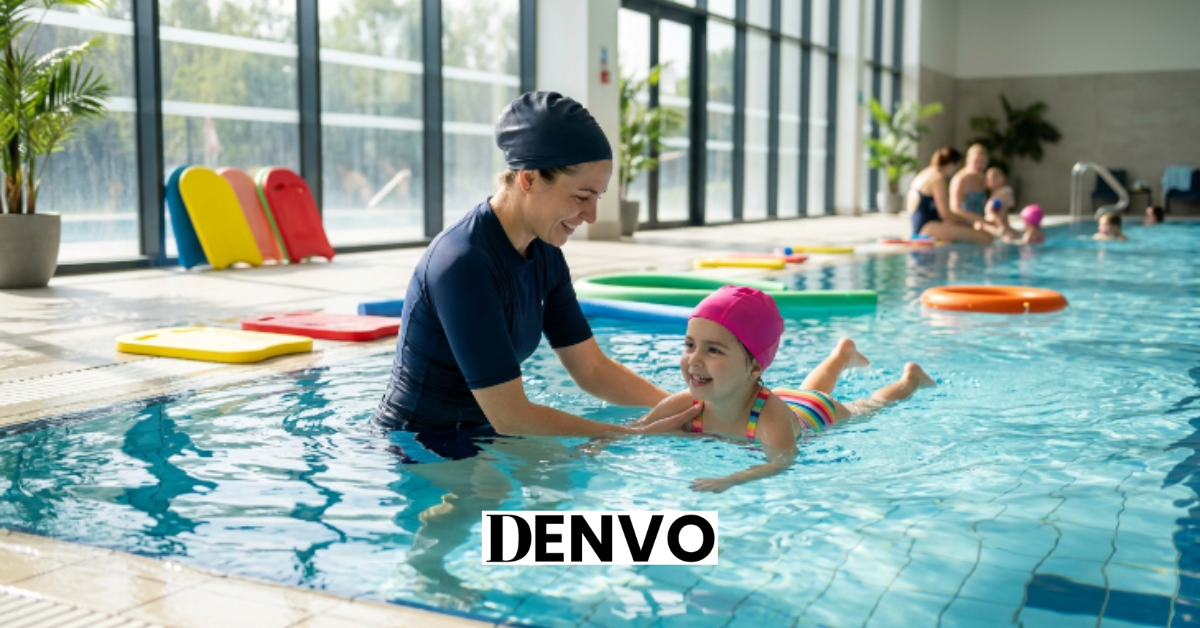
My daughter screamed through her first three swim lessons. By lesson four, she was jumping off the diving board without holding my hand. Four-year-olds are weird like that — one week it’s a full meltdown, the next they’re fearless.
Quick answer
Swimming classes for 4 year olds should focus on water comfort, breath control, and basic floating before stroke technique. Most kids this age need 15-20 lessons before they’re truly independent in water, and small group classes (1:4 ratio or better) tend to work faster than large group ones.
If you’re standing in the parenting aisle of Google trying to figure out whether your kid is “ready” for swim class, or whether the $200 you just spent on a summer session is actually going to teach them anything — I get it. I’ve been the parent poolside with a towel, a snack bag, and zero idea if any of this was working. Turns out, a lot of it comes down to things nobody tells you upfront. Let’s get into what actually matters.
The right age isn’t really “4” — it’s readiness
Four is a good general benchmark, but it’s not a magic number. Some three-year-olds are more water-confident than kids twice their age, and some five-year-olds still panic at the sight of a pool ladder. What matters more than birthday candles is whether your kid can follow a two-step instruction (“blow bubbles, then kick”) and tolerate having water on their face without falling apart.
That said, four is genuinely a sweet spot developmentally. Motor skills, coordination, and attention span all take a noticeable jump around this age. Instructors will tell you that four-year-olds pick up the flutter kick and basic floating position roughly twice as fast as three-year-olds do, just because their bodies are more coordinated.
If your child still cries at bath time or refuses to put their face in a sink of water, that’s useful information — not a red flag, just a sign you might want a gentler, slower-paced class rather than a fast-track “learn to swim in 2 weeks” program.
Group size matters more than the brand name on the pool
Here’s the part nobody advertises clearly: a class of 8 kids with one instructor is basically supervised splashing, not swim instruction. Your child might get 90 seconds of actual one-on-one attention per class. That’s not enough at this age.
Look for a ratio of 1 instructor to 4 kids or smaller. Some private swim schools go even tighter, 1:2 or 1:3, especially for beginner four-year-olds. Yes, it costs more. But the difference in progress speed is real — kids in smaller groups typically hit independent floating and basic front-crawl arm movement 3-4 weeks faster than kids in bigger classes.
I made this mistake with my first round of lessons. We signed up for a big community center class because it was $60 cheaper for the whole session. My son had four kids in front of him in line for every single drill. By week six, he’d barely progressed past blowing bubbles. We switched to a smaller studio, and within a month he was doing assisted freestyle across the shallow end.
Swimming classes for 4 year olds should prioritize water safety before strokes
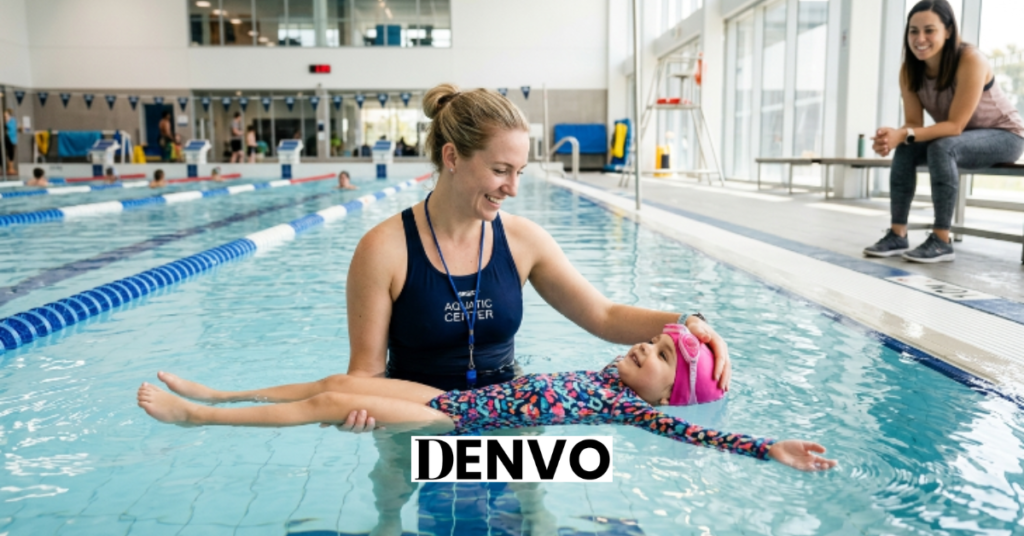
A lot of parents assume swim lessons are about teaching the front crawl or backstroke right away. That’s backwards for this age group. The real priority should be water safety skills: floating on your back unassisted, rolling from front to back to breathe, and knowing how to get to the pool wall or steps if they fall in.
Drowning is the leading cause of unintentional death for kids ages 1 to 4 in the U.S., according to the CDC. That statistic alone should shift how you think about what “good” swim lessons look like. Stroke technique is nice. Survival skills are non-negotiable.
Ask any program you’re considering directly: “Do you teach back-floating and self-rescue before or alongside stroke work?” If the answer is vague, or if they jump straight into teaching freestyle arm movements in week one, that’s worth questioning.
Consistency beats intensity, even though intensive camps feel more efficient
Here’s the contrarian bit: those popular one-week or two-week “swim survival” intensive camps, where kids do lessons every day for 10-14 days straight, aren’t automatically better than a slower once-or-twice-a-week schedule. They can work well for certain kids, especially anxious ones who need momentum to build confidence fast. But for most four-year-olds, spaced-out consistency over 8-10 weeks produces more durable skills.
Why? Skill retention in young kids is tied to repeated exposure over time, not cramming. A child who does 20-minute lessons twice a week for 10 weeks is getting spaced repetition, which is how motor memory actually sticks. A child who does a 2-week intensive might look impressive on day 14, but without follow-up practice, a lot of that skill fades within a month or two.
If you do go the intensive route, plan for maintenance sessions afterward. Otherwise you’re paying for a skill that evaporates by the time summer break actually starts.
What to actually do before your kid’s first class (practical steps)
A little prep goes a long way in making that first lesson less of a disaster. Here’s what’s worked for parents I know, myself included:
- Practice face-wetting at home, in the bath or shower, a few days before class starts. Pour small cups of water over their head so it’s not a new sensation at the pool.
- Let them pick their own swimsuit and goggles. Sounds small, but giving four-year-olds a sense of control over gear reduces first-day anxiety noticeably.
- Skip the “don’t be scared” talk. Telling a nervous kid not to be scared usually backfires. Instead, narrate what will happen: “You’ll hold the instructor’s hands, kick your legs, and then get a sticker.”
- Arrive 15 minutes early the first day so they can watch other kids in the pool before it’s their turn. Cold-starting straight into the water is harder than easing in by observation.
- Bring a familiar comfort item — a specific towel, a favorite goggles color — for the drive home. Post-lesson meltdowns from exhaustion are common and totally normal.
None of this guarantees a tear-free first lesson. My daughter still cried. But it shortens the adjustment period, usually to 2-3 sessions instead of 6 or more.
What progress actually looks like week by week
Parents often ask me, “How do I know if the class is working?” Fair question, especially when you’re paying for something and your kid comes home saying they “just played the whole time.” Play-based teaching at this age often looks like games, but there should be identifiable skill markers underneath it.
By week 3-4, expect your child to blow bubbles consistently and kick with some rhythm while holding the wall or a noodle. By week 6-8, most four-year-olds can float on their back for 5-10 seconds with minimal support and start attempting a basic freestyle arm motion. By week 10-12, many kids can swim 3-5 feet unassisted and self-correct to a back float if they start to struggle.
If your child hits none of these markers by week 8, that’s not necessarily a failure on their part. It might mean the class pace, instructor style, or group size isn’t the right match, and it’s worth having a direct conversation with the swim school.
FAQs
Is 4 years old too young to start swim lessons?
No, four is actually one of the better ages to start structured swimming classes for 4 year olds, since coordination and listening skills tend to be more developed than at 2 or 3. Some kids start even earlier with parent-assisted infant classes, but four is a common starting point for independent instruction.
How many swimming lessons does a 4-year-old need before they can swim alone?
Most kids need somewhere between 15 and 25 lessons before they’re swimming independently in the shallow end without support. This varies a lot based on the child’s comfort level, class size, and lesson frequency.
Should I stay in the pool with my 4-year-old during lessons?
Generally no, unless the class is specifically structured as a parent-and-child format. Most four-year-olds actually progress faster without a parent in the water, since they focus more on the instructor and less on seeking reassurance from mom or dad.
What if my child is scared of putting their face underwater?
This is extremely common and not a reason to delay lessons. A good instructor will build up to face-submersion gradually through games and short exposures rather than forcing it, and most kids get comfortable within 4-6 sessions.
How much do swimming classes for 4 year olds typically cost?
Prices vary widely depending on location and group size, but expect anywhere from $15-25 per class for group lessons at a community center, up to $50-80 per session for private or small-group instruction at a dedicated swim school.
Conclusion
Swim lessons at four are less about turning your kid into a competitive swimmer and more about giving them a skill that could genuinely save their life someday. The progress won’t always be linear, and some days will involve tears, both theirs and possibly yours. But the investment, in time and money, tends to pay off faster than most parents expect.
Has your four-year-old started swim lessons yet? I’d love to hear how it’s going, or what questions you’re still stuck on, drop a comment below.